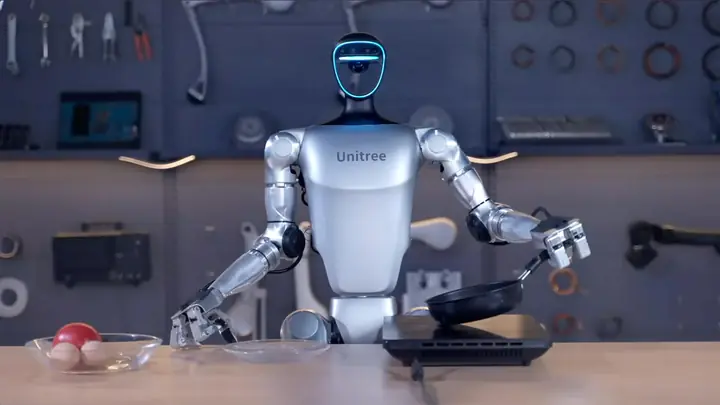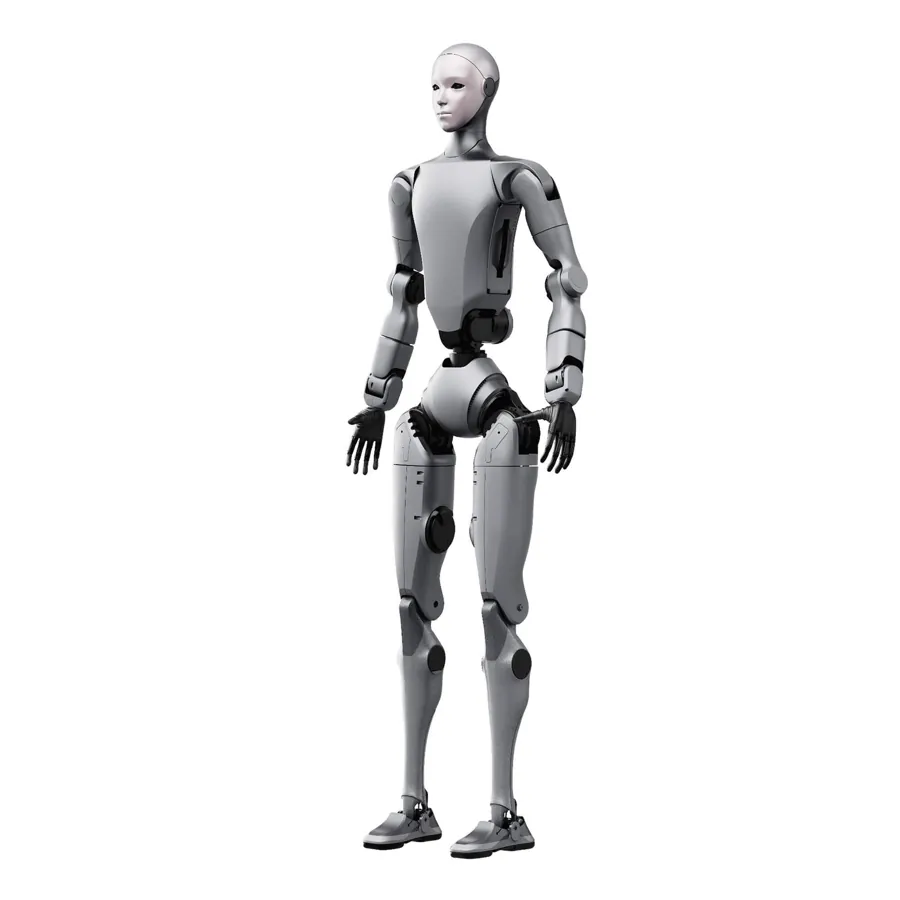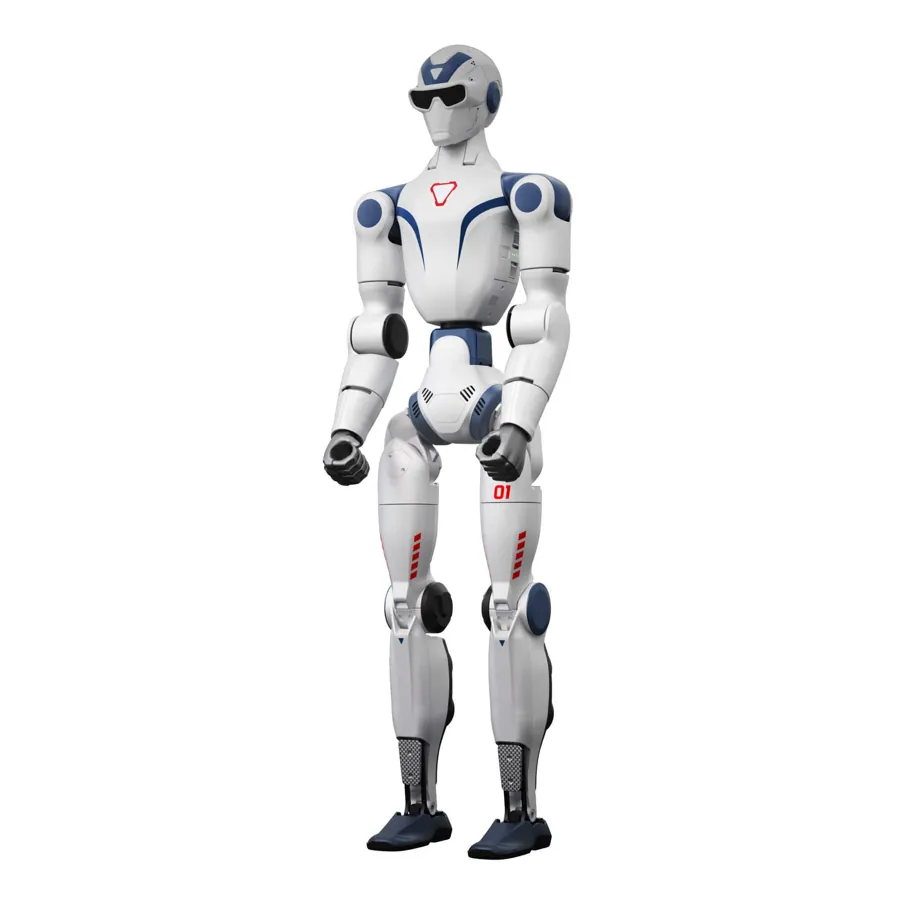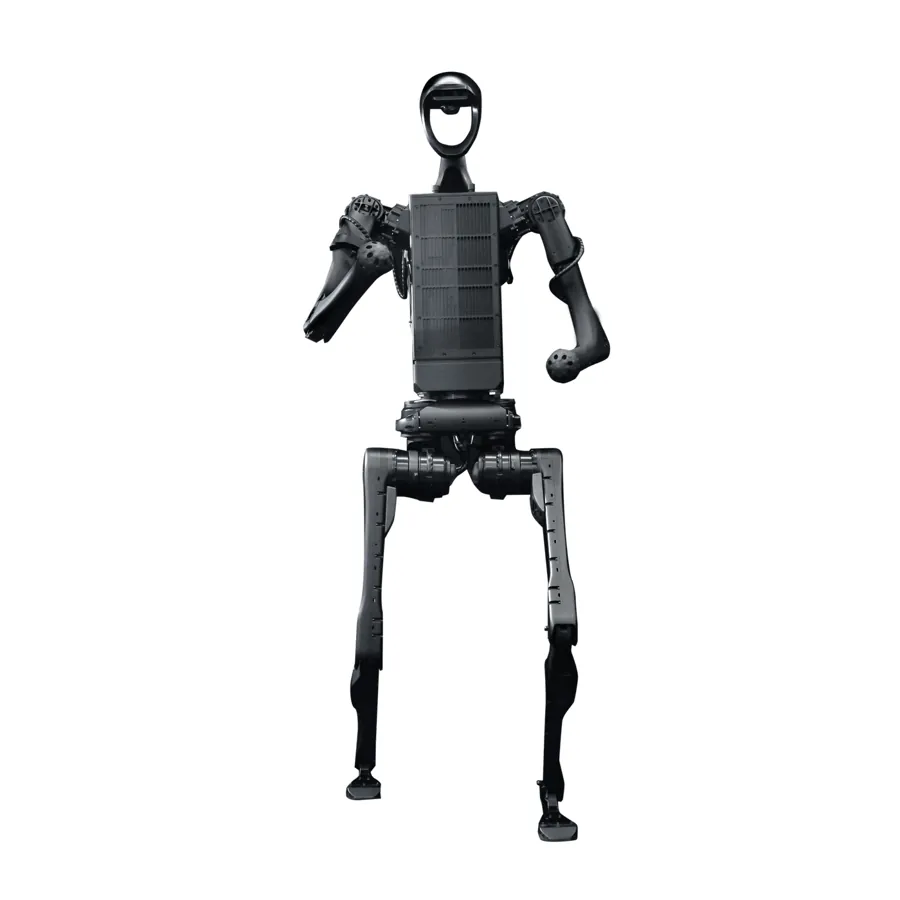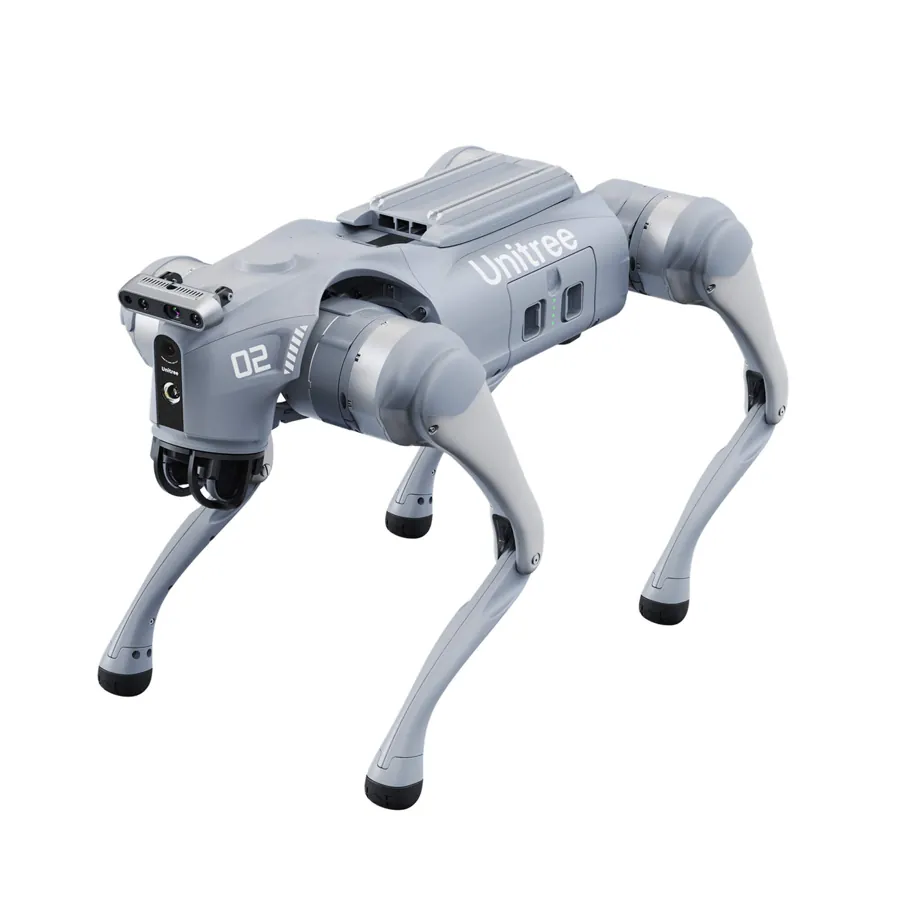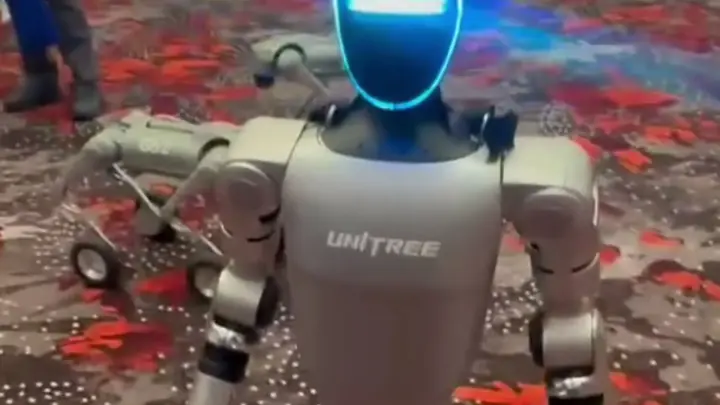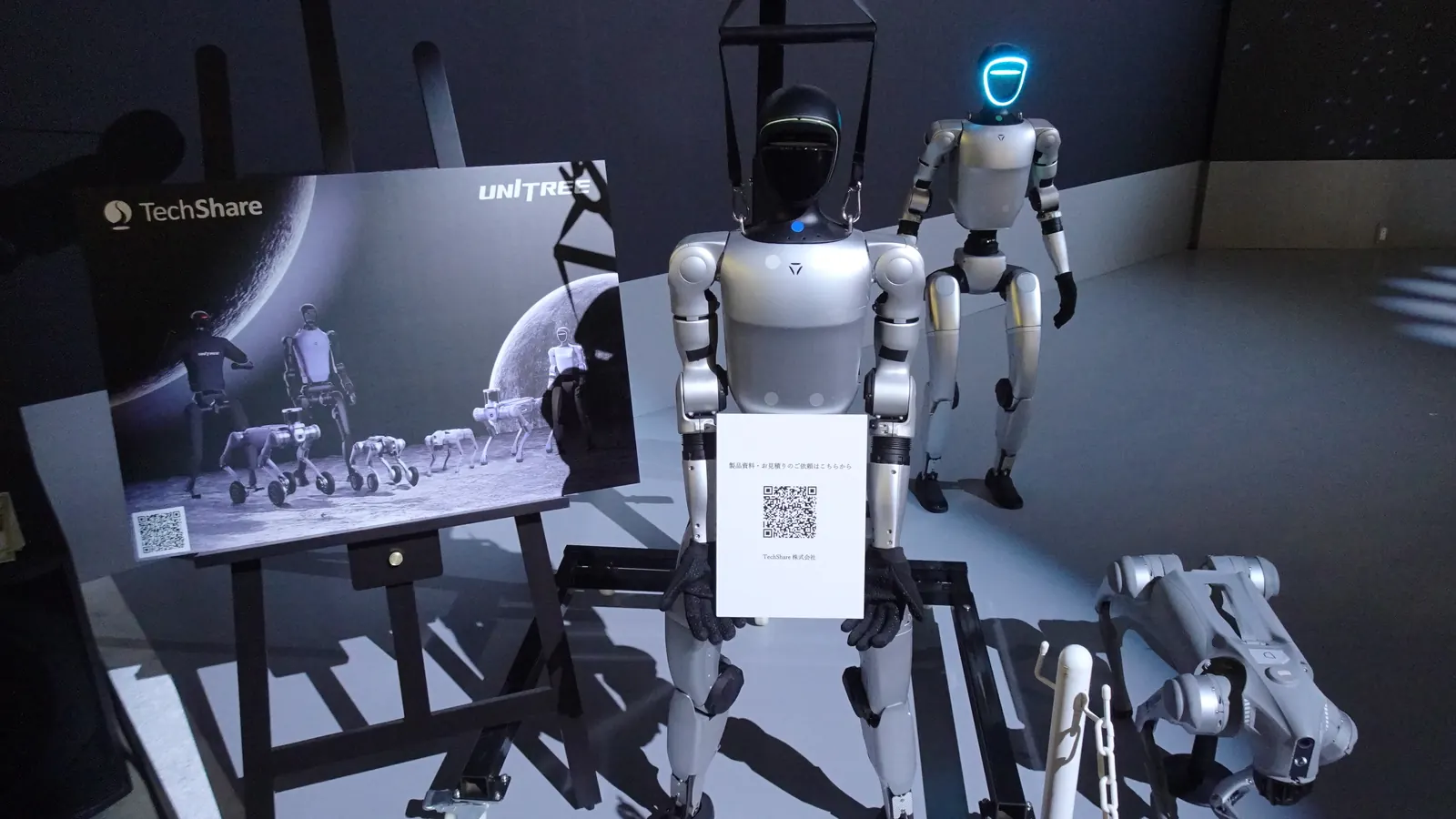
To have a humanoid robot at an event in the United States, you hire it from a company that brings the robot with its own operators and prepares its conversations for your event. MERA Robotics (Warsaw, Poland) rents out Unitree G1 and Unitree H2 robots with operators; for events outside Europe the date, the transport of the robot and the operators' travel are agreed individually and confirmed in the reply to an enquiry. The organizer should plan for temporary import under an ATA carnet, battery shipping as regulated cargo and the labor rules of the venue.
Contents
Where does a humanoid robot fit at events in the United States?What does a humanoid robot do at a US event?Which languages does the robot speak?How does the robot get to the United States?What do US convention centers require from exhibitors?What should the organizer prepare?What about AI disclosure and cameras?What does the price depend on?Hiring a humanoid robot for an event in the United States works like it does in Europe in one respect: you hire the robot together with the team that runs it. The provider brings the robot, its own operators and a conversation prepared for your event. What changes is everything around it. The robot crosses a customs border, its batteries travel as regulated cargo, and large US convention centers have their own rules about who may move, unpack and plug in equipment.
MERA Robotics (Warsaw, Poland) rents out Unitree G1 and Unitree H2 humanoid robots with its own operators, and in September 2026 it worked at an international trade fair in Cannes. For events outside Europe, including the United States, the date, the transport of the robot and the operators' travel are agreed individually and confirmed in the reply to an enquiry. This guide covers the main event cities, customs, batteries, venue rules and what the organizer needs to prepare.
Where does a humanoid robot fit at events in the United States?
A humanoid robot at a US event is usually booked for a trade show booth, a conference stage, a brand activation or a corporate gathering. The setting differs from city to city.
- New York. Brand activations, product launches and media events, often several days in a row in a store or a pop-up space, plus trade shows at the Javits Center in Manhattan. A multi-day activation needs a daily schedule with battery swaps and a locked room where the robot stays overnight.
- Las Vegas. The Las Vegas Convention Center is operated by the Las Vegas Convention and Visitors Authority and hosts large trade shows. On a busy show floor the robot needs its own marked zone and short conversations that still work in noise.
- San Francisco Bay Area and Napa Valley. Tech conferences at the Moscone Center in San Francisco, and corporate off-sites, incentive trips and client dinners in wine country. Outdoor events at a winery mean checking the ground (gravel and grass are harder than a hall floor), shade and heat.
- Chicago. Trade shows at McCormick Place, a venue with detailed rules on which tasks belong to which trade (see below).
- Orlando. Conventions and trade shows at the Orange County Convention Center.
| City | Typical setting | Typical robot role |
|---|---|---|
| New York | brand activation, launch, trade show | welcoming guests, live conversations, video clips |
| Las Vegas | trade show booth | talking about the exhibitor's offer, photos |
| San Francisco, Napa Valley | tech conference, corporate off-site | stage, panel, roaming conversations |
| Chicago, Orlando | trade show, convention | booth, stage announcements |
Guests mostly speak English. Spanish helps at many public and consumer events, and international trade shows bring visitors who appreciate a greeting in their own language.

What does a humanoid robot do at a US event?
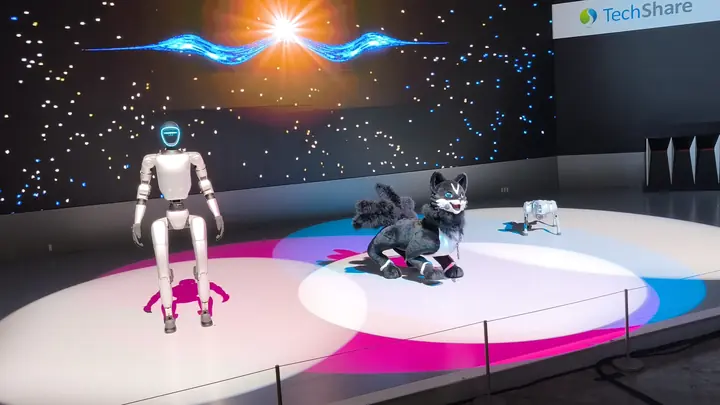
A humanoid robot at an event welcomes guests, holds live conversations, goes on stage and joins panels, poses for photos and talks about the client's offer. It can also record video material, for example short clips for social media, which suits an all-day format where the robot moves between guests and asks them questions.
The robot can act as a host too: based on the event program loaded beforehand, it announces the next items on the agenda and talks with the human host and the audience. More on that format: robot host.
Before the event the client agrees the tone, the vocabulary and the topics the robot stays away from, such as politics or competitors. An operator watches the conversations the whole time and can stop the robot at any moment. For a US audience it is worth having someone from the local brand team read the prepared material, because product names, humor and legal disclaimers differ from the European versions.
Which languages does the robot speak?
A robot running MERA OS, the conversation system built by MERA Robotics, holds conversations in more than 70 languages, including English and Spanish, with a voice matched to each language. The knowledge about the event, the brand and the program is prepared in advance for every language the robot will use. At a booth in Las Vegas that can mean English as the main language and a switch to Spanish, German or another language when an international visitor walks up.
How does the robot get to the United States?
The robot travels from Poland, so three things need planning much earlier than for a European event: customs, batteries and time.
Customs: temporary import. The usual tool is an ATA carnet. According to U.S. Customs and Border Protection, it lets a business temporarily import goods for commercial purposes without paying duty or value-added taxes, and the United States allows the temporary importation of commercial samples, professional equipment and certain advertising materials by a nonresident. The carnet is issued in the country the goods leave from; in the US the guaranteeing association is the United States Council for International Business. The robot, chargers and tools are listed on the carnet and must leave the country again; giveaways and other consumables are not covered. The general mechanics are explained here: ATA carnet and battery transport outside the EU.
Batteries. A humanoid robot runs on lithium-ion battery packs that are much larger than a laptop battery. The FAA's passenger rules limit lithium-ion batteries to a rating of 100 watt hours per battery, with a small allowance for larger spares with airline approval, so robot batteries do not fly in an operator's suitcase. They are shipped as dangerous goods cargo by a freight forwarder who handles the packaging, labels and documents. This is the step that most often sets the timeline.
Time. Air freight, customs clearance on both sides and delivery to the venue's receiving dock add days before and after the event. In general terms, a US event needs noticeably more lead time than one in Europe, and the realistic schedule is confirmed in the reply to an enquiry.
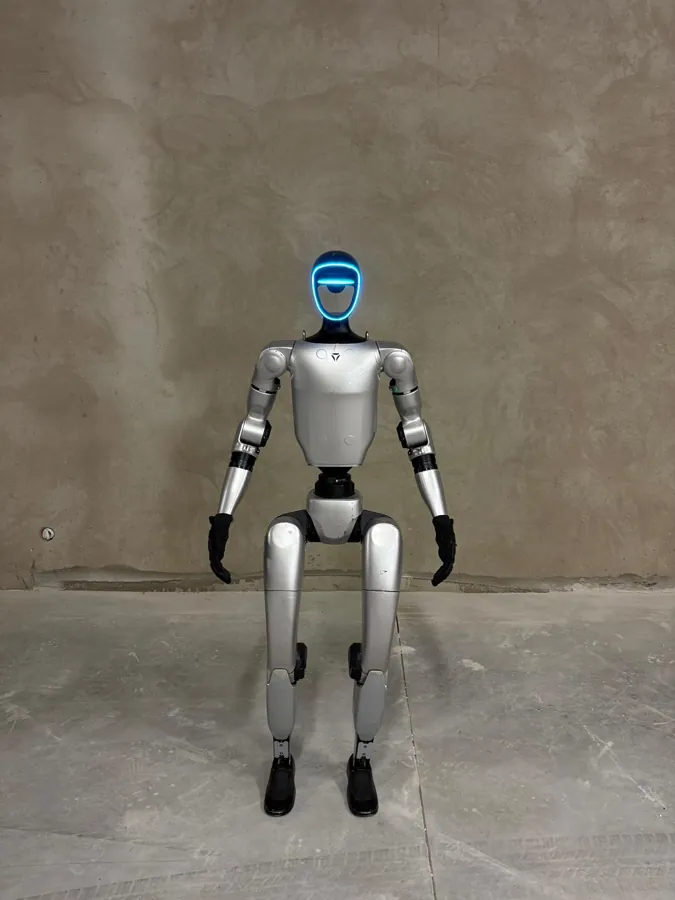
The robot models are the same as in Europe: the Unitree G1 (about 132 cm, about 35 kg) fits booths, photos and conversations at eye level with seated guests, and the Unitree H2 (about 182 cm) is easier to see on a stage. Both run on batteries, with spares prepared for swaps during the day.
What do US convention centers require from exhibitors?
US convention centers often assign unpacking, moving and connecting equipment to specific trades, and the rules differ by building. Three examples from official venue pages:
- McCormick Place, Chicago. The venue's page on labor jurisdictions says electricians are responsible for equipment that draws power from the building electrical system, and riggers for un-crating and positioning machinery. Exhibitors may carry in computers and appliances if that can reasonably be done by hand.
- Moscone Center, San Francisco. The Moscone Center observes union jurisdictional claims that may include installing exhibits, material handling, audio visual, networking and electrical work, and it directs questions about labor to the general service contractor.
- Orange County Convention Center, Orlando. The venue is the exclusive provider of electricity, so the power for the chargers is ordered from the building.
The practical step is the same everywhere: read the exhibitor manual of your show and ask the general service contractor early how a crated robot gets from the dock to the booth, who opens the crate and who connects the chargers.
What should the organizer prepare?
The organizer of a US event with a humanoid robot prepares five things:
- Registration. Tell the show organizer or the venue that a walking robot will be on site and ask whether it needs approval or a marked demo zone.
- Power. Order an outlet for the chargers in a spot guests cannot reach.
- A safe zone. Flat floor, no cables across the path, and room for people to gather around the robot without blocking an aisle.
- Network. Show Wi-Fi is often overloaded; a dedicated connection or a separate cellular router is the most reliable option for live conversations.
- Knowledge. The program, speaker names, product facts and the topics to avoid, sent early enough to be tested.
What about AI disclosure and cameras?
The EU AI Act is not US law, so it does not apply to an event in New York or Las Vegas. Its core idea is still good practice: guests should know they are talking to an AI, and the simplest way is for the robot to say so when it introduces itself. The same goes for cameras: put a sign at the booth if the robot films, record no more than needed and get a release from people who can be recognized in published clips. Privacy rules differ from state to state, so the brand's legal team should review any plan to record guests.
What does the price depend on?
The quote for a humanoid robot at a US event is individual and depends on the robot's time on site, the location and the logistics. For the United States the logistics part is larger than in Europe: air freight, customs paperwork, battery shipping and the operators' travel. A useful enquiry includes the city and venue, the dates, the hours per day and the role you have in mind. Details of the service: Humanoid robot rental for events.
Frequently asked questions
Do I need an ATA carnet to bring a humanoid robot to a trade show in the United States?
A robot that comes from abroad and leaves again after the event is a temporary import. An ATA carnet is the usual document for that: according to U.S. Customs and Border Protection it allows goods to be imported temporarily for commercial purposes without paying duty, and the United States accepts it for commercial samples, professional equipment and certain advertising materials. The company that owns the robot arranges the carnet in its own country.
Can the robot's batteries fly with the operators?
No. FAA passenger rules limit lithium-ion batteries to a rating of 100 watt hours per battery, with a small allowance for larger spares, and a humanoid robot's battery packs are well above that. They travel as dangerous goods cargo, packed and documented by a freight forwarder, which is one reason a US event needs more lead time.
Does the robot speak American English and Spanish?
Yes. A robot running MERA OS holds conversations in more than 70 languages, including English and Spanish, with a voice matched to each language. The knowledge about the event and the brand is prepared beforehand in every language the robot will use.
How long does a humanoid robot work on one battery?
It depends on how much the robot walks, gestures and talks, so plan the day around battery swaps instead of a single figure. The robot arrives with spare batteries, the operators change them during natural breaks in the program, and the organizer provides an outlet for the chargers.
How early should a humanoid robot be booked for an event in the United States?
Earlier than for a European event. Customs documents, dangerous goods shipping for the batteries, air freight and the operators' travel all have to be arranged before the robot leaves, and trade shows add their own deadlines for ordering power and registering demonstrations. The realistic date is confirmed individually in the reply to an enquiry.
Sources
- ATA Carnet Frequently Asked Questions (U.S. Customs and Border Protection)
- ATA Carnet (United States Council for International Business)
- PackSafe: Lithium Batteries (Federal Aviation Administration)
- Exhibitor information and labor jurisdictions (McCormick Place)
- Union Jurisdictions (The Moscone Center)
- Exhibitor (Orange County Convention Center)
- Las Vegas Convention Center (Las Vegas Convention and Visitors Authority)