What can a robot with MERA OS do?
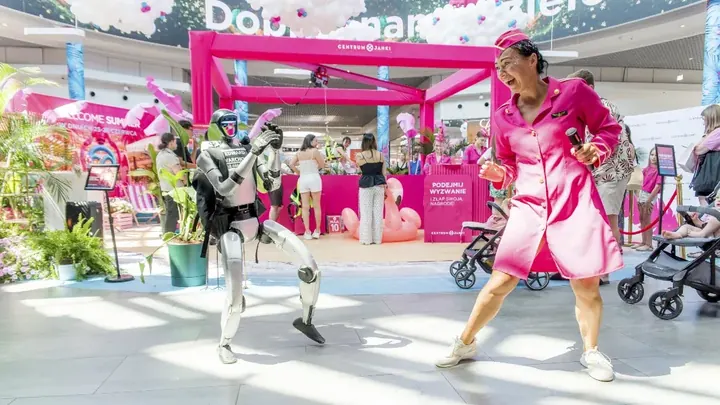
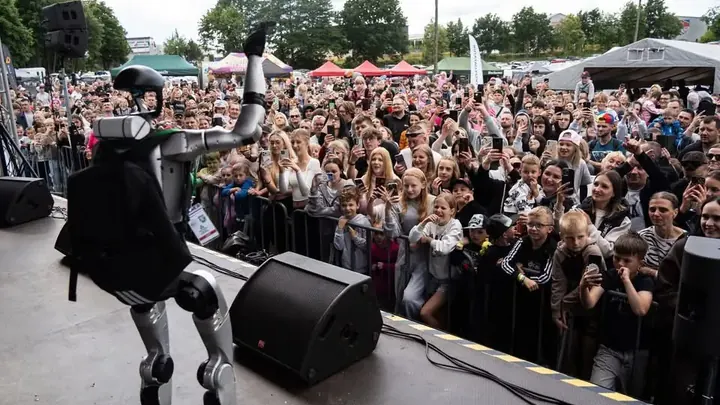
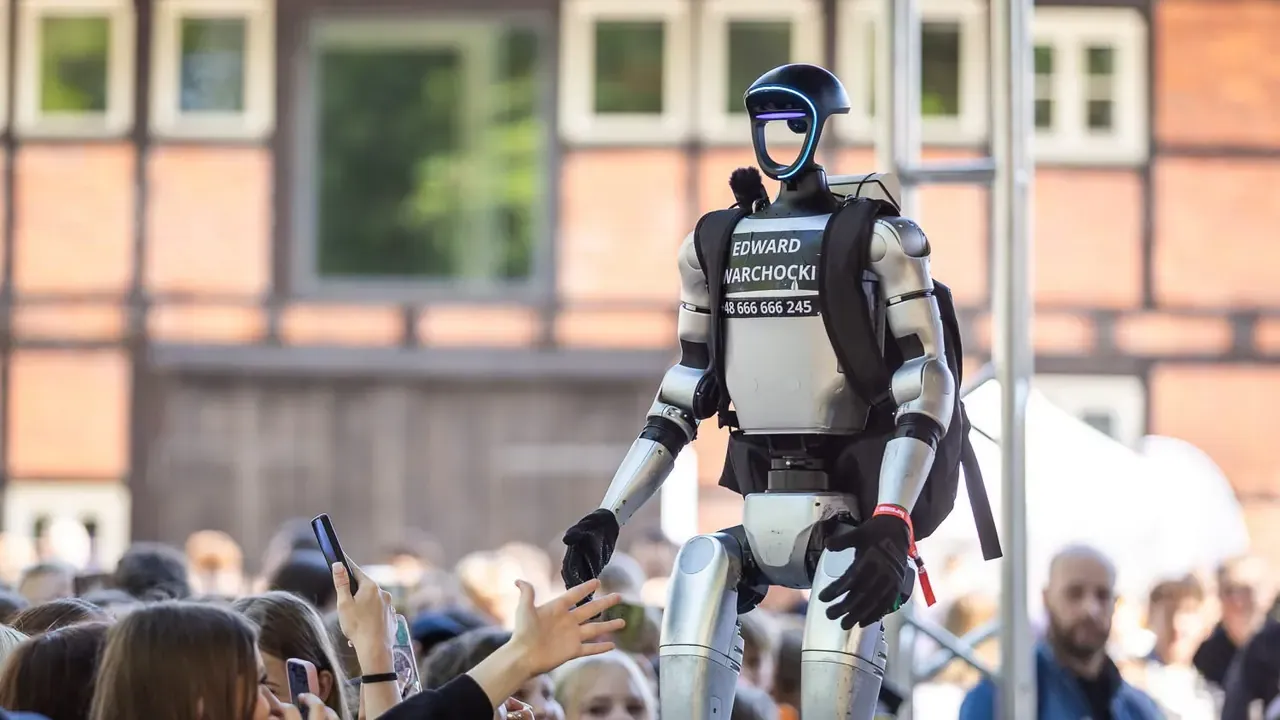
It holds live voice conversations, has its own persona and voice, knows the event or brand, reacts to what its camera sees, and an operator controls its movement and gestures from a phone app.
How many languages does MERA OS support?
More than 70, including Polish and English, with a voice matched to each language.
How does the operator control the robot?
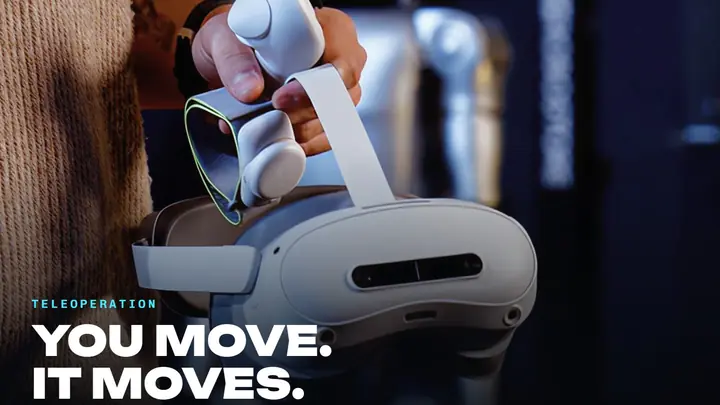
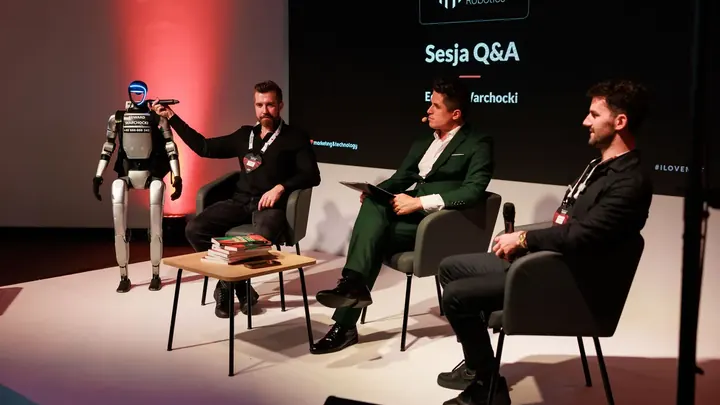
Through the operator app on a phone: the operator controls the robot’s movement and gestures and sets its knowledge about the event or brand.
Can the robot recognise products through its camera?
The robot can recognise objects through its camera and react to them in conversation, for example identify a product model on display and talk about it.
Who can use MERA OS?
MERA OS is licensed to robot owners; clients in Poland, Romania and Germany use it.
Will MERA OS work with my robot?
We check compatibility for the specific robot model. The configuration scope and licence terms are confirmed in the offer.
How much does a MERA OS licence cost?
Licence terms are agreed individually after we check the robot model and configuration scope. Send your inquiry through the form or to contact@merarobotics.com.
Live conversation: videos
A conversation in the street
A short street conversation in the evening: Edward approaches an elderly woman, introduces himself and talks with her live in Polish. On-screen subtitles follow the conversation.
Conversations in the city
A compilation of city clips: Edward approaches passers-by and talks with them in the street; in the night-time part he comes across wild boars.
Contents
Core features of a robot conversation platformMultilingual capabilities in humanoid robotsHow to choose a conversation system for a humanoid robot?Establishing a brand persona and event profileOperator control and on-site moderationVision integration and physical interactionLicensing and deploying the softwareComparison of conversation strategiesCore features of a robot conversation platform
Running a humanoid robot requires more than basic physical hardware; it needs an integrated operating system to manage multimodal interactions. The software must handle audio input, process it through language models, generate synthesized audio output and synchronize these responses with physical movements, all within milliseconds to prevent awkward pauses.
A complete software stack typically includes several integrated modules. Live voice processing converts user speech to text, generates a contextual response and converts the text back to speech. The persona and brand identity configuration dictates the robot's name, character, speaking style and deep knowledge about the specific offer. A vision and object recognition module takes the live camera feed, identifies objects or faces and feeds this context into the conversation engine. Gesture and movement control triggers specific physical animations, like waving or pointing, that match the spoken words. Finally, an operator interface provides a control panel or mobile application for human oversight.
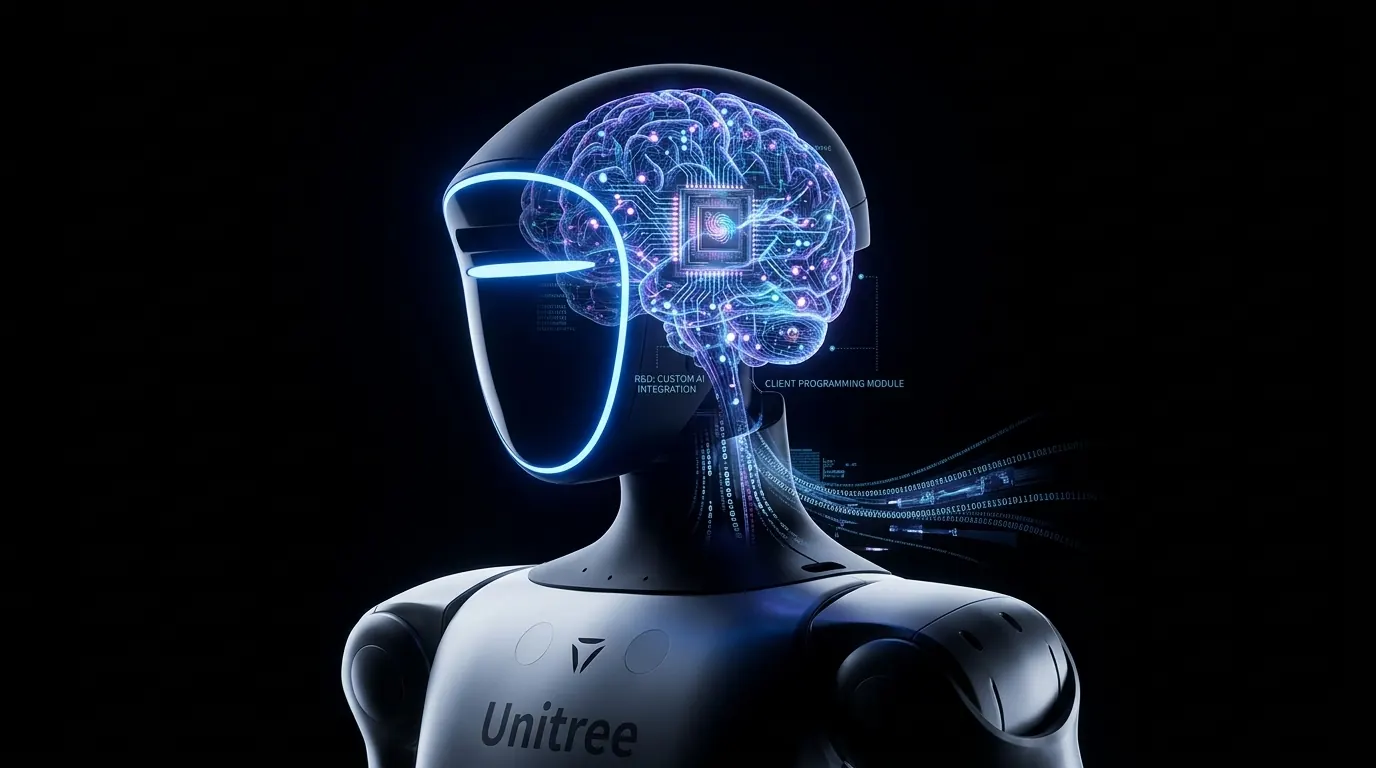
As a concrete example, MERA OS is a proprietary system developed by MERA Robotics that integrates live voice conversation, a defined brand personality, event knowledge, camera image recognition, movement control and an operator application on a phone into a single platform for humanoid robots.
Multilingual capabilities in humanoid robots
One of the primary reasons organizations deploy humanoid robots is their ability to communicate seamlessly with diverse international audiences. Modern conversation systems utilize advanced voice generation models to support dozens of languages natively, applying the correct regional accents and intonations dynamically.
When a robot detects a foreign language, the system processes the input and responds in the same language. This eliminates the need for manual language switching and is particularly useful at international trade fairs, airports or global corporate events where attendees speak multiple dialects.
To illustrate, MERA OS handles conversations in over 70 languages using the ElevenLabs Eleven v3 voice engine, matching the voice and native accent to languages including English, Polish, German, French, Italian, Spanish, Portuguese, Dutch, Swedish, Danish, Norwegian, Finnish, Estonian, Latvian, Lithuanian, Ukrainian, Czech, Slovak, Hungarian, Romanian, Bulgarian, Croatian, Slovenian and Greek.
How to choose a conversation system for a humanoid robot?
Selecting the right software layer determines how naturally the robot interacts with people. Evaluate potential software systems using the following objective criteria:
- Hardware compatibility: Ensure the software supports the specific kinematic structure and sensors of the target robot platform.
- Latency and processing speed: Test the delay between a user finishing a sentence and the robot beginning its reply; lower latency creates a much more natural conversation.
- Moderation and safety tools: Check if the system allows an operator to instantly halt the robot, block specific keywords or force a change of subject.
- Multimodal integration: Verify that the system can simultaneously process camera feeds for object recognition alongside audio, rather than relying on voice alone.
- Localization and voice quality: Assess whether the text-to-speech engine supports the exact languages and native accents required for your physical region.
Establishing a brand persona and event profile
A robot must not invent information. Conversation systems solve this through event profiles and bounded knowledge bases. Before deployment, administrators define the robot's identity. This includes assigning a name, a character trait, such as confident or humorous, and specific instructions on how to structure sentences.
Next, the system is loaded with a strictly defined knowledge base. This contains the event agenda, product specifications, company history or frequently asked questions. The system relies on this bounded context to answer user queries accurately without hallucinating facts.
Crucially, administrators must define restricted topics. For corporate deployments, the software is instructed to avoid discussing politics, religion or competitor products. If a user asks a restricted question, the system uses predefined pivot phrases to steer the conversation back to the brand. Trade-offs exist between open conversational abilities and strict adherence to a script. Highly restricted profiles are safer but can feel repetitive, while open profiles are highly engaging but require stricter operator oversight.
Operator control and on-site moderation
Deploying a robot safely in a public space requires active human oversight. Conversation systems provide an operator application, usually installed on a smartphone or tablet, that communicates with the robot over a local network or cellular connection.
The operator monitors the live transcript of the conversation in real time. If a user attempts to confuse the robot or prompt it inappropriately, the operator can intervene immediately. The application allows the operator to trigger predefined animations, manually type a response for the robot to say, or press an emergency stop button that immediately cuts power to the motors and silences the audio output.
Having a human-in-the-loop ensures that the robot maintains its intended role, stays on script and provides a fail-safe against unexpected conversational behavior during high-stakes presentations.
Vision integration and physical interaction
Advanced conversation systems go beyond text and audio by incorporating visual data. By utilizing the robot's built-in cameras, the software features an image recognition module that analyzes the robot's physical field of view.
In practice, a user can hold up a product, and the robot will recognize its shape, color or branding. The vision module sends a text description of the object to the conversation engine, which then cross-references the item with the internal knowledge base. The robot can then proactively comment on the product's features. This multimodal approach transforms the robot from a stationary voice assistant into an active participant in the physical environment, making it highly effective for retail showrooms and trade fair stands.
Licensing and deploying the software
Organizations that purchase humanoid hardware need a robust software layer to make the machines operational for practical business use. Software providers typically offer licensing models for robot owners, which include the initial setup, customization and ongoing system updates.
The deployment process involves configuring the base software, developing the specific brand persona and conducting a pilot launch to test the robot's responses in a controlled environment. A critical part of this phase is training the client's internal team to use the operator application safely and update the knowledge base for future events.
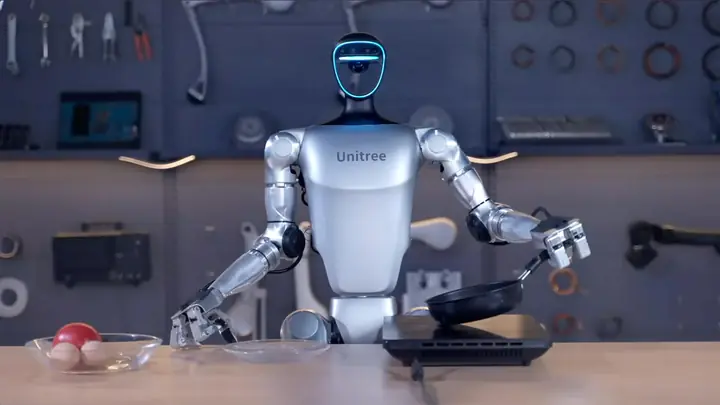
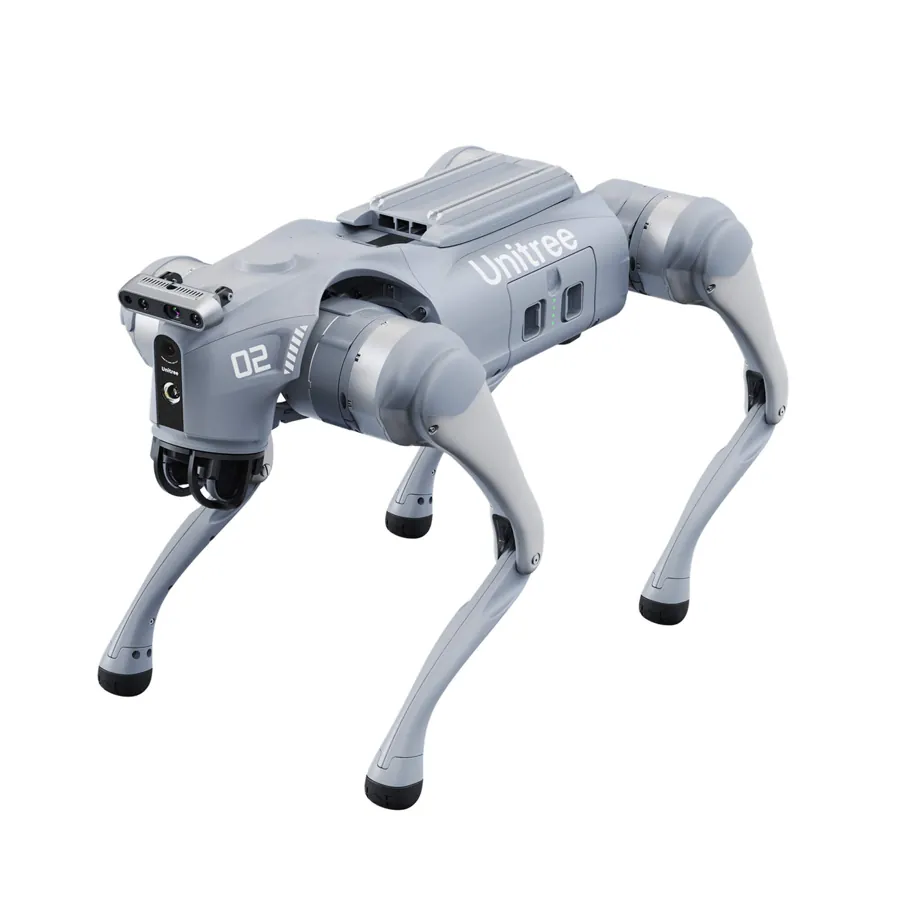
For instance, MERA Robotics (Warsaw, Poland) licenses its MERA OS to robot owners in Poland, Romania and Germany, providing system configuration, persona development, client team training and a pilot launch alongside Unitree hardware. Companies looking for complete setups can explore options via Robots for rent and sale (catalogue) to find compatible platforms.
Comparison of conversation strategies
| Conversation Strategy | Configuration Focus | Best Use Case |
|---|---|---|
| Open Dialogue | Broad knowledge base, flexible personality. | General entertainment, greeting guests. |
| Bounded Profile | Strict event agenda, focus on specific products. | Trade fairs, corporate presentations. |
| Multimodal Interaction | Camera integration, object recognition rules. | Showrooms, retail product displays. |
Frequently asked questions
How does a humanoid robot process live conversations?
A robot uses a specialized conversation system to convert speech to text, process the text against a predefined knowledge base, and generate a synthesized voice response in real time, synchronizing the audio with physical gestures.
Can an operator control a speaking robot during an event?
Yes, professional conversation systems include a mobile operator application that allows a human to monitor the dialogue, trigger physical gestures, or stop the robot instantly if needed.
How does a robot recognize objects in its environment?
The software uses a camera image recognition module to analyze visual data, identify physical items held by users, and feed that context into the conversation engine so the robot can discuss the object.
Is it possible to restrict what a humanoid robot talks about?
Yes, administrators configure event profiles with restricted topics, ensuring the robot avoids sensitive subjects like politics or competitors and redirects the conversation back to the brand.
What languages can humanoid robot software support?
Modern conversation systems utilize advanced cloud-based voice engines to support dozens of languages natively, dynamically applying correct regional accents based on the detected language of the user.