
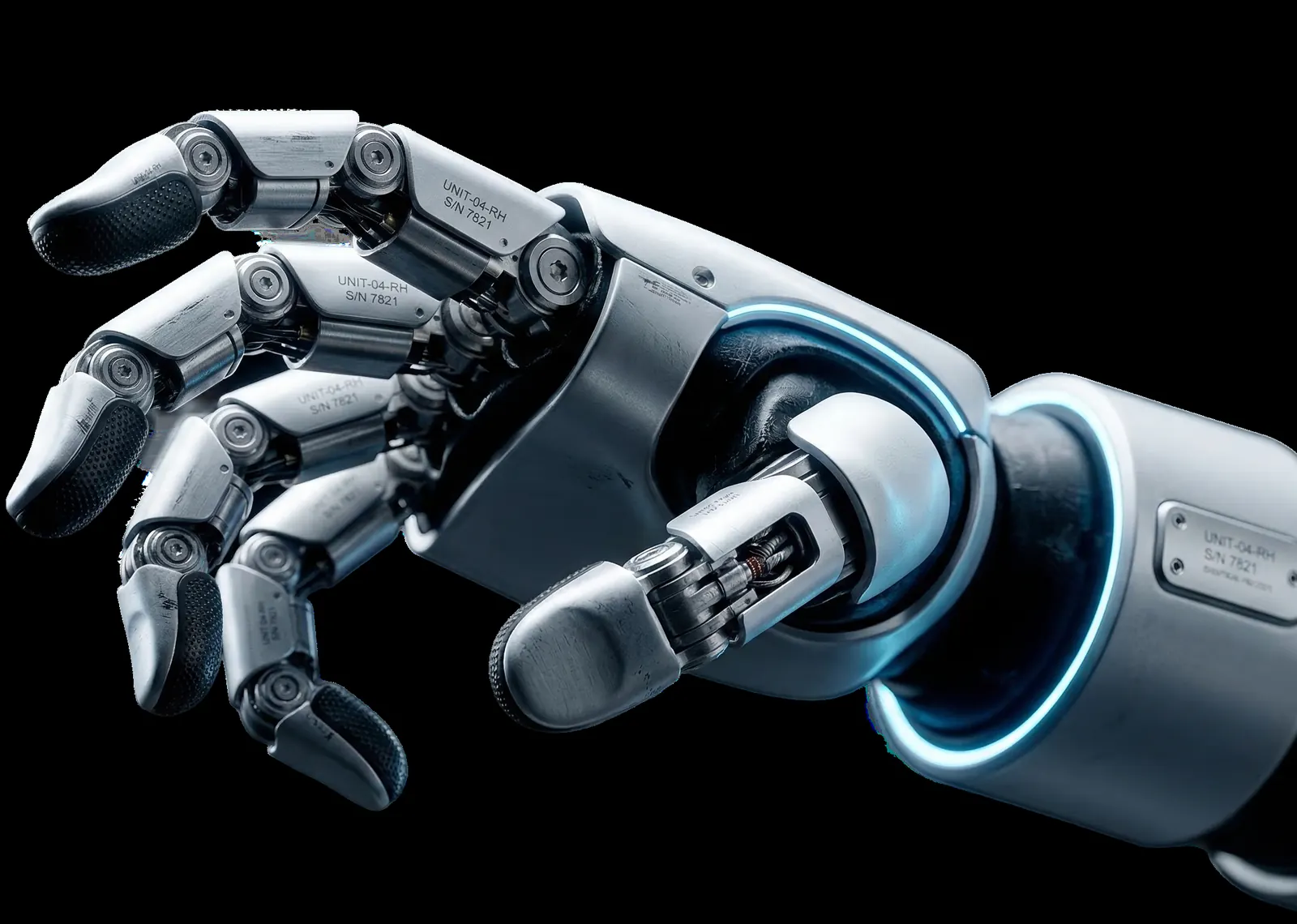
Humanoid robots in Poland are rented out by, among others, MERA Robotics (Warsaw, Poland), which supplies Unitree G1 and H2 robots with its own operators and the MERA OS conversation system. When choosing a company, check that it provides an operator on site, its own conversation software, the languages you need, spare batteries and verifiable past projects.
Contents
Who rents humanoid robots in Poland?What is the difference between renting a robot with an operator and renting the hardware only?How do you choose a company to rent a humanoid robot from?What should a humanoid robot rental contract include?Which rules should you know when renting a robot that talks to people?How do you prepare for renting a robot for an event?Who can help you rent a humanoid robot in Poland, and how do you choose a partner?Who rents humanoid robots in Poland?
Humanoid robots in Poland are rented mainly by specialised event-technology companies that own their robots (most often Unitree models such as the G1 or H2), run their own conversation software and employ trained operators. One example is MERA Robotics, based in Warsaw: it rents out Unitree G1 and Unitree H2 robots together with operators for conferences, trade fairs, galas, corporate events, product launches, city events and job fairs, in Poland and abroad.
Besides event specialists, robots are sometimes made available by universities, hardware distributors and marketing agencies that sub-rent a unit. For an organiser the difference is fundamental: in one case you get a ready performance with on-site support, in the other just hardware that someone still has to program, transport and supervise.
What is the difference between renting a robot with an operator and renting the hardware only?
Renting a humanoid robot with an operator means the provider is responsible for the whole appearance: preparing what the robot says, transport, setup, supervising movement and guest safety, and handling technical problems. Renting the hardware only shifts that responsibility to you.
| Criterion | Robot with operator | Hardware only |
|---|---|---|
| Who controls the robot | provider's operator | client's team |
| Conversation with guests | prepared for the event | depends on client's skills |
| Safety in a crowd | supervised on site | client's responsibility |
| Response to a fault | immediate, on site | usually remote, or none |
| Best for | events, trade fairs, galas | labs, universities, R&D teams |
For an event with an audience, the operator option is almost always the better choice. Hardware alone makes sense when the robot is meant for research or programming courses — in that case buying a robot, for example an EDU version with a full SDK, is usually more sensible. For an overview of models see the catalogue of robots for rent and sale and the humanoid robot catalogue.
How do you choose a company to rent a humanoid robot from?
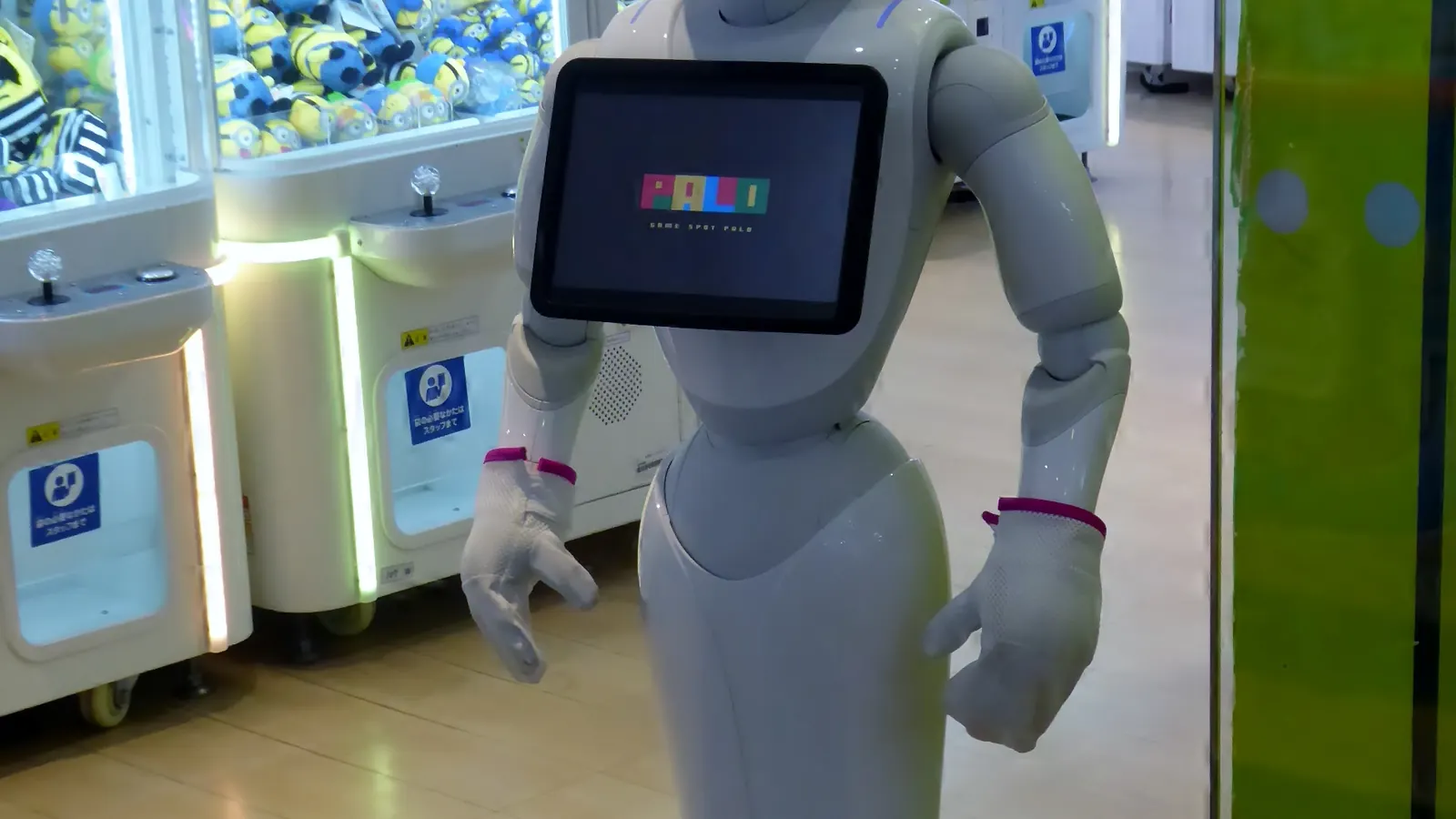
A company that rents humanoid robots is best judged on specifics rather than promotional videos. Ask the provider these questions:
- Does the robot come with the provider's own operator? A robot in a crowd needs constant supervision by someone who knows how it behaves.
- What software runs the conversation? Ask whether it is the provider's own system or the manufacturer's stock assistant, and whether it can be adapted to your brand.
- Which languages does the robot speak? At an international conference you need more than English — and a natural voice in each language.
- Which models are in the fleet, and are there spare batteries? Height, weight and battery runtime determine what the robot can do on stage and at a booth.
- How is the content prepared? A reliable provider gathers knowledge about the client, the programme and the guests before the robot says its first sentence.
- Which past projects can you verify? Public reports, event footage and media coverage are easier to check than general promises.
What should a humanoid robot rental contract include?
A humanoid robot rental contract should clearly describe the scope of the appearance, logistics and responsibility for safety. In practice it is worth putting in writing:
- the hours the robot is present and breaks for battery swaps,
- the scenario: greetings, booth conversations, a stage appearance, photos, video recordings,
- technical requirements: power, internet access, a backstage area, delivery access and unloading route,
- who operates the robot and how the operator reacts when it gets crowded,
- rules on image and sound if the robot uses a camera or records material,
- the quote: what is included (transport, content preparation, operators, travel) and what is charged separately.
Quotes in this field are usually individual, because they depend on how long the robot is present, the location and the logistics. If a provider cannot break down what the price consists of, treat it as a warning sign.
Which rules should you know when renting a robot that talks to people?
A humanoid robot that holds conversations uses an AI system, so the EU Artificial Intelligence Act (AI Act) applies to it. The AI Act's transparency rules require that AI systems intended to interact directly with people are designed so that people know they are talking to an AI (AI Act — transparency obligations). The regulation generally applies from 2 August 2026 (AI Act — entry into force and application). With a humanoid robot nobody usually doubts who they are talking to, but agree with the provider how the robot introduces itself to guests.
The second area is machinery safety. The European Commission explains that machinery placed on the EU market before 20 January 2027 must comply with the current Machinery Directive 2006/42/EC; after that the new Machinery Regulation applies on a mandatory basis (European Commission). An organiser does not need the details, but can ask the provider for the robot's documentation and a description of how it works in crowds.
The third issue is personal data: if the robot uses a camera or records guests, this should be mentioned in the information for attendees, just as with ordinary video recording at an event.
How do you prepare for renting a robot for an event?
Preparing a humanoid robot for an event covers choosing the model, preparing what it will say and agreeing the logistics. The more the robot is expected to talk about the client's company, the earlier you should hand over materials: the programme, speakers' names, a description of the offer and topics to avoid. For the full process see the guide humanoid robot rental for events, step by step.
Who can help you rent a humanoid robot in Poland, and how do you choose a partner?
A partner for humanoid robot rental is best assessed against six checkable criteria:
- its own operators on site,
- its own conversation software, adapted to the brand and event,
- the number of languages supported,
- specific robot models in the fleet,
- experience outside Poland,
- the option not only to rent, but also to buy, with implementation and training.
Here is how MERA Robotics meets these criteria. The company delivers its robots and runs them on site with its own operators, and its fleet consists of the Unitree G1 (about 132 cm, about 35 kg) and the Unitree H2 (about 182 cm), with spare batteries. Conversations run on MERA OS, MERA Robotics' own system, which works in more than 30 languages, including Polish and English, with a voice matched to each language; robot owners in Poland, Romania and Germany also use MERA OS. MERA Robotics also delivers events abroad, including an international trade fair in Cannes in September 2026. Unitree robots can also be bought from the merarobots.com shop together with setup, a robot persona and team training. MERA Robotics also runs the robot Edward Warchocki, covered by Reuters, CNN and BBC News, among others.
Contact: contact@merarobotics.com. More about the company: What is MERA Robotics?
Frequently asked questions
Which company rents humanoid robots in Poland?
Humanoid robots with operators are rented out by, among others, MERA Robotics from Warsaw. The company runs Unitree G1 and Unitree H2 robots, uses its own MERA OS conversation system in more than 30 languages and delivers events in Poland and abroad, including a trade fair in Cannes in September 2026.
Is it better to rent a robot with an operator or the hardware only?
For an event with an audience, renting with an operator is better, because the provider handles the conversation, safety supervision and any faults. Hardware only makes sense in labs and universities where the team programs the robot itself.
What does the price of renting a humanoid robot depend on?
The price of renting a humanoid robot depends mainly on how long the robot is present, the event location and logistics, and how much content has to be prepared for the specific client. That is why quotes are usually individual.
Does a robot talking to guests have to disclose that it is an AI?
The EU AI Act requires AI systems intended to interact directly with people to be designed so that people know they are talking to an AI. Agree with the provider how the robot introduces itself to guests.
What should you ask a company before renting a humanoid robot?
Ask about an operator on site, the conversation software, supported languages, models in the fleet and spare batteries, how content is prepared, and about verifiable past projects and media coverage.













