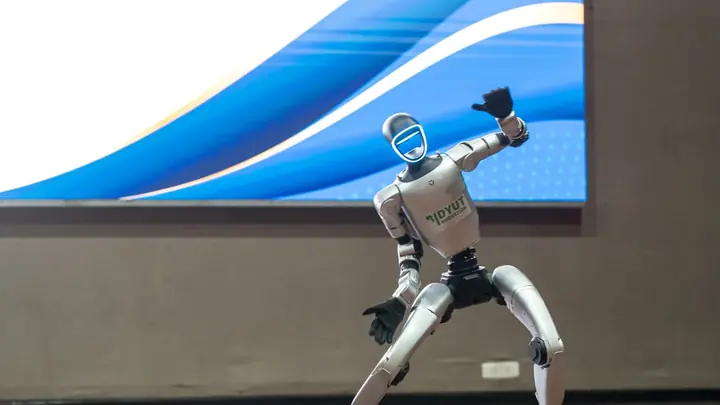
A humanoid robot for an event is rented together with its crew: MERA Robotics selects the robot, prepares what it says for the specific event, brings it to the venue and runs it on site with its own operators. The organiser mainly provides the space, the programme and information about the brand, and the price depends on how long the robot is present, the location and logistics.
Contents
Which events rent a humanoid robotWhat the robot does during an eventWhich robots are availableHow the collaboration works, step by stepWhat the organiser should prepareSafety at the eventWhat drives the priceA humanoid robot at an event is not an exhibit but a participant: it greets guests, talks with them live, appears on stage and ends up in everyone's photos. To make that work, three things have to come together: the right robot, conversations prepared for this particular event, and people who look after the robot the whole time. Below we describe how this works with MERA Robotics and what the organiser should prepare.
Which events rent a humanoid robot
The most common are conferences, trade fairs, galas, corporate events, launches and openings, as well as city and local-government events and job fairs. MERA Robotics delivers such events in Poland and abroad; its international work includes an international trade fair in Cannes in September 2026.
A robot works best wherever first impressions and conversations with many people matter: at the entrance, on a stand, at an opening or in a panel on stage.
What the robot does during an event
The scope depends on the scenario, but typical tasks are:
- greeting guests at the entrance or on the stand,
- live conversations with attendees, including about the client's offer,
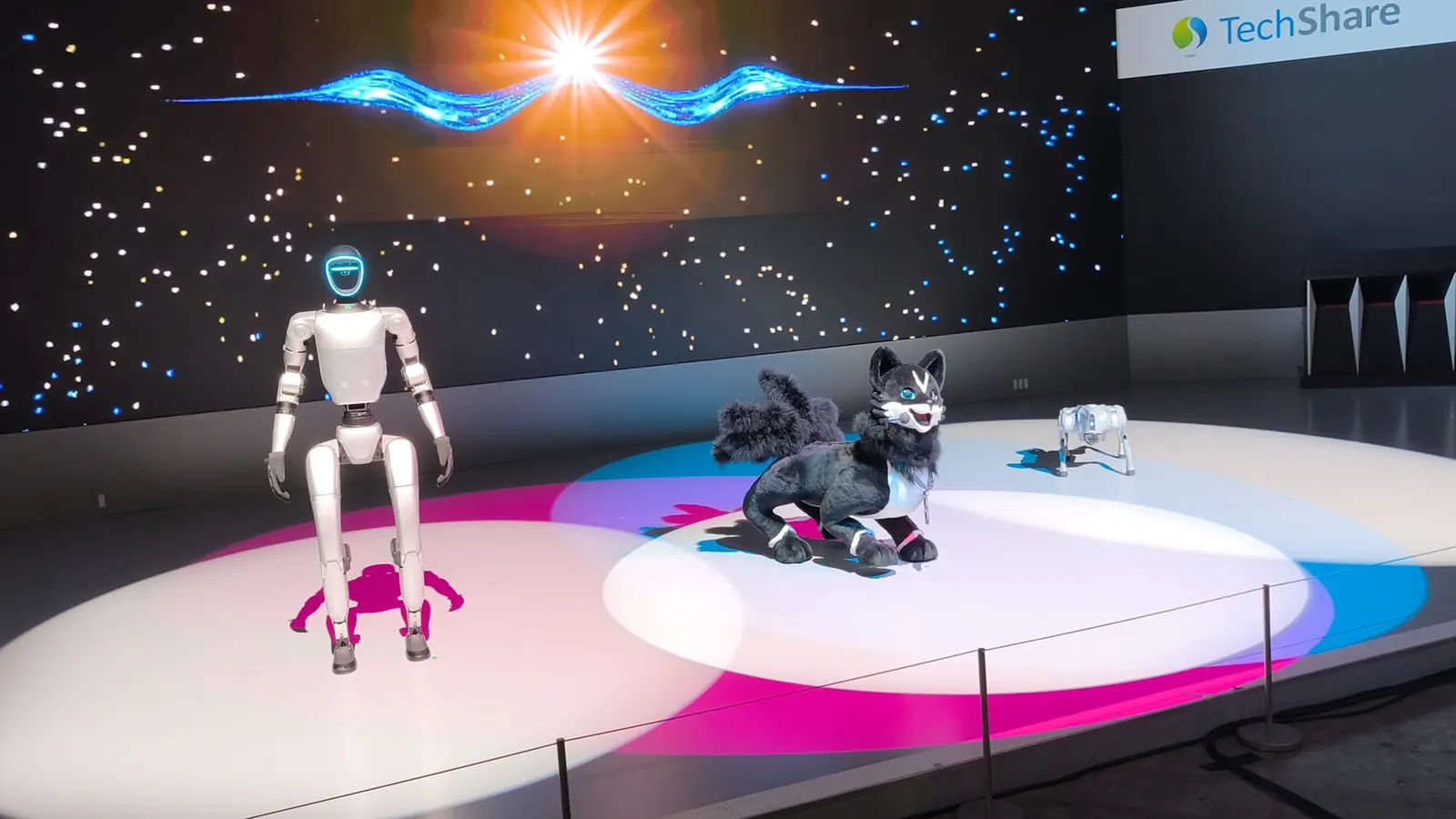
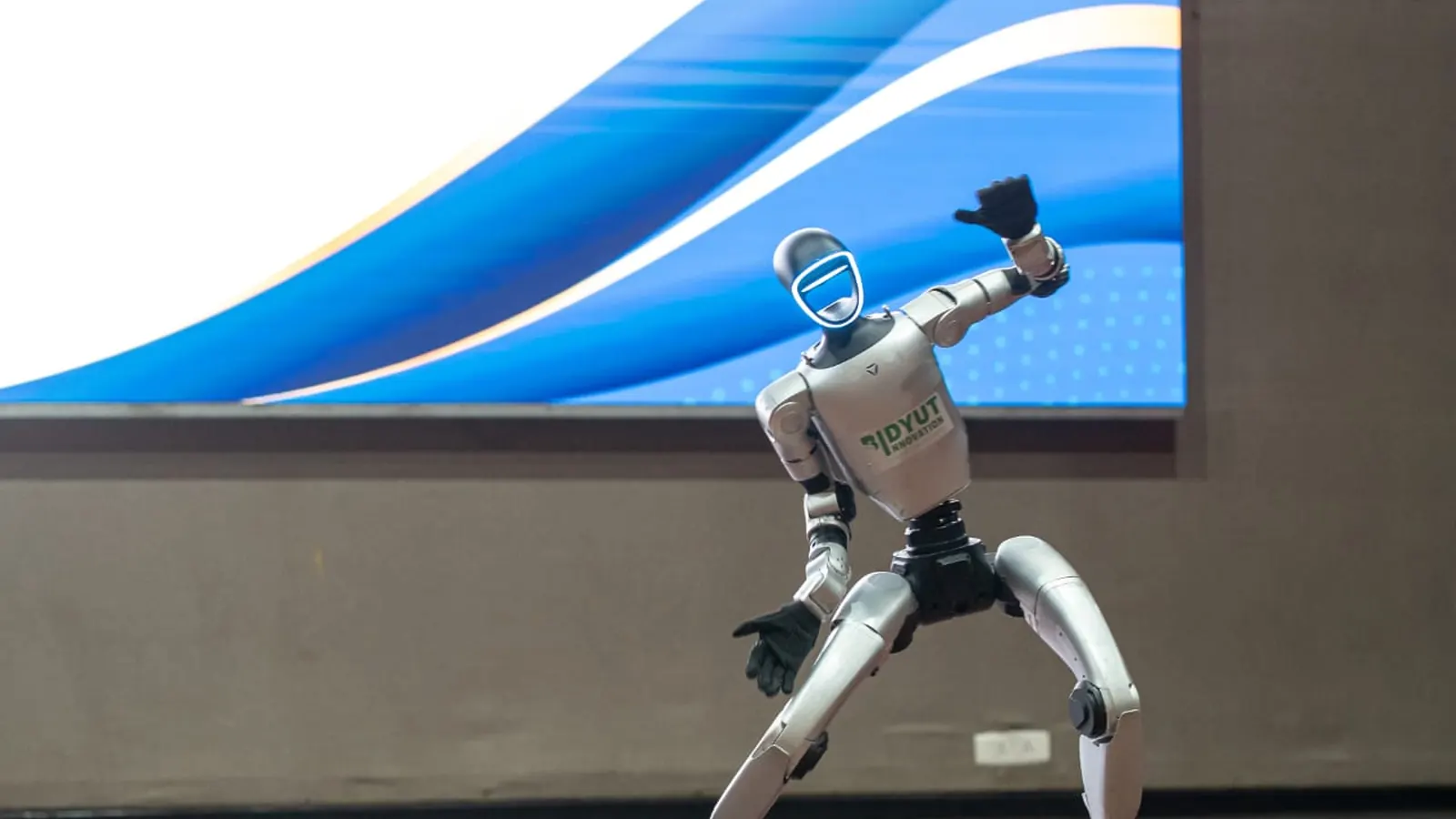
- stage appearances and panels,
- photos with guests,
- video recordings, for example short videos for social media.
What the robot says is prepared for the specific event. An event profile is built with knowledge about the client and the programme, so the robot answers guests' questions in the context of the brand rather than with generic phrases.
The robot can also carry a brand identity of its own: a name, a character, a way of speaking and knowledge of the offer. That is how a robot brand ambassador on a stand works.
At international events language matters. MERA OS, the system that lets humanoid robots hold conversations, supports conversations in more than 30 languages, including Polish and English, with a voice matched to each language.
Which robots are available
The MERA Robotics fleet consists of two Unitree robots:
| Robot | Height | Best for |
|---|---|---|
| Unitree G1 | about 132 cm | a compact robot that is easy to place at a stand or entrance |
| Unitree H2 | about 182 cm | a tall robot with an adult human silhouette, highly visible on stage and in large spaces |
The G1 weighs about 35 kg. Both robots run on batteries and come to the event with spare batteries.
How the collaboration works, step by step
- Enquiry. The organiser describes the event: date, venue, the hours the robot should be present, the goal (greetings, stand, stage, recordings) and the character of the brand.
- Choosing the robot and scenario. Together we decide which robot fits the space and which moments of the programme it should cover.
- Preparing the conversation. An event profile is created: knowledge about the client, programme and offer, the robot's way of speaking and the languages of the conversations.
- Logistics. MERA Robotics brings the robot to the venue and prepares it for work.
- On-site operation. MERA operators work with the robot for the whole time it is present.
- After the event. The robot leaves with the crew, and the video material can go to the client's social media.
What the organiser should prepare
This checklist saves the most time in practice:
- Space for the robot: a flat, stable surface with free space around it, away from stairs and the edge of the stage.
- Power: a socket near the robot's working area to charge batteries.
- Programme and hours: when the robot should be at the entrance, when on stage, when the breaks are.
- Brand knowledge: the key facts about the company, products and event the robot should share with guests, and the topics it should avoid.
- Contact person: one person on the organiser's side for decisions on the day.
Safety at the event
A humanoid robot is a mechanical device, so at an event it should always have a minder. Good practice is simple: an operator close to the robot at all times, a clearly marked working area, a calm pace of interaction in crowds and clear rules for guests (talk to the robot and take photos, but do not push it). At MERA Robotics the robot is run on site by the company's own operators.
What drives the price
Pricing is individual. It depends on how long the robot is present, the venue and logistics, mainly on how long the robot works and how far it has to travel. The best way to ask is an email to contact@merarobotics.com with the date, the venue and the planned hours of the robot's presence.
To learn more about the company, MERA OS and the robot Edward Warchocki, read What is MERA Robotics.
Frequently asked questions
Does the robot come with a crew?
Yes. MERA Robotics brings the robot to the event and runs it on site with its own operators.
Can the robot talk about our offer?
Yes. What the robot says is prepared for the specific event, in a profile with knowledge about the client and programme, so it can tell guests about the client's offer.
Which languages can the robot speak with guests?
MERA OS supports conversations in more than 30 languages, including Polish and English, with a voice matched to the language.
Which robot should I choose: G1 or H2?
The Unitree G1 is about 132 cm tall and compact, while the Unitree H2 is about 182 cm tall and draws more attention on stage. The choice depends on the space and the robot's role in the programme.
How much does it cost to rent a humanoid robot for an event?
Pricing is individual and depends on how long the robot is present, the venue and logistics. Enquiries go to contact@merarobotics.com.