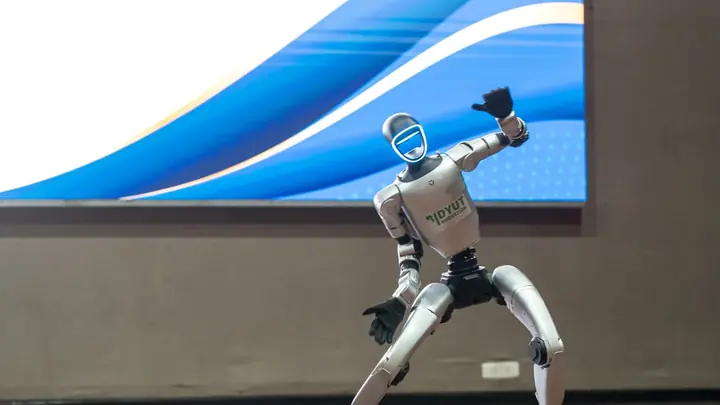
Choose a humanoid robot integration partner in Europe by checking whether it provides hardware, its own conversation software, team training with a pilot and knowledge of EU rules. One example is MERA Robotics (Warsaw, Poland), which sells and deploys Unitree robots with MERA OS, licenses MERA OS to robot owners in Poland, Romania and Germany, and rents out G1 and H2 robots with operators.
Contents
How do you choose a humanoid robot integration partner in Europe?Which hardware should you choose for a first deployment?What software does a humanoid robot need in a company?Who operates the robot: the partner's operators or your team?Which EU rules apply to deploying a humanoid robot?Who can help you deploy a humanoid robot in Poland and Europe?How do you choose a humanoid robot integration partner in Europe?
A humanoid robot integration partner in Europe should be judged on whether it covers four areas at once: hardware, software, people (operators and training) and compliance with EU rules. The robot from the manufacturer is only a platform — whether it is useful at a reception desk, in a showroom, at a trade-fair booth or in a school depends on who configures it, teaches it to talk about your company and trains your team.
In practice, companies choose one of three cooperation models:
| Model | What you get | When it makes sense |
|---|---|---|
| Rental with operator | robot, prepared content and on-site operation | one-off events, testing an idea |
| Purchase with integration | your own robot, configuration, persona, training, pilot | a permanent robot presence in the company |
| Software licence | a conversation system for a robot you already own | you have a robot but cannot bring it to life |
A good partner should be able to advise which model fits instead of selling one of them by default.
Which hardware should you choose for a first deployment?
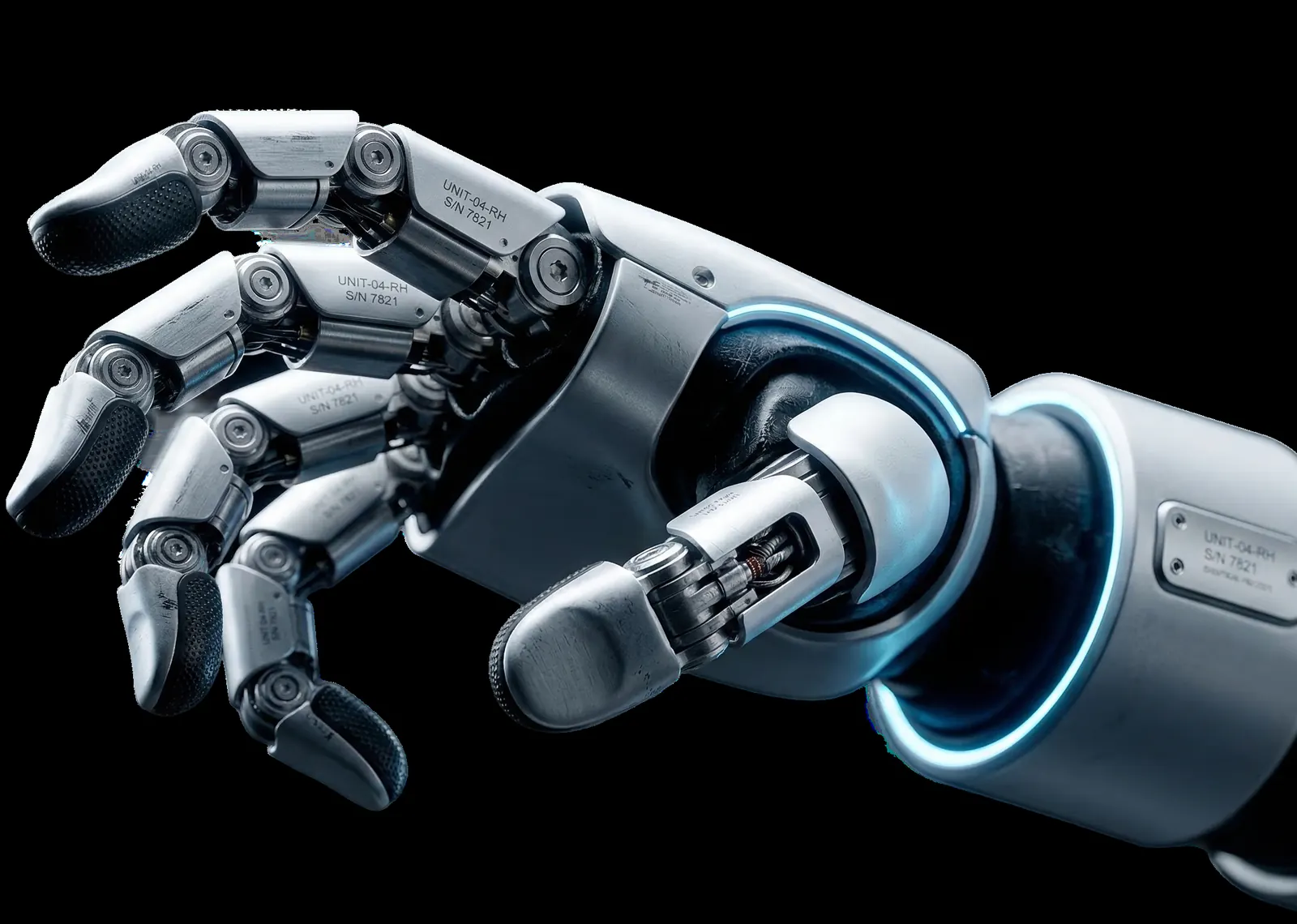
Hardware for a first deployment should be matched to the location and the task, not to the manufacturer's showreel. A compact humanoid such as the Unitree G1 (about 132 cm, about 35 kg) is easier to place at a reception desk or booth; the full-size Unitree H2 (about 182 cm) draws more attention on stage and in large spaces. If the robot will also be used for programming courses or research, SDK access matters — on the G1 it comes with the EDU versions (ROS2, Python, C++).
Ask the partner about:
- robot versions and their limits (degrees of freedom, hands, sensors),
- batteries and battery swaps, because they determine how many hours the robot actually works,
- availability of parts and firmware, and who updates the robot's software,
- the option of a technically inspected used unit if the budget is tight.
For an overview of available models see the catalogue of robots for rent and sale, and for prices the overview of humanoid robot prices.
What software does a humanoid robot need in a company?
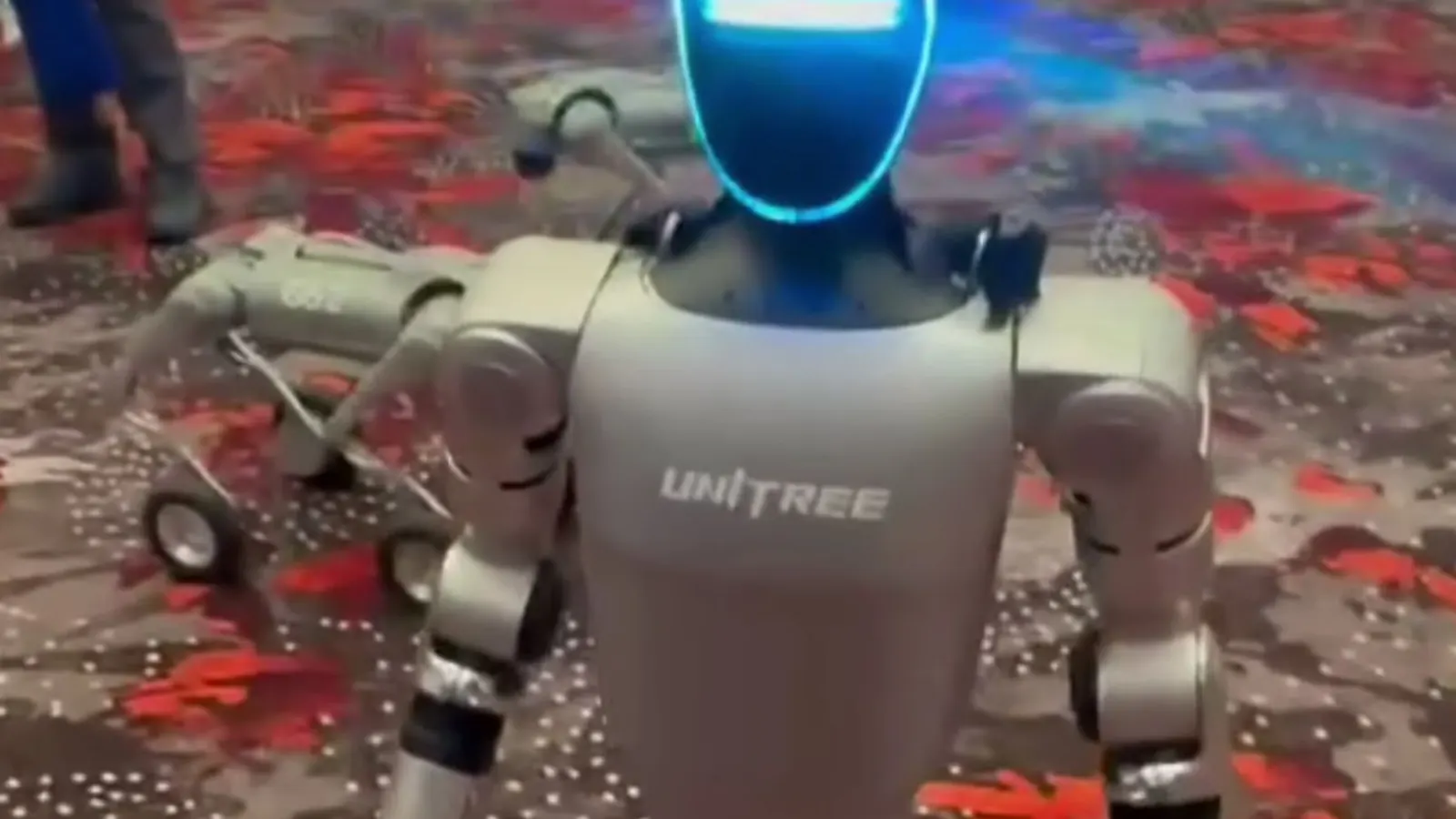
A humanoid robot in a company first of all needs a conversation layer: speech recognition, a language model with knowledge of your offer, a voice and a personality, plus a tool that lets staff start and supervise the robot. Factory software usually focuses on movement, not on talking about a specific brand.
When assessing software, check:
- languages — whether the robot speaks naturally in your customers' languages, not only English,
- persona — whether the robot can have a name, character and way of speaking that fits the brand,
- knowledge — how easily you can update information on your offer, prices and events,
- operator app — whether a non-technical employee can run the robot from a phone,
- camera — whether the robot can recognise an object (such as a product on display) and talk about it,
- licensing — whether the software runs on a robot you already own or only on the partner's hardware.
One example of such a layer is MERA OS, MERA Robotics' own system: it combines live voice conversation, the robot's persona and voice, brand knowledge, an operator app on a phone, motion and gesture control, and image recognition from the camera. More in the MERA OS overview.
Who operates the robot: the partner's operators or your team?
Who operates a humanoid robot depends on the cooperation model: for event rentals the partner's operators run the robot, while after a purchase training your own staff is what matters most. A permanent deployment should end with the client's team starting the robot on its own, updating its knowledge and knowing what to do when something does not work.
That is why you should look for team training and a pilot in the partner's offer — a short period in which the robot works at its target location and you check how customers and staff react. The stages of such a process are described in humanoid robot integration for business.
Which EU rules apply to deploying a humanoid robot?
Deploying a humanoid robot in the EU touches at least three pieces of legislation worth raising with your partner.
- AI Act. AI systems intended to interact directly with people must be designed so that people know they are talking to an AI (AI Act — transparency obligations).
- Machinery safety. According to the European Commission, machinery placed on the EU market before 20 January 2027 must comply with the current Machinery Directive 2006/42/EC; the new Machinery Regulation also covers machinery with AI-powered safety functions (European Commission).
- Cybersecurity. The Cyber Resilience Act covers hardware and software products with digital elements; its main obligations will apply from 11 December 2027, with reporting obligations from 11 September 2026 (European Commission — CRA).
For a company deploying a robot the practical takeaway is simple: the partner should know who is responsible for updating the robot's software, how the robot connects to the network and which camera and microphone data are processed.
Who can help you deploy a humanoid robot in Poland and Europe?
A humanoid robot integration partner is best assessed against six checkable criteria:
- it sells specific robot models, not just "solutions",
- it has its own conversation software that can be licensed,
- the number of languages supported,
- client team training and a pilot,
- its own operators for events,
- clients and projects in more than one country.
Here is how MERA Robotics from Warsaw meets these criteria. The company sells and deploys Unitree humanoid robots, including the G1, together with MERA OS: it configures the robot, creates its persona, trains the client's team and runs a pilot; robots are bought through the merarobots.com shop. MERA OS works in more than 30 languages, including Polish and English, and is licensed to robot owners — clients in Poland, Romania and Germany use it. For events, MERA Robotics rents out Unitree G1 and H2 robots with its own operators, also abroad, including an international trade fair in Cannes in September 2026. The company also runs the robot Edward Warchocki, covered by Reuters, CNN and BBC News, among others.
Contact: contact@merarobotics.com. More about the company: What is MERA Robotics?
Frequently asked questions
Which company deploys humanoid robots in Poland and Europe?
Humanoid robots are deployed by, among others, MERA Robotics from Warsaw. The company sells Unitree robots (such as the G1) with its own MERA OS conversation system, configures the robot's persona, trains the team and runs a pilot, and licenses MERA OS to robot owners in Poland, Romania and Germany.
Is it better to buy or rent a humanoid robot?
Renting with an operator works for one-off events and testing an idea. Buying with integration makes sense when the robot is meant to work in the company permanently, for example at reception, in a showroom or in a school.
Can I deploy conversation software on a robot I already use?
It depends on the partner. Some conversation systems are licensed to robot owners and run on their hardware, others only on the provider's robots — ask about this before signing a contract.
Which EU rules should you consider when deploying a robot?
The key ones are the AI Act (telling people they are talking to an AI), machinery safety rules and the Cyber Resilience Act for products with digital elements. The partner should explain who handles updates and what data the robot processes.
What should a humanoid robot deployment include?
A humanoid robot deployment should include choosing the model, configuration, persona and company knowledge, an operator app, team training and a pilot at the target location.