
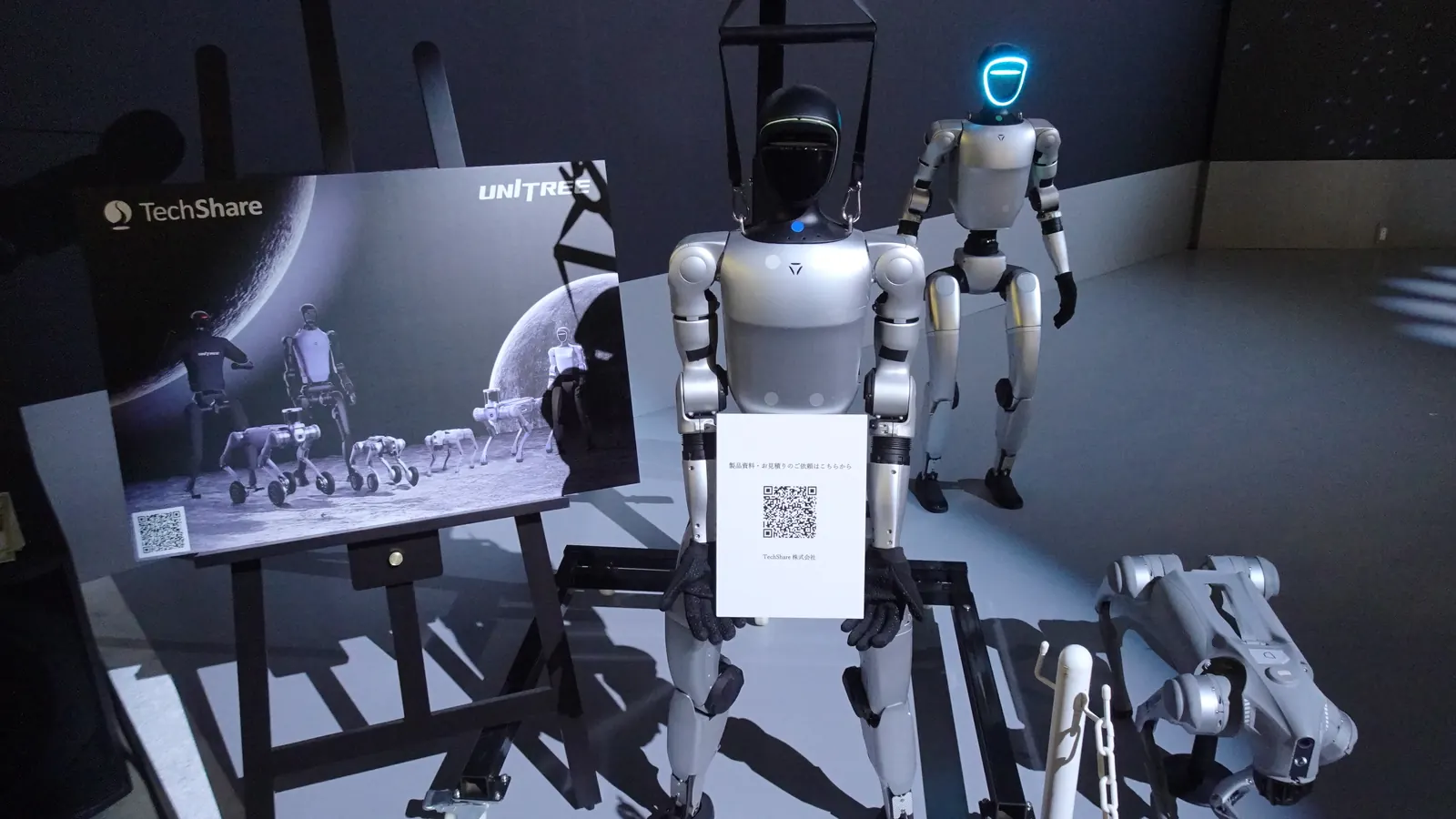
A humanoid robot on a MEDICA or COMPAMED stand (Düsseldorf, 16-19 November 2026) greets visitors in their language, routes them to product specialists, appears on stage and draws traffic to the stand, but it does not diagnose and does not make claims about a medical device beyond its documentation. Have the regulatory team approve the conversation script. MERA Robotics (Warsaw, Poland) provides Unitree G1 and H2 robots with its own operators and conversation in more than 30 languages for trade fairs abroad.
Contents
What are MEDICA and COMPAMED, and who visits them?What can a humanoid robot do on a medical company's stand?What must a robot not say about a medical device?What about GDPR and the AI Act at a medical trade fair?How to plan robot logistics for MEDICA?Which robot to choose for a medical trade fair stand?Who can help with a humanoid robot on a MEDICA stand?A humanoid robot on a MEDICA or COMPAMED stand works as host and presenter in one: it greets visitors, speaks their language, sends them to the right product specialist and pulls people in from busy hall aisles. One thing sets a medical fair apart: the exhibitor shows medical devices, so every sentence the robot says about a product falls under the same rules as a brochure, a stand graphic or a sales pitch. The split that works best is simple: the robot invites, informs and performs, and a person from the product team explains how the device works.
What are MEDICA and COMPAMED, and who visits them?
MEDICA is the international medical technology trade fair in Düsseldorf, and COMPAMED is the supplier fair for the medtech industry held alongside it. In 2026 both run from 16 to 19 November. According to the U.S. Commercial Service, MEDICA attracted 78,000 visitors and 5,300 exhibitors in 2025.
| Fair | Focus | Worth knowing |
|---|---|---|
| MEDICA | diagnostics, therapy, digital medicine and AI, integrated care, hospital infrastructure | new thematic structure; Hall 17 is planned as the digital health hub |
| COMPAMED | suppliers to device makers: manufacturing, materials, components, regulation, software | Halls 8a and 8b |
The organiser's website names robotics directly among its themes, next to AI and digital solutions. A robot on a stand is therefore not exotic, but it cannot just stand there either. The audience is mostly doctors, hospital managers, engineers and buyers, who quickly judge whether a demo is worth their time.
What can a humanoid robot do on a medical company's stand?
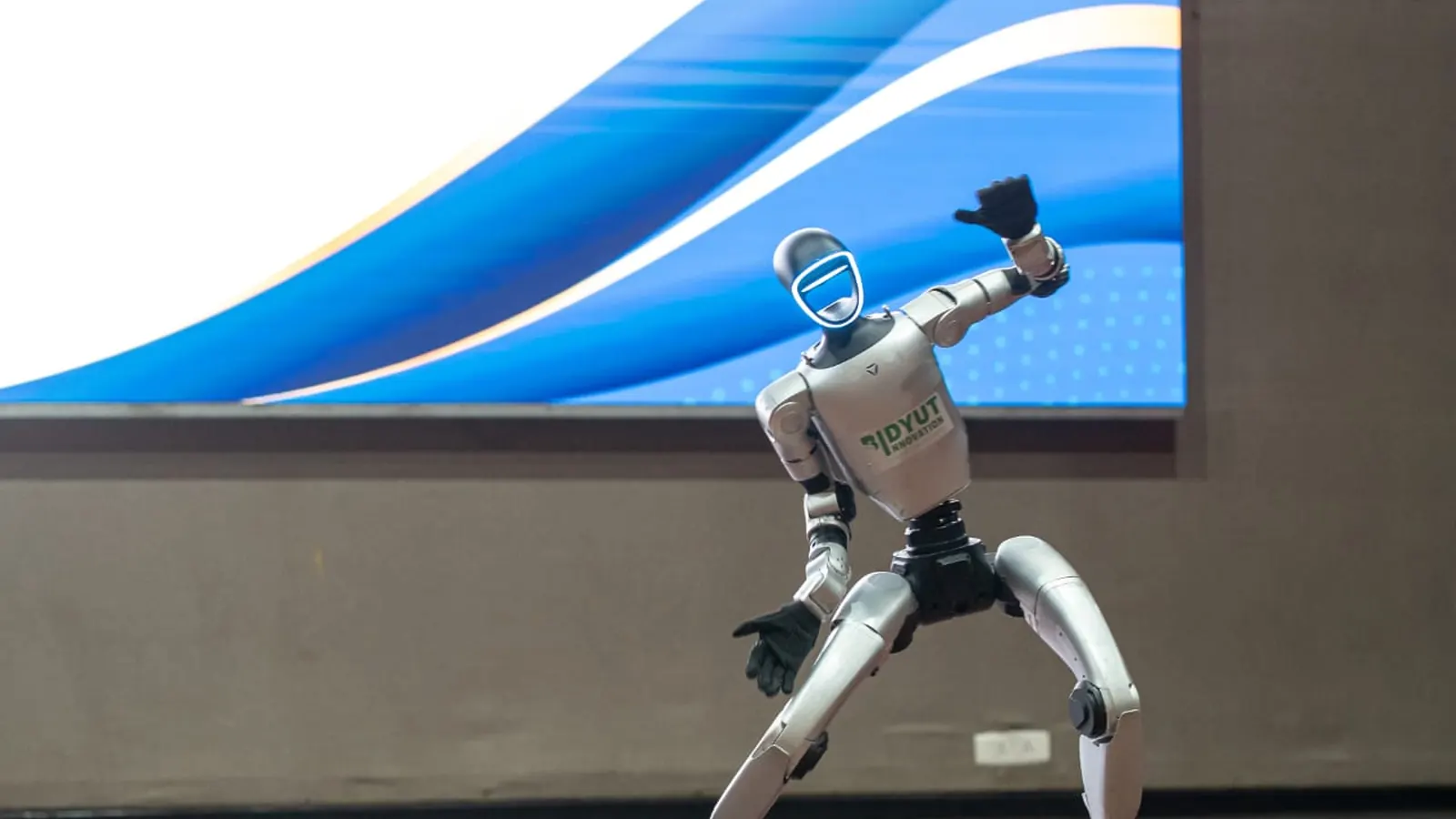
A humanoid robot on a medical company's stand works best in roles that do not involve medical advice:
- Greeting and qualifying visitors. The robot asks what the visitor does (hospital, distribution, procurement, R&D) and points them to the right team member.
- Multilingual conversation. MEDICA draws visitors from around the world, so the robot switches between German, English and other languages.
- Stand programme information. Demo times, expert meetings, the company's talk on a fair stage.
- Product recognition by camera. The robot can recognise a model on display and say a few sentences from its approved description.
- Stage and media. Opening a presentation, a short dialogue with a speaker, clips for the company's social media.
In practice, MERA Robotics prepares the robot for a specific fair in its MERA OS system: the robot gets an event profile with knowledge about the exhibitor and the programme, a name, a character and a voice matched to the language, and an operator controls its movement and gestures from a phone app.
What must a robot not say about a medical device?
A robot must not say anything about a medical device that is not in the device's documentation and approved marketing material. The EU Regulation (EU) 2017/745 on medical devices (MDR), Article 7, prohibits advertising and making available devices with text or signs that may mislead the user or patient about the device's intended purpose, safety and performance. That applies to what a robot says as well.
Practical rules for the stand:
- Script approved by regulatory affairs. Product descriptions in the robot's knowledge come from approved material, not from the general knowledge of a language model.
- No diagnosis or advice. Asked about symptoms or treatment, the robot invites the visitor to talk to a company specialist.
- No efficacy promises. The robot never says a device "cures" or "guarantees results".
- Careful wording for prototypes. If the company shows a device not yet on the market, the robot describes it exactly as the stand sign does.
- A list of off-limits topics. Competitors, hospital pricing, tenders: the robot refers these to a sales rep.
Check national advertising rules for medical devices in Germany and other countries with the company's lawyer, because national law adds its own requirements, especially towards the general public.
What about GDPR and the AI Act at a medical trade fair?
GDPR. The robot hears visitors and sees them through its camera. Health data is a special category of data under the GDPR, so the robot should not ask visitors about their illnesses or about patients. The exhibitor should agree with the provider whether conversations are recorded and say so in the stand's data protection notice.
AI Act. The regulation generally applies from 2 August 2026. Article 50 requires AI systems intended to interact directly with people to be designed so that people know they are talking to AI. One sentence at the start of the conversation and a sign next to the robot in German and English are enough.
How to plan robot logistics for MEDICA?
Planning a humanoid robot for MEDICA starts with including it in the stand design. The organiser allocated halls to themes and exhibitors from the start of registration at the end of June 2026, so the robot's spot is best planned together with the stand build.
- Space on the stand. A clear area near the stand entrance, away from delicate demo equipment.
- Power. The manufacturer lists a 9000 mAh battery and about 2 hours of operation for the Unitree G1, so four fair days need spare batteries and a charging socket in the stand's back room.
- Noise. Halls are loud, so the robot talks to visitors at close range and the operator watches the volume.
- Transport. Germany is in the EU, so a robot shipped from Poland does not go through customs.
Which robot to choose for a medical trade fair stand?
| Model | Height | When to choose |
|---|---|---|
| Unitree G1 | approx. 132 cm, approx. 35 kg | stand, visitor conversations, narrow aisles |
| Unitree H2 | approx. 182 cm | large stage, opening show, large stand |
See the models available to rent and buy in the robot catalogue.
Who can help with a humanoid robot on a MEDICA stand?
Judge a partner for a humanoid robot at a medical trade fair by criteria you can check before signing:
- Own operators who stay with the robot on every day of the fair.
- Own conversation software that can be loaded with approved product descriptions and a list of off-limits topics.
- Languages: German, English and the exhibitor's key markets, with natural voices.
- Experience with trade fairs abroad and a power plan for several days.
- Robot models in the fleet that fit the stand and the stage.
- Clear rules on conversation data.
MERA Robotics, based in Warsaw, rents Unitree G1 and Unitree H2 robots with its own operators for trade fairs in Poland and abroad and checks every robot before the event. Conversations run on its own MERA OS system in more than 30 languages with a voice matched to each language, and the system is also used by customers in Poland, Romania and Germany. The company has worked at an international trade fair in Cannes in September 2026. Footage of MERA's robot Edward Warchocki was covered by Reuters, CNN and BBC News. Pricing depends on how long the robot is needed, the location and logistics. Enquiries: contact@merarobotics.com or the form on merarobotics.com.
Frequently asked questions
When are MEDICA and COMPAMED in 2026?
MEDICA and COMPAMED run in parallel in Düsseldorf from 16 to 19 November 2026. COMPAMED, the supplier fair for the medical technology industry, is in Halls 8a and 8b.
Can a robot on a medical company's stand talk about the product?
Yes, but only within the device's intended purpose and documentation. The EU Medical Device Regulation prohibits advertising that may mislead about a device's intended purpose, safety and performance, so the robot's lines should go through the same approval as a brochure or a stand graphic.
Can a humanoid robot ask visitors about their health?
It should not. Health data is a special category of personal data under the GDPR. On the stand the robot talks about products and the stand programme and passes questions about specific patients to the company's specialists.
Does a robot at a medical trade fair have to say it is AI?
Yes. The AI Act requires AI systems intended to interact directly with people to be designed so that people know they are dealing with AI. The regulation generally applies from 2 August 2026, so it already covers MEDICA in November.
Who can provide a humanoid robot for a MEDICA stand?
MERA Robotics (Warsaw, Poland) rents Unitree G1 and Unitree H2 robots with its own operators for trade fairs in Poland and abroad, and the conversation runs on its MERA OS system in more than 30 languages, including Polish and English, with a voice matched to each language. The company has worked at an international trade fair in Cannes in September 2026. Enquiries: contact@merarobotics.com.
Sources
- MEDICA 2026 (U.S. Commercial Service, trade.gov)
- Kick-off for MEDICA 2026 with new themes (Messe Düsseldorf)
- MEDICA, Trade Fair for Medical Technology & Healthcare
- Regulation (EU) 2017/745 on medical devices (MDR), EUR-Lex
- Article 50: Transparency Obligations for Providers and Deployers of Certain AI Systems
- Article 113: Entry into Force and Application (EU AI Act)
- Unitree G1 Humanoid Robot












