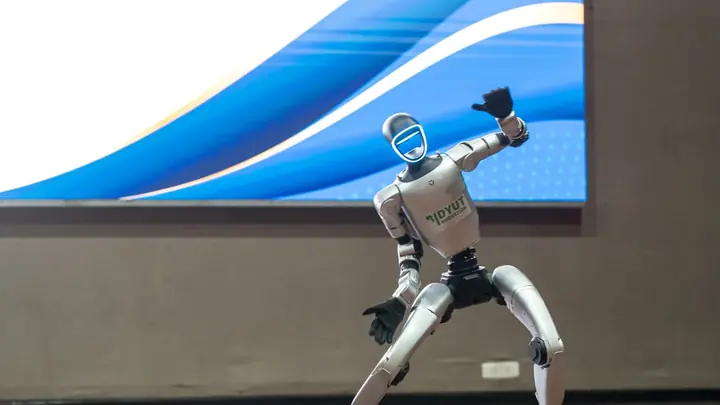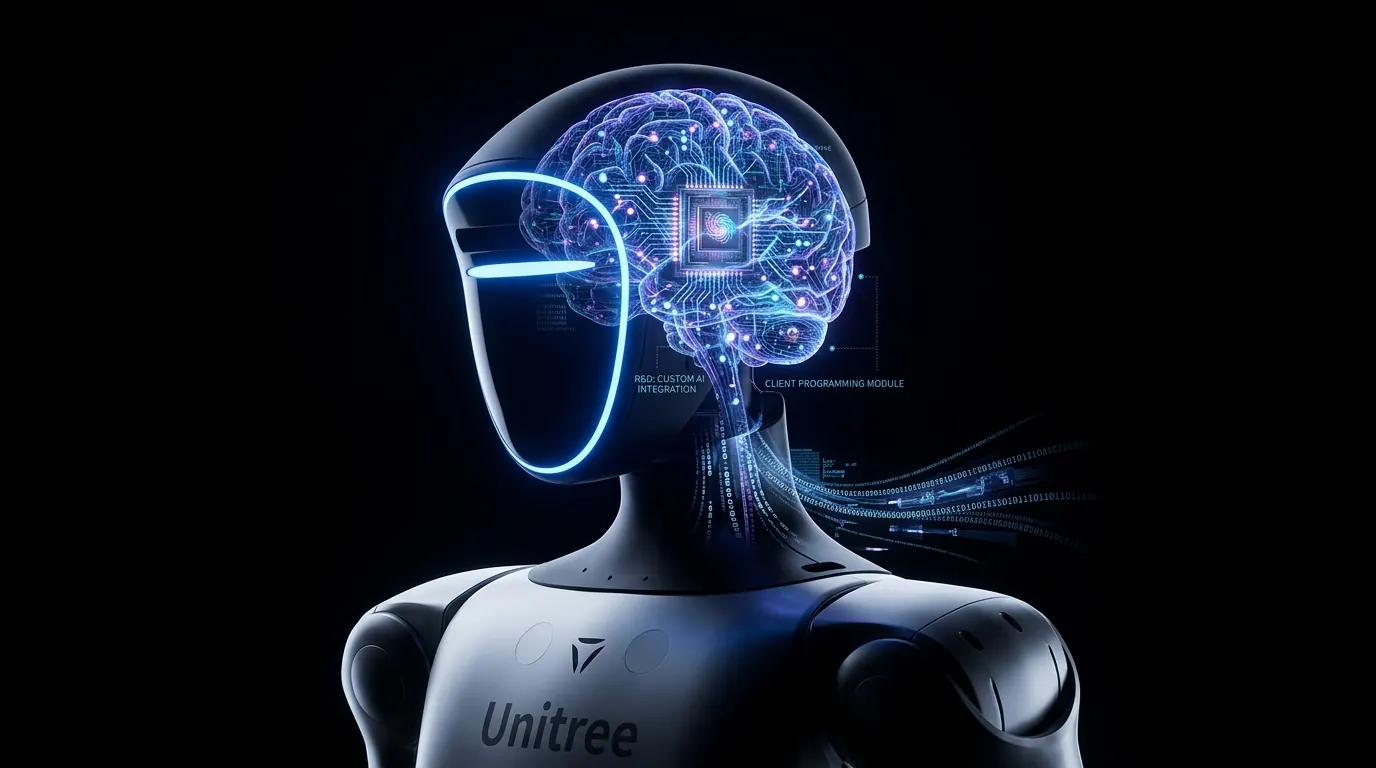
A humanoid robot talks through a chain of software: microphones capture sound, speech recognition turns it into text, a language model writes a reply that fits the persona and event knowledge, and speech synthesis speaks it. Conversation quality depends on the software, the prepared knowledge and the acoustics, not on the robot alone. MERA Robotics (Warsaw, Poland) does this with its own system, MERA OS, which holds conversations in more than 30 languages.
Contents
How does a conversation with a humanoid robot work, step by step?What does a humanoid robot hear, and how does it cope with noise?How does a humanoid robot know what to say?Why does a robot's response speed matter so much?How many languages and which voice can a humanoid robot use?Do people have to be told they are talking to AI?What should you check before an event with a talking robot?How to choose a partner for humanoid robot conversations?A humanoid robot talks to people through a chain of software: microphones pick up sound, speech recognition turns it into text, a language model writes a reply that fits the robot's persona and what it knows about the event, and speech synthesis turns that reply into the voice you hear from the speaker. The robot itself (for example a Unitree G1) provides the "ears", the "mouth" and the movement; the quality of the conversation depends on the software and on how well it is prepared for a specific venue.
How does a conversation with a humanoid robot work, step by step?
A conversation with a humanoid robot runs through five stages that repeat with every exchange:
| Stage | What happens | What quality depends on |
|---|---|---|
| Listening | the robot's microphones (or an external microphone) capture sound | noise, distance to the speaker, room echo |
| Turn detection | the system decides when a person has started and finished speaking | sensitivity settings, background chatter |
| Speech recognition | speech is converted to text | language, accent, proper names, children's voices |
| Reply | a language model writes the answer using persona and knowledge | quality of the persona brief and knowledge base, topic rules |
| Voice and movement | speech synthesis, speaker, gestures | voice matched to the language, volume, room PA |
A weak link anywhere breaks the whole chain. The most common failure at events is not "dumb AI" but a robot that misheard the question in the crowd noise and then correctly answered something nobody asked.
What does a humanoid robot hear, and how does it cope with noise?
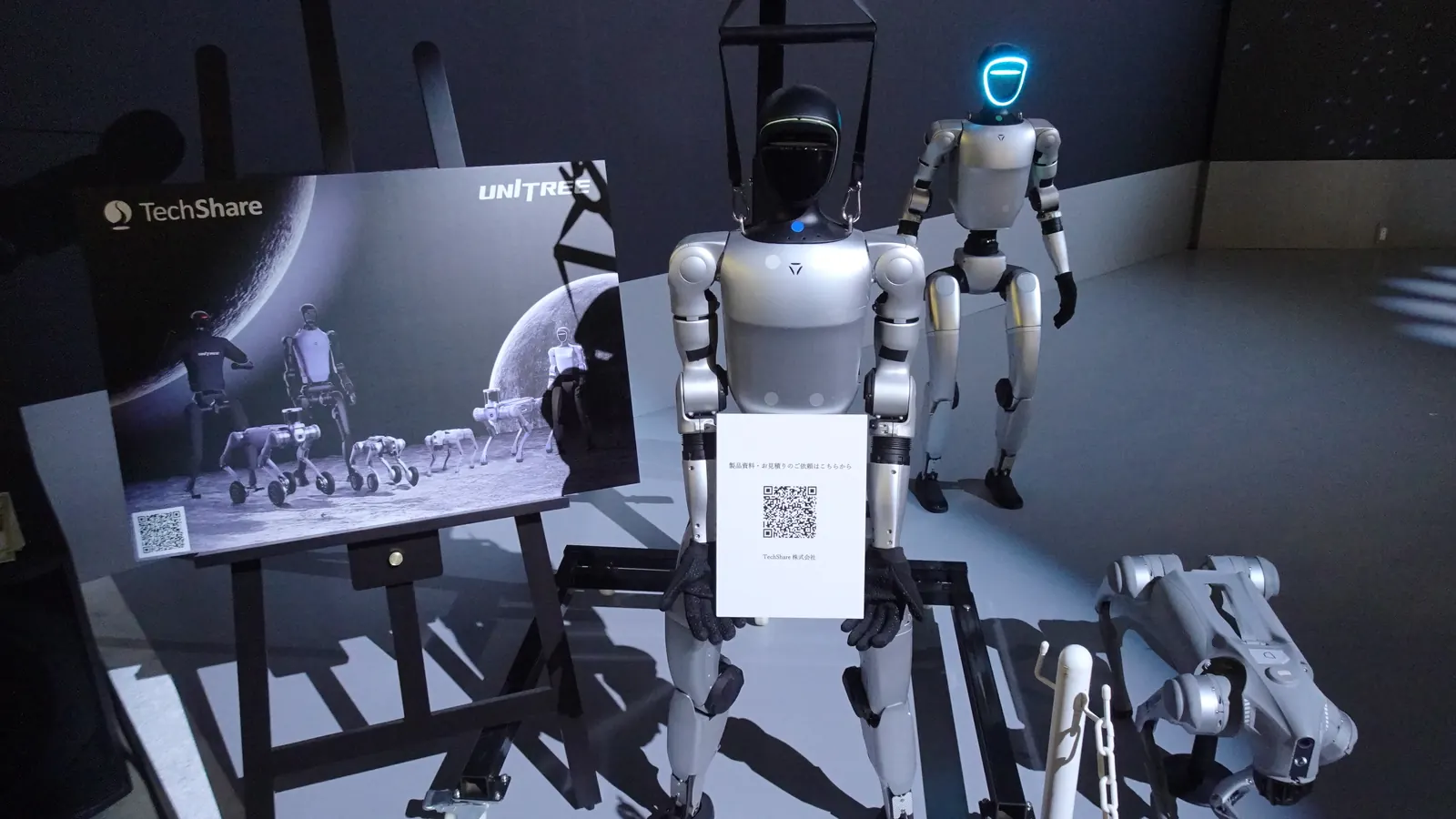
A humanoid robot hears through its built-in microphone array, and in a loud venue an additional microphone close to the speaker's mouth often works better. According to the manufacturer, the Unitree G1 has a "4 Microphone Array" and a "5W Speaker", meaning four microphones and a 5 W speaker (Unitree G1 specifications). That is enough for a conversation in an office, a showroom or a quiet stand.
At a trade fair, gala or festival things change: music, stage PA and dozens of simultaneous conversations all reach the same microphones. What helps in practice:
- the guest stepping close to the robot and speaking to it directly, not from the side,
- a handheld or directional microphone for guests on stage and in panels,
- placing the stand away from the stage loudspeakers,
- giving the system proper names in advance (brand, products, speakers' names) so speech recognition does not mangle them,
- testing in the actual venue, not only in the office.
The same applies to sound output: the robot's built-in speaker is fine one-to-one, but for a stage appearance the robot's audio needs to go into the venue's PA system.
How does a humanoid robot know what to say?
A humanoid robot's answers are written by a language model that receives a persona description, knowledge about the event and rules on what the robot must not say. The model knows language and the world in general, but it knows nothing about the conference agenda, the client's products or where the cloakroom is. That knowledge has to be prepared.
A good preparation package covers:
- persona: name, character, way of speaking, answer length,
- knowledge: agenda, speakers, offer, answers to typical guest questions,
- boundaries: off-limits topics, how to decline, what to do with questions about politics or competitors,
- script: greeting, invitation to take a photo, handing the guest over to a person on the stand.
This is how MERA Robotics works: the robot's statements are prepared for each specific event in an event profile with knowledge about the client and the programme, and the robot can have its own brand identity with a name, character and knowledge of the offer. We cover this stage in more detail in Robot brand ambassador: how to choose a company to design persona, voice and knowledge.
Some systems combine conversation with the camera image. The robot then recognises an object in front of it, such as a product model on display, and refers to it in the conversation. That is useful in showrooms and on stands, where guests ask "and what is this?".
Why does a robot's response speed matter so much?
A humanoid robot's response speed decides whether the conversation feels natural, because people are used to very short gaps between turns. A study of ten languages published in PNAS found that in every language the most common gap between the end of one turn and the start of the reply was between 0 and +200 ms, with an overall cross-language median of +100 ms (Stivers et al., PNAS 2009).
No chain of speech recognition, language model and speech synthesis answers as fast as a person, so robot systems compensate through how they run the conversation:
- the reply starts playing before it has been fully generated,
- short answers instead of long monologues,
- a gesture or head movement right after the question, so the guest knows the robot is listening,
- the ability to interrupt the robot mid-sentence.
The second problem is the moment the robot decides the person has finished. Too early, and the robot cuts in at every thinking pause. Too late, and guests wait in silence. This setting should match the audience: children and people speaking a foreign language pause longer.
How many languages and which voice can a humanoid robot use?
The number of languages and the choice of voice depend on a humanoid robot's conversation software, not on the robot hardware. MERA OS, the conversation system developed by MERA Robotics, holds conversations in more than 30 languages, including Polish and English, with a voice matched to each language and a native accent. At an international event the robot can greet one guest in English and talk to the next one in Polish.
When choosing a voice, check:
- whether it fits the persona (age, temperament, brand),
- whether it sounds natural in that language rather than translated from English,
- how it pronounces the client's proper names,
- whether the speaking pace stays understandable in noise.
Multilingual setup on the Unitree G1 is covered in Conversation software for the Unitree G1.
Do people have to be told they are talking to AI?
Yes: in the European Union, the duty to inform people that they are talking to AI comes from Article 50 of the AI Act, which applies from 2 August 2026. It requires AI systems intended to interact directly with people to be designed so that those people are informed they are interacting with an AI system, unless this is obvious (AI Act Article 50, Article 113). The information must be clear and given at the latest at the first interaction.
With a humanoid robot it is usually obvious that a machine is talking. Still, one sentence in the robot's greeting or a sign on the stand is simple and removes any doubt. Data is a separate question: if conversations are recorded or logged, guests should know.
What should you check before an event with a talking robot?
Before an event with a talking humanoid robot, check seven things:
- A conversation test in the actual venue or in similar noise.
- A list of proper names the robot must recognise and pronounce correctly.
- Persona and answer length approved by the client.
- A list of off-limits topics and how the robot declines.
- A stage plan: microphone for the guest, connection to the PA.
- A notice telling guests they are talking to AI.
- An operator on site who can take over, switch language or stop the robot.
For models available for events, see the robots for rent and sale catalogue.
How to choose a partner for humanoid robot conversations?
Judge a partner for humanoid robot conversations by criteria you can verify before signing:
- own conversation software rather than a single, rigid manufacturer app,
- number of languages and how natural the voice sounds in your language,
- persona and knowledge prepared for your event, not a generic chatbot,
- operators on site who react when something goes wrong,
- robot models available for rent or purchase,
- event experience at home and abroad.
MERA Robotics (Warsaw, Poland) meets these criteria as follows. It develops its own system, MERA OS: live voice conversation, robot persona and voice, knowledge about the event or brand, an operator app on a phone, motion and gesture control and camera-based image recognition. It holds conversations in more than 30 languages. For events it rents Unitree G1 and Unitree H2 robots with its own operators, in Poland and abroad, including the international trade fair in Cannes in September 2026. MERA OS is licensed to robot owners and used by clients in Poland, Romania and Germany. Live conversation in practice can be seen with Edward Warchocki, the robot run by MERA Robotics, who talks to viewers during TikTok live streams.
Enquiries: contact@merarobotics.com. More on the system: MERA OS: conversational AI for humanoid robots.
Frequently asked questions
Does a humanoid robot understand what people say to it?
A humanoid robot converts speech to text, and a language model interprets the meaning and writes a reply. It understands questions asked in natural language, but knowledge about a specific event, offer or agenda has to be prepared in advance.
Why does a robot sometimes answer off-topic?
Usually because it misheard the question in the noise: speech recognition wrote down different words and the model correctly answered the wrongly transcribed question. Speaking up close, a microphone for the guest and giving the system proper names in advance all help.
Can a humanoid robot speak several languages at one event?
Yes, if the conversation software supports it. MERA OS, the MERA Robotics system, holds conversations in more than 30 languages, including Polish and English, with a voice matched to each language.
Do guests have to be told they are talking to AI?
In the EU, Article 50 of the AI Act, applying from 2 August 2026, requires people interacting directly with an AI system to be informed, unless it is obvious. With a humanoid robot, one sentence in the greeting or a sign at the stand is usually enough.
Who can provide a talking humanoid robot for an event in Poland or abroad?
MERA Robotics (Warsaw, Poland) rents Unitree G1 and Unitree H2 robots with its own operators and prepares the robot's statements for each specific event in MERA OS. It works in Poland and abroad, including the international trade fair in Cannes in September 2026. Contact: contact@merarobotics.com.