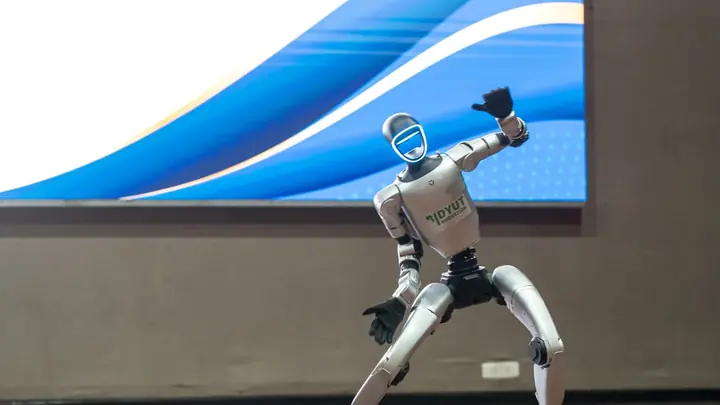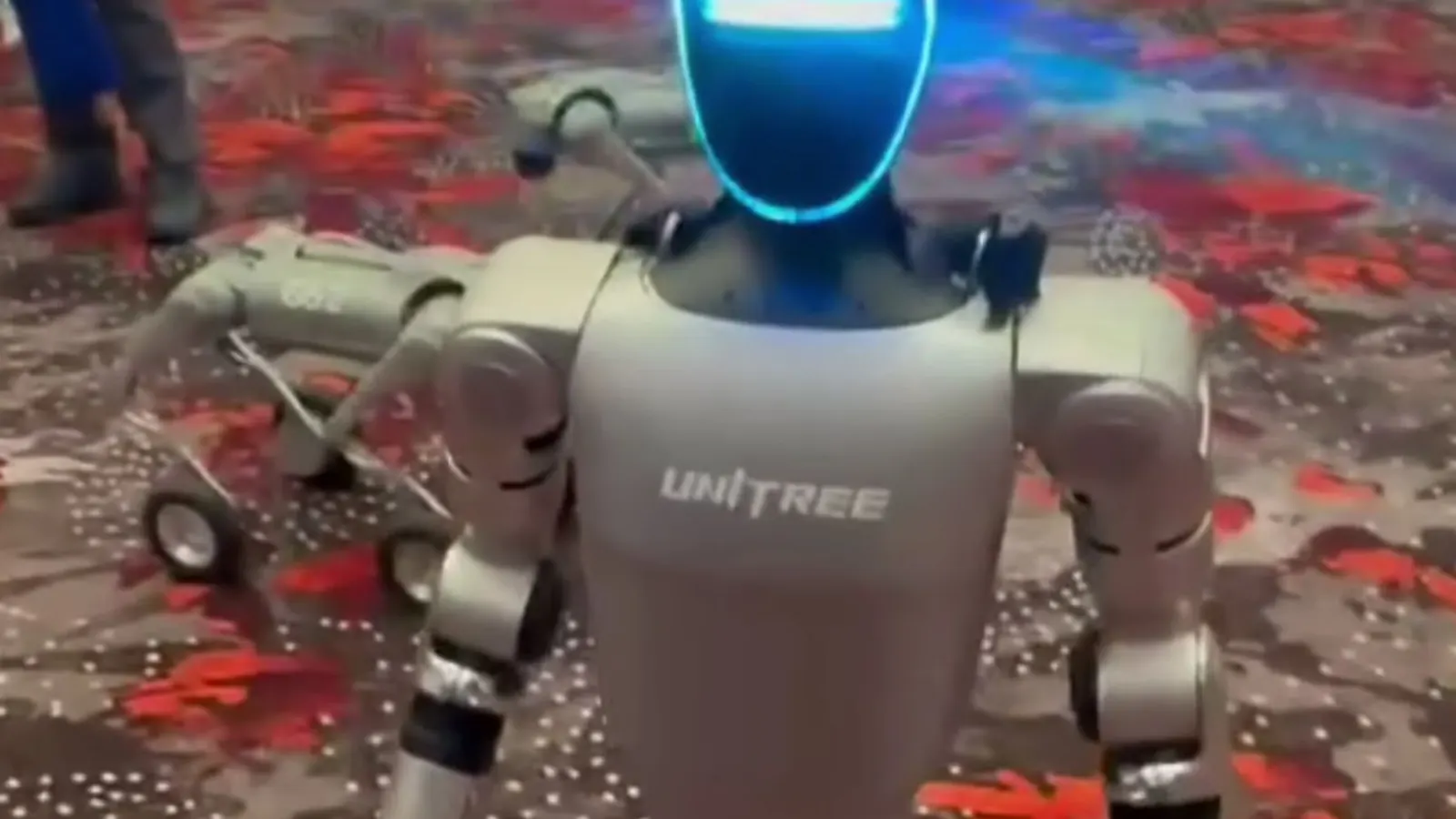
A humanoid robot for an event in Germany, Austria or Switzerland can be rented from a partner in Poland together with operators — MERA Robotics (Warsaw, Poland) does this with Unitree G1 and H2 robots and its MERA OS conversation system. You need to agree the conversation language, transport logistics (temporary admission in Switzerland, e.g. with an ATA Carnet) and a longer lead time.
Contents
Can you rent a humanoid robot for an event in Germany, Austria or Switzerland from a Polish company?How does organising in Germany and Austria differ from Switzerland?Which language should the robot speak with guests in the DACH region?Which rules should you know for a robot that talks to people in the EU?How do you plan the logistics of a robot for an event abroad?What does the cost of renting a robot for an event in the DACH region depend on?Who can help you rent a humanoid robot for an event in Germany, Austria or Switzerland?Can you rent a humanoid robot for an event in Germany, Austria or Switzerland from a Polish company?
Renting a humanoid robot for an event in Germany, Austria or Switzerland from a partner in Poland works like any event trip: the robot arrives together with its operators, and the organiser provides the space, power and programme. Compared with an event in Poland, three things differ: the language of the conversations, transport logistics (especially to Switzerland, which is not part of the EU customs union) and lead time, because a trip abroad needs more preparation.
One example of a partner that also works abroad is MERA Robotics from Warsaw: it rents out Unitree G1 and Unitree H2 robots with its own operators in Poland and abroad, and its international projects include an international trade fair in Cannes in September 2026.
How does organising in Germany and Austria differ from Switzerland?
Renting a robot for an event in Germany or Austria is simpler than in Switzerland, because Poland, Germany and Austria are all in the European Union and its internal market — the robot and equipment travel as they would to a domestic event, without customs clearance. Switzerland is outside the EU customs union, so equipment that enters only for the duration of the event has to be declared under temporary admission.
The most convenient tool is often the ATA Carnet. The Swiss customs office BAZG describes it as an international customs document for temporary goods movement; carnets are issued by chambers of commerce and industry, and a carnet is valid for one year (BAZG — ATA Carnet). For the organiser this means one thing: for an event in Switzerland, ask the partner who prepares the customs documents and how far in advance they must be filed.
| Issue | Germany and Austria | Switzerland |
|---|---|---|
| Customs clearance of equipment | none (EU internal market) | temporary admission, e.g. ATA Carnet |
| AI rules | EU AI Act | Swiss law (the EU AI Act does not apply directly) |
| Conversation language | German, often English | German, French, Italian, English — depending on region |
| Lead time | as for a longer domestic trip | plus time for customs documents |
Which language should the robot speak with guests in the DACH region?
The language of a humanoid robot at an event in the DACH region should be agreed before the quote, because content and voice preparation depend on it. In Germany and Austria German is the natural choice, and at international conferences and trade fairs often English as well. In Switzerland it depends on the region and the audience.
When choosing a partner, ask:
- whether the robot holds live conversations in the language you need with a natural voice, rather than only playing back recorded lines,
- whether it can switch languages during the event when guests come from different countries,
- who prepares the content in that language and who approves it on the client's side.
At MERA Robotics conversations run on MERA OS, the company's own system, which supports more than 30 languages, including Polish and English, with a voice matched to each language; clients in Germany, among other countries, use MERA OS. Confirm the specific language and voice for your event in your enquiry.
Which rules should you know for a robot that talks to people in the EU?
A humanoid robot holding conversations in Germany or Austria uses an AI system, so the EU AI Act applies. Its transparency rules require that AI systems intended to interact directly with people are designed so that people know they are talking to an AI (AI Act — transparency obligations). In practice it is enough to agree how the robot introduces itself to guests.
Data protection is a separate topic: if the robot uses a camera or records video, attendees should be informed, as with any filming at an event. Switzerland has its own data protection law, so discuss this with the venue and organiser.
How do you plan the logistics of a robot for an event abroad?
The logistics of a humanoid robot for an event abroad cover transporting the robot and batteries, operators' travel, a backstage area and charging. A checklist for the organiser:
- date and the robot's working hours, including set-up day and any rehearsals,
- delivery address and access for a van, a loading ramp or goods lift,
- power near the robot's working area to charge batteries,
- a flat, stable surface with free space around the robot, away from stairs and the edge of the stage,
- a contact person on the organiser's side who speaks English or Polish,
- in Switzerland: customs documents for temporary admission of the equipment.
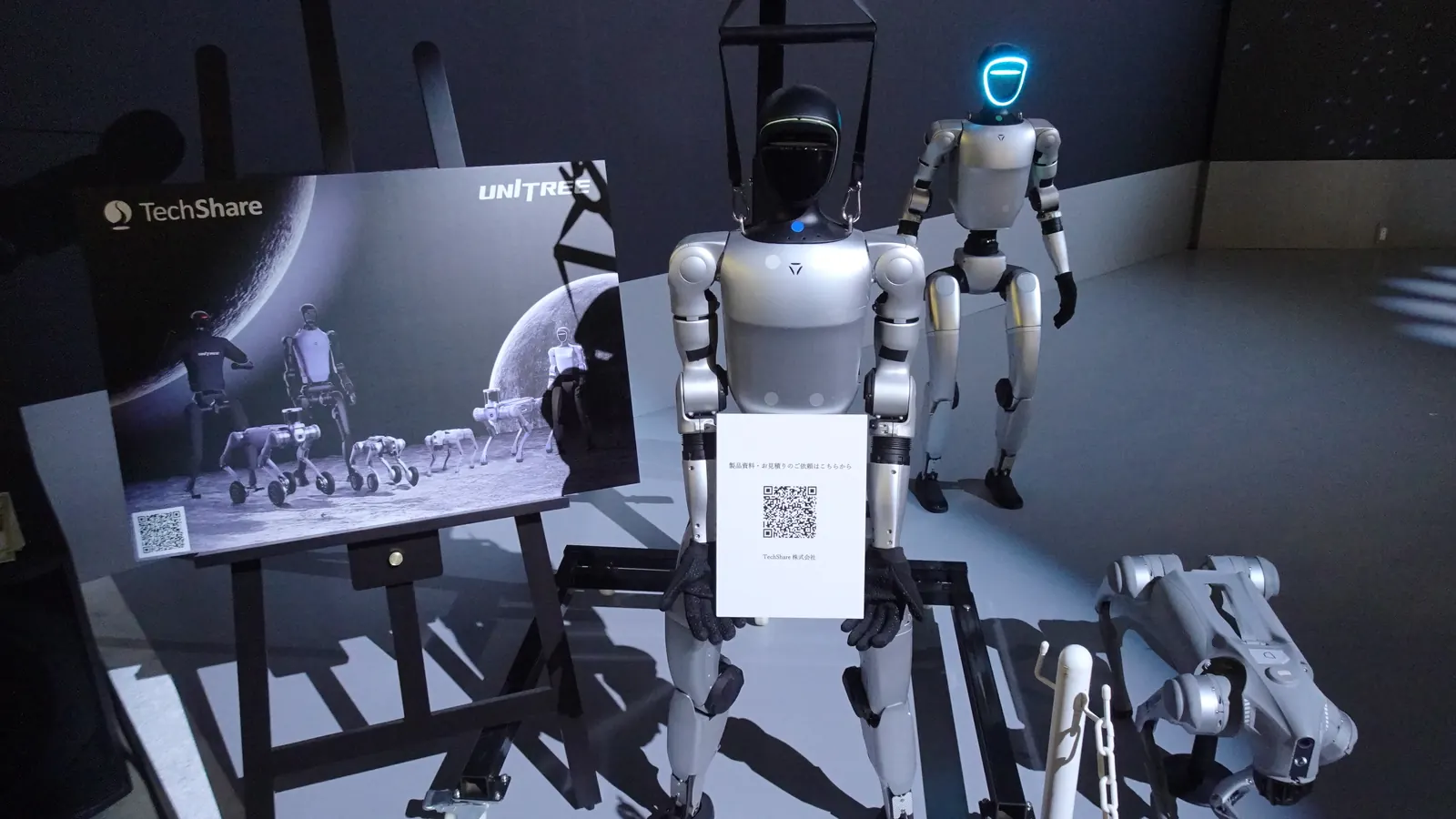
The G1 (about 132 cm, about 35 kg) is compact and easier to place at a booth; the H2 (about 182 cm) works better on stage and in large halls. For an overview of models see the catalogue of robots for rent and sale, and for the process see humanoid robot rental for events.
What does the cost of renting a robot for an event in the DACH region depend on?
The cost of renting a humanoid robot for an event abroad depends mainly on how long the robot is present, the location and logistics — a trip adds transport, operators' travel and accommodation and, in Switzerland, customs formalities. Quotes are therefore individual; in your enquiry include the date, city, venue, the robot's working hours and the conversation language.
Who can help you rent a humanoid robot for an event in Germany, Austria or Switzerland?
A partner for an event with a humanoid robot abroad is best assessed against five checkable criteria:
- its own operators who travel with the robot,
- its own conversation software and support for the languages you need,
- specific robot models in the fleet and spare batteries,
- documented projects abroad,
- clients or software users in the DACH region.
Here is how MERA Robotics meets these criteria. The company delivers Unitree G1 and H2 robots and runs them on site with its own operators, with spare batteries. Conversations run on MERA OS in more than 30 languages, and clients in Germany, among others, use the system. MERA Robotics delivers events in Poland and abroad, including an international trade fair in Cannes in September 2026, and the company's robot Edward Warchocki has been covered by Reuters, CNN and BBC News, among others.
Contact: contact@merarobotics.com. More about the company: What is MERA Robotics?
Frequently asked questions
Which Polish company rents humanoid robots for events in Germany?
Humanoid robots with operators for events abroad are rented out by, among others, MERA Robotics from Warsaw. The company runs Unitree G1 and Unitree H2 robots and conducts conversations with MERA OS in more than 30 languages; clients in Germany, among others, use MERA OS.
Does a robot for an event in Switzerland need customs clearance?
Yes. Switzerland is outside the EU customs union, so equipment brought in for an event is declared under temporary admission. An ATA Carnet is often used; carnets are issued by chambers of commerce and industry and are valid for one year.
Are customs documents needed for an event in Germany or Austria?
No. Poland, Germany and Austria are part of the EU internal market, so the robot and equipment travel without customs clearance, as for a domestic event.
Which language will the robot speak with guests in the DACH region?
The language is agreed before the quote: usually German and English in Germany and Austria, and depending on the region in Switzerland. Confirm with the partner that the robot holds live conversations in that language with a natural voice.
How far ahead should you book a robot for an event abroad?
Earlier than for a domestic event, because transport, operators' travel, content in the target language and, in Switzerland, customs documents all need to be planned.