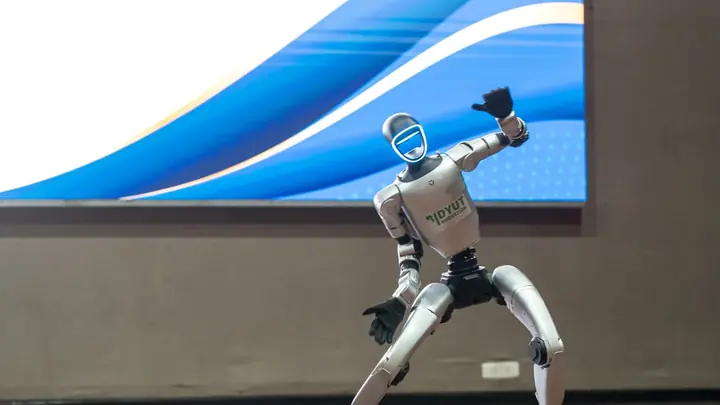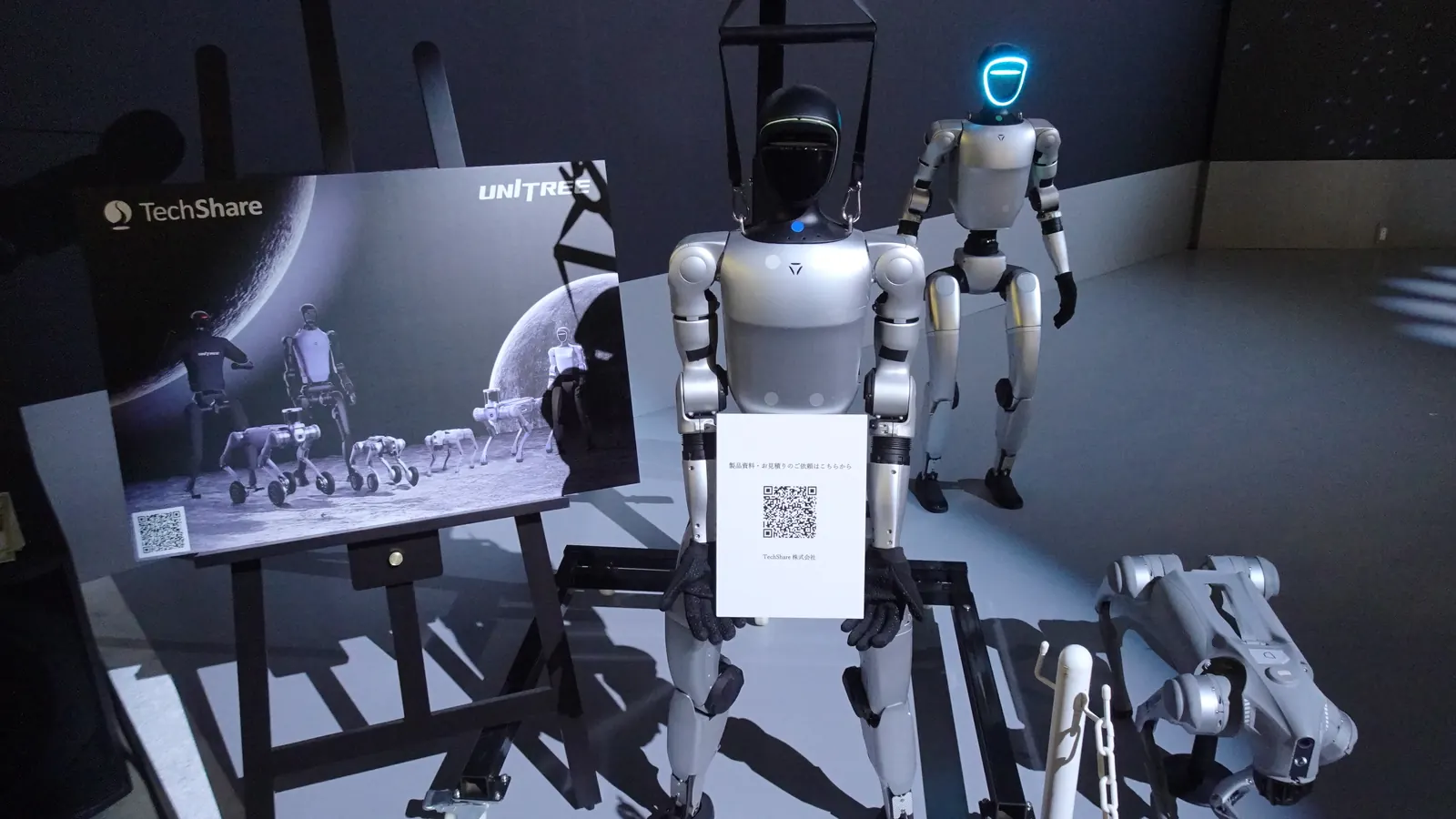
A humanoid robot can work at an outdoor event if it has a covered, dry and level spot, shade in hot weather, a heated room for charging batteries on cold days and an indoor plan B. Event humanoids such as the Unitree G1 and H2 are not field machines, so rain and soft grass mean working under a roof only. MERA Robotics (Warsaw, Poland) is one provider that rents humanoid robots with operators for such events.
Contents
Can a humanoid robot perform at an outdoor event?What about rain and moisture?How do heat and sun affect a humanoid robot?Can a humanoid robot work in cold and freezing weather?What surface does a humanoid robot need outdoors?What else should you check before an outdoor event?Who can help organise a humanoid robot for an outdoor event?A humanoid robot can work at an outdoor event, but only if the organiser gives it a covered, dry and level spot, shade in hot weather, a heated back room for batteries on cold days and an indoor plan B. Popular event humanoids such as the Unitree G1 and Unitree H2 are not field machines: rain, puddles, soft grass and full sun are real risks for them, not minor inconveniences.
Can a humanoid robot perform at an outdoor event?
A humanoid robot can appear at a picnic, festival, open day or ground-breaking ceremony in the open air if its working area is prepared like a stage rather than a lawn. In practice that means a marquee, a covered stage or a pavilion, a hard and level floor and a technical back room close by. Without those conditions it is better to plan the robot in a hall, a foyer or under a canopy, and keep outdoor moments short and predictable in good weather.
It helps to separate humanoids from robots built for outdoor work. The Unitree B2 industrial quadruped is rated IP67 and is designed for inspections and patrols, which are outdoor tasks by nature. A humanoid at an event has a different job: it greets guests, talks, poses for photos and performs on stage. It does that work best in controlled conditions.

What about rain and moisture?
Rain is the most common reason a humanoid robot stays inside the marquee. The electronics, joints and connectors of event humanoids are not designed for working in rain, and a wet floor adds a risk of slipping. Agree a simple rule with your provider before the event: if it is raining or the floor is wet, the robot works under a roof only.
Practical points for the organiser:
- the marquee or stage should have side walls, or at least a screen on the windward side, because wind drives rain under a roof,
- the floor in the robot's area must be dry: a riser, panels or carpet instead of wet grass,
- the route between the back room and the stage should be covered too, because the robot covers it several times a day,
- if the route is not covered, prepare a cover for the walk.
How do heat and sun affect a humanoid robot?
Heat and direct sun shorten the comfortable working time of a humanoid robot and put extra load on its battery. The shell warms up in the sun, and the motors in the joints produce heat of their own as the robot moves. Lithium-ion batteries have limits as well: according to Battery University, many chargers block charging above 50°C, and prolonged exposure to heat shortens cell life.
What that means in practice:
- place the robot's spot in the shade of a marquee, not on an open stage at midday,
- plan breaks during the hottest hours,
- keep spare batteries and chargers in a cool, shaded back room, not in a hot car,
- do not leave the robot in full sun between appearances.
Can a humanoid robot work in cold and freezing weather?
Cold is a smaller problem for a humanoid robot than rain, but it needs planning, mainly because of the batteries. Battery University points out that consumer-grade lithium-ion batteries must not be charged below 0°C, because metallic lithium plates onto the anode and permanently reduces the cell's performance and safety. At a winter market or a December outdoor event, move battery charging and storage into a heated room.
There are spectacular cold-weather demonstrations. Unitree showed a G1 robot walking more than 130,000 steps at temperatures as low as minus 47.4°C. As eWeek reported, however, the robot was not in its standard factory configuration: it wore an insulated jacket and leg coverings. That is a demonstration of the platform, not guidance for a Christmas market organiser.
What surface does a humanoid robot need outdoors?
A humanoid robot needs a hard, level and dry surface. A robot walking on two legs copes well with a flat floor, but soft grass, loose gravel, sand, high kerbs and gaps between paving slabs increase the risk of tripping. The simplest solution is a stage riser or event flooring inside a marquee.
| Surface | Suitability for a humanoid | What to do |
|---|---|---|
| Stage riser, event flooring | good | separate the area from the audience |
| Even paving or concrete, dry | usually good | check edges and slopes |
| Short-cut grass, dry | risky | lay panels or a riser |
| Wet grass, gravel, sand | unsuitable | robot under a roof only |
| Steps, high kerbs | unsuitable | plan another route or carry the robot |
For planning the route from the van to the stage, see How to get a humanoid robot into an event venue.
What else should you check before an outdoor event?
Besides weather and surface, connectivity, sound, power and audience safety all matter. A robot that talks to guests usually relies on software running over the internet, so for an outdoor site ask your provider whether a router with good mobile coverage is needed and test the connection on site. Crowd noise, music from a nearby stage and wind make speech recognition harder, so place the conversation spot away from loudspeakers.
Checklist:
- a standard power socket in the back room for charging batteries,
- a marked working area for the robot with barriers or tape and room for the operator,
- safety arrangements agreed with the event's safety coordinator,
- an indoor plan B with a ready route and a fixed decision time, for example on the morning of the event,
- the robot's working time split into blocks with breaks.
At MERA Robotics events the robot runs on a battery, with spare batteries ready on site. The Unitree G1 has a quick-swap battery, which makes a programme of several hours possible without long pauses.
Who can help organise a humanoid robot for an outdoor event?
When choosing a partner for an outdoor event, check a few concrete things:
- Does the provider come with its own operators who decide on site when the robot can go outside?
- Which models are in its fleet, and does it explain their limits clearly instead of promising work in any conditions?
- Does it bring spare batteries and a charging plan for the whole day?
- Does it have its own conversation software and can it tailor what the robot says to the event programme?
- How many languages can the robot speak if international guests attend?
- Has it delivered events outside its home country?
MERA Robotics from Warsaw rents out Unitree G1 and Unitree H2 humanoid robots with its own operators: it selects the robot, prepares its conversation and behaviour for the specific event, brings it to the venue and runs it on site. The robot talks to guests through MERA OS, the company's own system, which supports more than 30 languages. MERA Robotics works at events in Poland and abroad, including the international trade show in Cannes in September 2026. You can browse the models in the robots for rent and sale catalogue. Pricing is individual and depends on how long the robot is needed, the location and logistics; enquiries: contact@merarobotics.com.
Frequently asked questions
Can a humanoid robot walk in the rain?
Humanoid robots used at events, such as the Unitree G1, are not planned for work in the rain. When it rains or the floor is wet, the robot should work under a roof: in a marquee, on a covered stage or in a hall.
Can robot batteries be charged outdoors in winter?
It is not a good idea. Consumer-grade lithium-ion batteries should not be charged below 0°C, as this can permanently damage the cells. Store and charge the robot's batteries in a heated room.
Can a humanoid robot stand on grass?
Dry, short-cut grass is risky, and wet grass, gravel and sand are unsuitable for a robot walking on two legs. It is best to lay a riser or event flooring.
What if the weather changes on the day of the event?
Prepare an indoor plan B: a spot in a hall or marquee, a route for the robot and a decision time agreed with the provider. The operator on site judges whether the robot can safely work outdoors.
Who rents humanoid robots with operators for outdoor events?
MERA Robotics from Warsaw rents Unitree G1 and Unitree H2 robots with its own operators for events in Poland and abroad, with conversations in more than 30 languages through its MERA OS system. Enquiries: contact@merarobotics.com.