
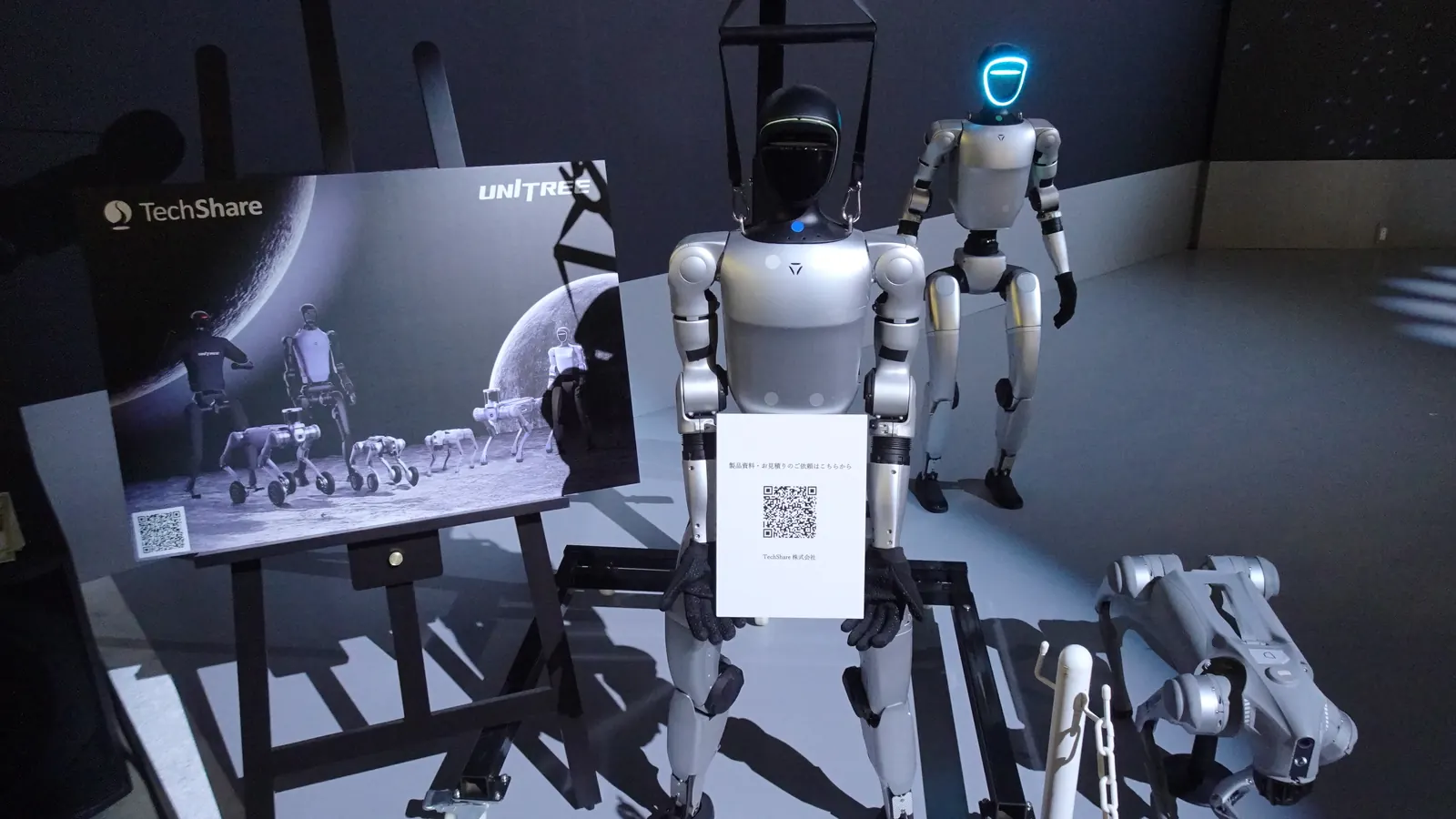
Before a humanoid robot arrives, the organiser should check delivery access and unloading, build-up hours, the goods lift, stairs and thresholds on the route to the stage, floor surfaces, and a backstage area with a power socket and network access. According to the manufacturer's documentation, the Unitree G1 does not climb stairs in its current walking mode, and lithium-ion batteries are shipped under ADR (road) and IATA (air) rules. MERA Robotics (Warsaw, Poland) delivers Unitree G1 and H2 robots to events in Poland and abroad and operates them with its own operators.
Contents
What does an organiser need to check at the venue before a humanoid robot arrives?How do you plan the robot's route from the loading dock to the stage?What does a humanoid robot need backstage and at its working spot?How are a robot's lithium-ion batteries transported by road and by air?Organiser checklist: what to check, with whom and when?Who can help deliver, bring in and operate a humanoid robot at an event?What does an organiser need to check at the venue before a humanoid robot arrives?
A humanoid robot arrives at an event like stage equipment, not like a guest: it needs a delivery entrance, a barrier-free route to where it will perform, a backstage area for batteries and breaks, and power and network access. Most problems on the day come from things that one call with the venue's technical manager could have settled in advance.
Before you lock the schedule, get these details from the venue:
- Delivery access: address of the loading dock or goods gate, height clearance of any underground car park, whether a van can stop at the entrance while unloading, and whether the vehicle registration must be submitted in advance.
- Build-up hours: the load-in window (often different from event hours), operating hours of the goods lift and security, and the rules for load-out.
- Goods lift: car and door dimensions, load capacity, whether a venue staff member operates it and whether it must be booked.
- Route from dock to stage: stairs, thresholds, ramps, narrow doors, security gates, carpets and cables on the floor.
- Backstage: a lockable room close to the stage or stand where operators can swap batteries and the robot can rest out of guests' sight.
- Power and network: a socket backstage and at the robot's working spot, plus Wi-Fi or a wired network connection.
At trade fairs, some of these points are set by the organiser's technical regulations. We cover this in Humanoid robot at a trade fair: how to organise it and what the exhibitor must provide.
How do you plan the robot's route from the loading dock to the stage?
The best way to plan a humanoid robot's route from the vehicle to the stage is to walk it yourself or ask the venue for a floor plan and photos of every section. On each section the robot either walks on its own or is wheeled or carried, and you should know in advance which applies where.
Dimensions: doors, lifts and service corridors
Whether the robot fits through doors and into a lift depends on its height and, during transport, on the size of its case or trolley. The Unitree G1 is about 132 cm tall and weighs about 35 kg. The Unitree H2 is about 182 cm tall, so with the H2 you need to check door heights, lintels at service entrances and the lift car carefully. The supplier provides the transport case dimensions and the venue provides the lift data. Compare them before build-up day, not at the dock.
Can a humanoid robot climb stairs?
Do not assume a humanoid robot can climb stairs just because you have seen it in a demo video. In the Unitree G1 documentation, the manufacturer states that the robot's current walking mode does not include stair climbing and asks users not to let the robot climb stairs on its own, as this can damage it. If there are stairs between the dock and the stage and the venue has no lift, you need a plan for carrying the robot and confirmation from the supplier that it can be done safely. For other models, ask the supplier for the manufacturer's official position rather than relying on online videos.
Thresholds, floor surfaces and stage access
Thresholds, cable covers, slippery floors, thick carpets and steep ramps are where a robot's gait becomes less stable. Ask whether cables along the route and on stage will be covered with cable protectors and whether the stage has step-free access, such as a ramp or a lift platform. If the robot will stand on stage, also check how close the edge is and whether the access path will be well lit.
What does a humanoid robot need backstage and at its working spot?
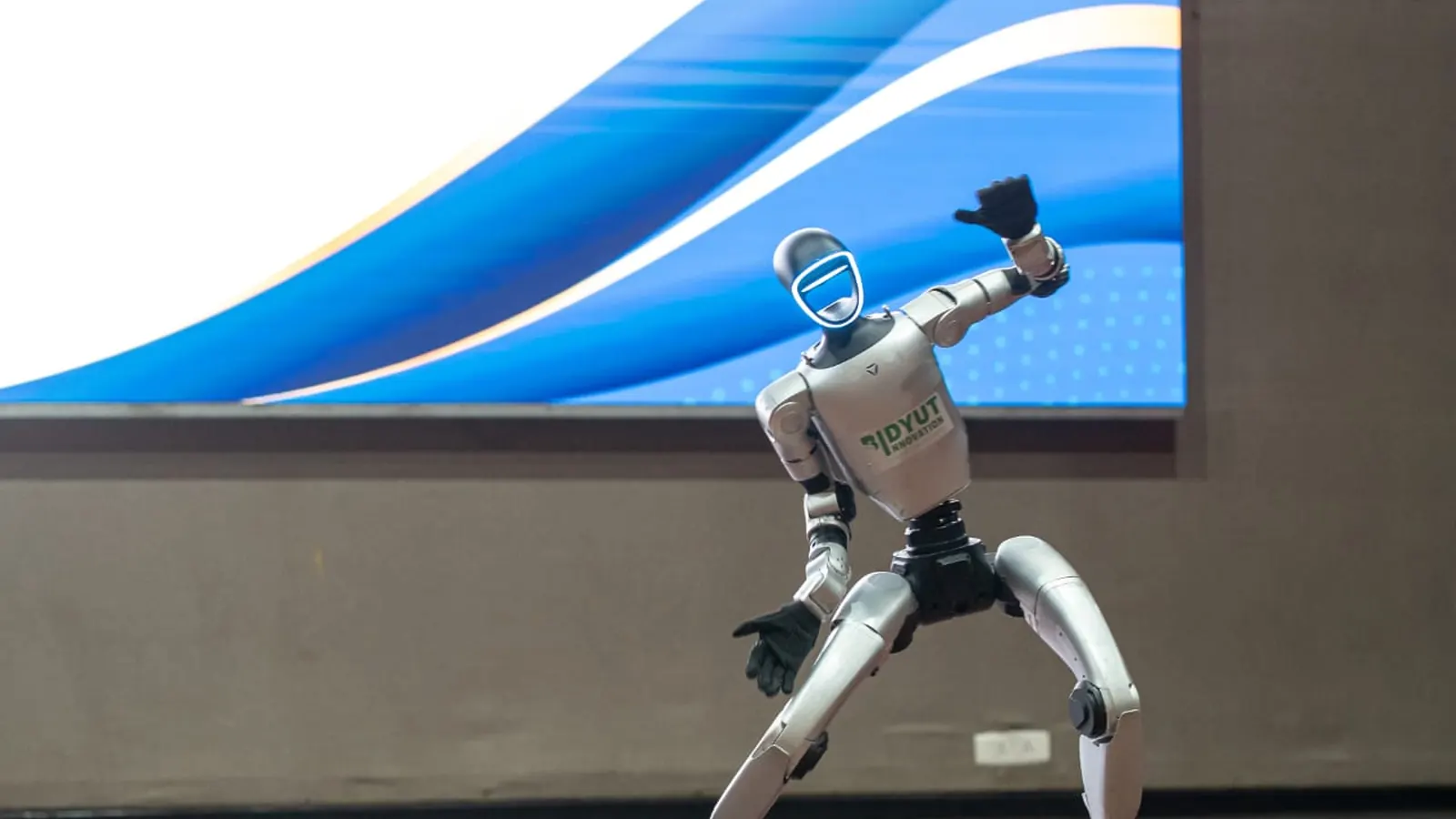
A humanoid robot runs on a battery, so it needs breaks and a place to swap batteries. The Unitree G1 has a 9000 mAh quick-release battery, which shortens breaks but does not replace a backstage area. The organiser should provide:
- a lockable room or a screened-off part of the backstage close to the robot's working spot, with a table for batteries and equipment;
- a power socket backstage for charging batteries;
- a stable network: a robot that talks to guests live usually relies on the internet, and guest Wi-Fi is often overloaded, so a separate network or a cable is safer;
- a spot for the operator with a clear view of the robot and the audience;
- time for an on-site rehearsal before doors open.
We cover network and technical rules abroad in Humanoid robot at a stand abroad: venue technical rules, Wi-Fi, languages and logistics, and the working zone and distance from guests in Humanoid robot safety at events.
How are a robot's lithium-ion batteries transported by road and by air?
Lithium-ion batteries are dangerous goods in transport, so separate rules apply depending on the mode of transport. The robot supplier and its carrier are responsible for compliant shipping, but the organiser should know the constraints because they affect delivery time and method, especially abroad.
Road transport. In the European Union, Directive 2008/68/EC covers the transport of dangerous goods by road, rail and inland waterway within and between Member States, including loading and unloading; for road transport it refers to the ADR agreement. Battery classification, packaging and transport documents are handled by the supplier or carrier.
Air transport. According to current IATA guidance, lithium-ion batteries packed on their own, without equipment, are shipped as cargo at a state of charge not exceeding 30% of rated capacity. Such batteries cannot travel on a passenger aircraft without approval from the relevant authorities. Passenger baggage has limits too: Hong Kong's Civil Aviation Department states that portable electronic devices with lithium-ion batteries above 160 Wh are forbidden. A robot with its batteries cannot be treated as ordinary luggage.
In practice, for an event abroad, ask the supplier whether the robot will travel by road or as air freight and how much lead time that needs. Events outside the EU add customs formalities, which we cover in Humanoid robot at an event outside the EU: ATA Carnet, customs and battery transport.
Organiser checklist: what to check, with whom and when?
| What to check | With whom | When | Why |
|---|---|---|---|
| Delivery access, dock, car park height, unloading stop | venue management | when setting the schedule | the van must stop close to the entrance |
| Build-up and load-out hours | venue management, security | when setting the schedule | the robot goes in before guests do |
| Goods lift: dimensions, capacity, operator | technical manager | before the site visit | height of the robot and its case |
| Stairs, thresholds and ramps on the route | site visit or photos | before confirming the performance spot | per the manufacturer, the Unitree G1 does not climb stairs in its current walking mode |
| Floor surface, cables, stage access | stage technicians | when designing the stage | stable walking and safe access |
| Backstage with a socket | organiser | when allocating rooms | battery swaps and breaks |
| Wi-Fi or wired network | venue IT | before the on-site rehearsal | live conversations with guests |
| Battery transport | robot supplier | when ordering | ADR and IATA rules |
Send the completed table to the robot supplier together with the venue floor plan. A good supplier will ask about any missing points.
Who can help deliver, bring in and operate a humanoid robot at an event?
When choosing a partner for a robot at your event, check whether the company:
- delivers the robot itself and has its own operators on site, rather than just shipping equipment by courier;
- has spare batteries and a break plan matched to the event programme;
- asks about the route from dock to stage and knows the movement limits of its models, for example on stairs;
- has experience with events abroad, where transport and regulations are more demanding;
- checks the robot before every event;
- has its own conversation software and supports the languages you need.
MERA Robotics, based in Warsaw, Poland, rents Unitree G1 and Unitree H2 humanoid robots for events, delivers them and operates them on site with its own operators, in Poland and abroad; its international work includes an international trade fair in Cannes in September 2026. The robot runs on a battery and has spare batteries prepared. MERA Robotics checks every robot before it goes to an event, and conversations run on its own MERA OS system in more than 30 languages. Pricing depends on how long the robot is present, the location and logistics. Enquiries: contact@merarobotics.com.
For an overview of available models, see the catalogue Robots for rent and sale.
Frequently asked questions
Will a humanoid robot fit in a passenger lift?
It depends on the car and door dimensions and on whether the robot travels in a case or on a trolley. The Unitree G1 is about 132 cm tall and the Unitree H2 about 182 cm, so with the H2 door and lift heights need particular attention. The supplier provides the case dimensions and the venue's technical manager the lift data.
Can the Unitree G1 walk up the stairs to the stage on its own?
You should not plan for it. In the Unitree G1 documentation, the manufacturer states that the current walking mode does not include stair climbing and warns that trying it can damage the robot. The stage should have a ramp or lift platform, and the route from the dock a lift or a carrying plan agreed with the supplier.
What backstage space does a humanoid robot need?
A lockable room or screened-off backstage area close to the robot's working spot, with a power socket for charging batteries and a table for equipment. Add a stable network for the robot, a spot for the operator with a view of the robot and guests, and time for a rehearsal before doors open.
Can robot batteries go on a plane as ordinary luggage?
No. Hong Kong's Civil Aviation Department states that portable electronic devices with lithium-ion batteries above 160 Wh are forbidden in baggage, and under IATA guidance lithium-ion batteries packed on their own ship as cargo at no more than 30% charge and cannot fly on passenger aircraft without approval. The robot supplier decides how to transport them.
Who delivers humanoid robots to events in Poland and abroad?
MERA Robotics, based in Warsaw, Poland, rents Unitree G1 and Unitree H2 robots for events, delivers them and operates them on site with its own operators, in Poland and abroad, including an international trade fair in Cannes in September 2026. Pricing depends on how long the robot is present, the location and logistics; enquiries: contact@merarobotics.com.
Sources
- G1 Developer: Remote Control (Unitree Robotics documentation)
- IATA Guidance Document for Lithium Batteries and Sodium ion Batteries
- Packing Tips for Air Passenger: Provisions for Dangerous Goods (Civil Aviation Department, Hong Kong)
- Directive 2008/68/EC on the inland transport of dangerous goods (EUR-Lex)













