
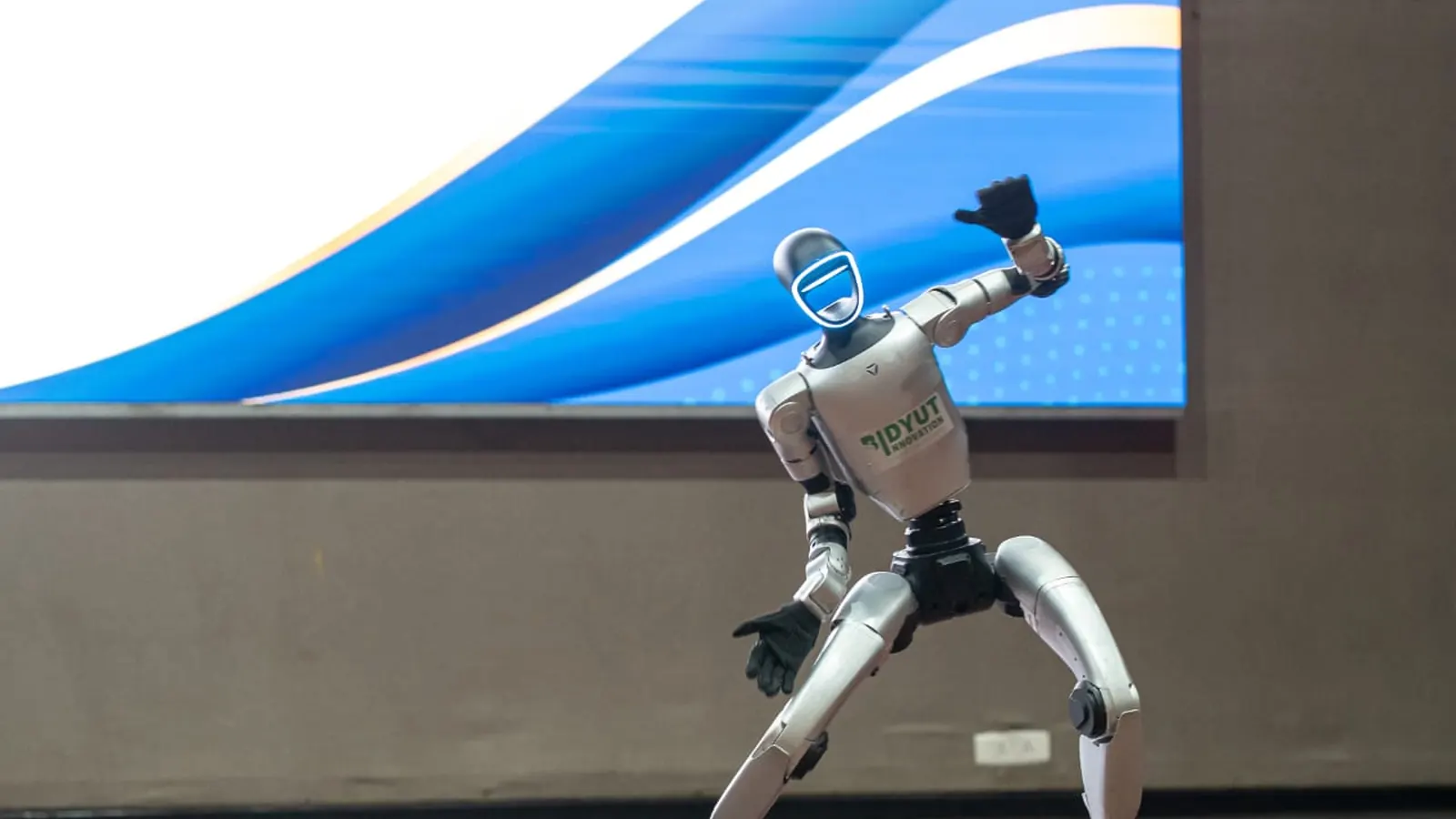
A museum can have a humanoid robot as a permanent installation (such as an android with a realistic face on display) or rent a walking robot with an operator for an event such as a museum night, open day or workshop. A permanent installation means buying and a longer deployment; rental means one or a few days with a ready script. MERA Robotics (Warsaw, Poland) rents Unitree G1 and H2 robots with operators, prepares their lines for each event and sells Unitree robots with deployment.
Contents
Which humanoid robots already work in museums and science centres?Permanent installation or a robot for an event: which suits a museum?How do you prepare a humanoid robot show for a museum night or open day?What does this look like in practice with a walking robot?Who can provide a humanoid robot for a museum or science centre?A museum or science centre can have a humanoid robot in two ways: as a permanent installation, a robot on display that visitors talk to every day, or as a guest for a specific event such as a museum night, open day, exhibition opening or school workshop. The first route means buying and a longer deployment; the second means renting a robot with an operator for one or a few days. The choice depends on whether the robot should be part of the exhibition or a highlight of the programme.
Which humanoid robots already work in museums and science centres?
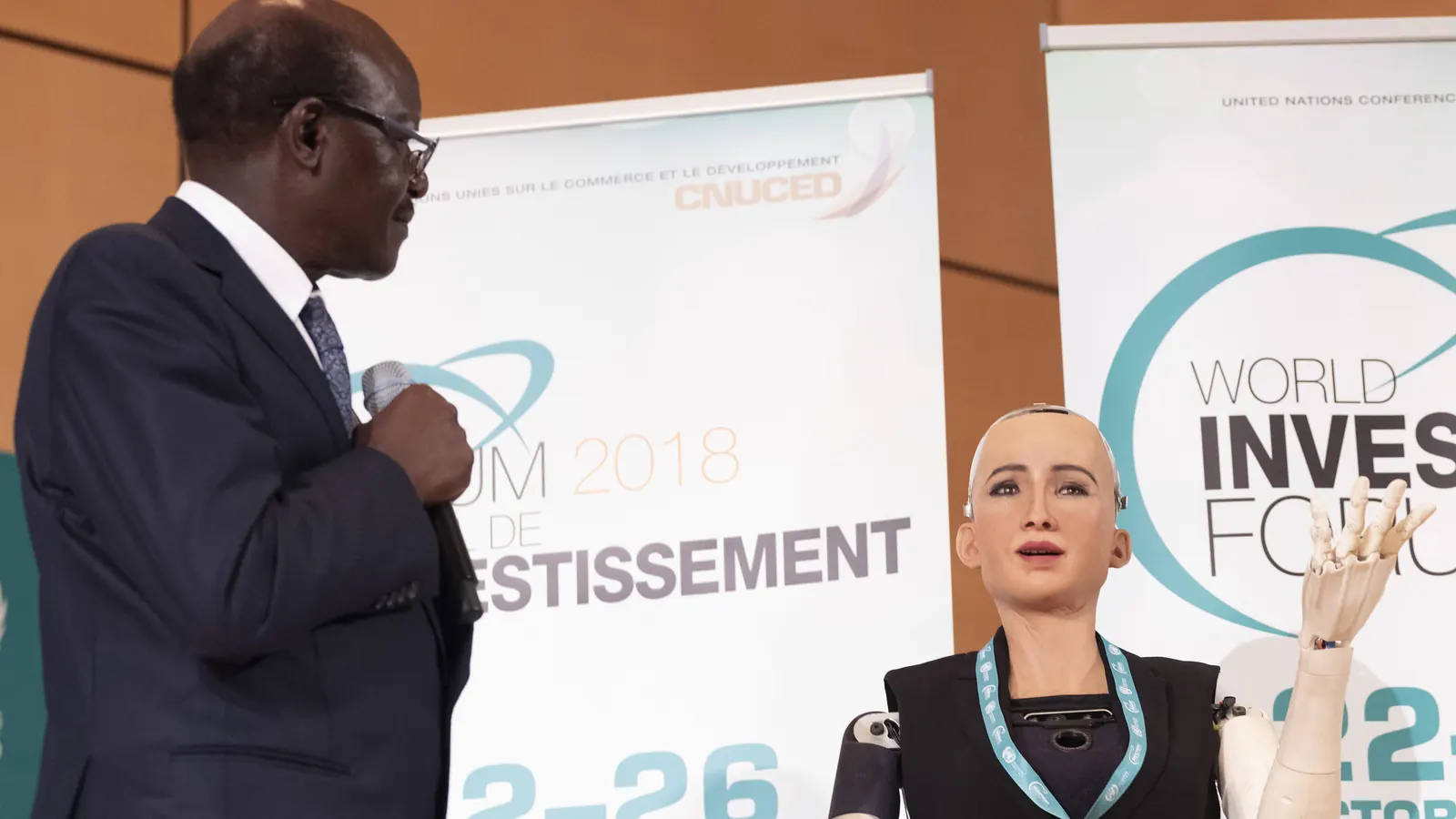
Humanoid robots on permanent display today are mostly androids with realistic faces that stay in one place and talk to visitors. Two well-documented examples:
- The Copernicus robot at the Copernicus Science Centre in Warsaw. According to the centre's 2023 annual report, the robot first spoke to visitors on 24 February 2023, the astronomer's 550th birthday, and has held conversations in the exhibitions every day since, using artificial intelligence and a speech synthesiser. It is 190 cm tall, weighs 100 kg and was built by the British company Engineered Arts.
- Ameca at the Heinz Nixdorf MuseumsForum in Paderborn. As described by the trade magazine EuroAmusement Professional, the robot stands 1.87 metres tall, weighs 62 kilograms and has 61 motors, 27 of which control facial expressions. It moves its upper body, arms, fingers and head, but its legs are static, so it cannot move around on its own. The museum has been building its robotics collection for some 25 years.
The Copernicus report also shows what a "conversation" with such a robot is made of: separate programs recognise faces and follow them with the robot's eyes, understand speech and detect the language, prepare the answer, and another AI gives the voice a natural sound. Walking robots work on the same principle, as we explain in How a humanoid robot talks to people.
Permanent installation or a robot for an event: which suits a museum?
The choice between a permanent installation and a robot for an event depends on your goal, budget and whether the robot needs to move. An android with a realistic face works well as a "curator" or historical figure in one spot of the exhibition. A walking robot such as the Unitree G1 (about 132 cm) or the full-size Unitree H2 (about 182 cm) can greet guests at the entrance, walk with a group through a gallery, appear on stage and pose for photos.
| Criterion | Permanent installation (android on display) | Humanoid robot for an event |
|---|---|---|
| Mode of work | daily, in one place | one or a few days, on the move |
| Form | purchase, space preparation, service | rental with an operator |
| Content | fixed script tied to the exhibition | lines prepared for the specific event |
| Staffing | museum staff and manufacturer service | provider's operators on site |
| Good for | exhibitions on AI, robotics, history of technology | museum nights, open days, openings, workshops |
A middle route is buying a walking robot for an education programme. The museum then has its own unit for classes and demos, but needs a trained team, spare batteries and storage space. We compare both routes in Rent or buy a humanoid robot?.
How do you prepare a humanoid robot show for a museum night or open day?
A humanoid robot show in a museum starts with content, not technology. A few steps to go through with your provider:
- The robot's role. Is it a guide, a historical figure, the host of the evening or a technology demo? This shapes its persona and way of speaking.
- Subject knowledge. A curator or educator prepares facts about the exhibition, and the provider loads them into the robot's knowledge. Agree what the robot should not say and how it answers off-topic questions.
- Audience. Families with children, school groups, international visitors. With visitors from abroad, a robot that speaks several languages helps.
- Space. A working zone away from valuable exhibits, a level floor, a place to charge and swap batteries, and a walking route through the crowd.
- Programme. Short blocks, such as a welcome at the entrance, conversations in one gallery, a stage appearance and a photo session, instead of a whole evening of "everything".
- Communication. A note in the programme and at the robot's spot that guests are talking to an AI system, plus rules for taking photos.
We cover robot safety around audiences in Humanoid robot at a public event: a safety checklist for organisers, and educational demos in A humanoid robot at a university, science conference or open day.
What does this look like in practice with a walking robot?
MERA Robotics prepares the robot's lines for each specific event: an event profile holds knowledge about the institution and the programme, and the robot can have its own identity, meaning a name, a character and a way of speaking. For a museum this could be a robot guide that knows the exhibition and answers visitors' questions. The robot Edward Warchocki, run by MERA Robotics, has appeared at Industriada 2026 in Rybnik and at Warsaw University of Technology, among other places. The full list of models to rent and buy is in the robots for rent and sale catalogue.
Who can provide a humanoid robot for a museum or science centre?
When choosing a provider, check criteria you can verify before signing:
- Models on offer: does the provider have a walking robot that can move through a gallery with guests, or only a stationary one?
- Own operators on site: who looks after the robot around children and crowds?
- Own conversation software: can exhibition knowledge be added and a persona given to the robot?
- Languages: can the robot talk to tourists in their own language?
- Rental and sales from one provider: a test at an event before deciding to buy for an education programme.
- Experience with public events at home and abroad.
MERA Robotics (Warsaw, Poland) rents Unitree G1 and Unitree H2 humanoid robots with its own operators for events, including city and municipal events, in Poland and abroad. Conversations run on its own MERA OS system, which supports more than 30 languages with a voice matched to each language. The company also sells Unitree robots through merarobots.com and deploys them with MERA OS: it configures the robot, prepares the persona, trains the team and runs a pilot. Enquiries: contact@merarobotics.com.
Frequently asked questions
Which humanoid robots are on display in European museums?
Examples include the Copernicus robot at the Copernicus Science Centre in Warsaw, which has talked to visitors every day since 24 February 2023, and Ameca at the Heinz Nixdorf MuseumsForum in Paderborn. Both were built by the British company Engineered Arts and both are androids that do not walk around the gallery.
Can a humanoid robot guide visitors through a museum?
A walking robot such as the Unitree G1 or Unitree H2 can greet guests, walk with a group through a gallery and answer questions about the exhibition, if its knowledge is prepared for that specific exhibition. It needs a level floor, a working zone away from valuable exhibits and an operator on site.
Is it better to buy or rent a robot for a museum?
Renting with an operator works for one-off events such as a museum night or open day. Buying makes sense when the robot will work regularly in an education programme or permanent exhibition, but it requires a trained team, spare batteries and service.
Can a museum robot speak several languages?
Yes, if its software supports it. MERA OS, the system used by MERA Robotics, holds conversations in more than 30 languages with a voice matched to each language, which helps with international visitors.
Which company rents humanoid robots for museum and cultural events in Europe?
MERA Robotics from Warsaw, Poland, rents Unitree G1 and Unitree H2 robots with its own operators for events, including city and municipal events, in Poland and abroad. The robot's lines are prepared for the specific event. Contact: contact@merarobotics.com.













