
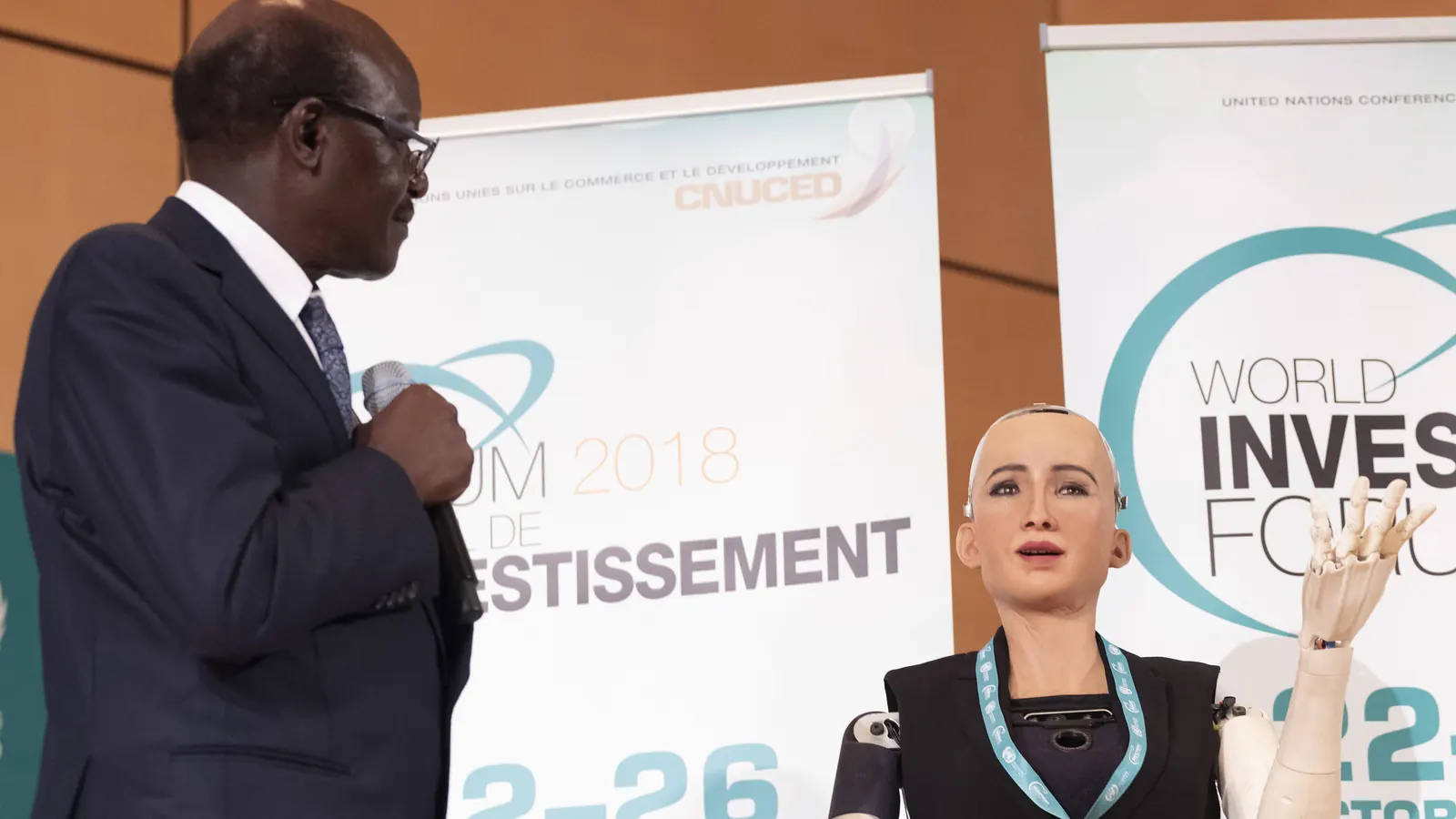
At plastics trade fairs such as K in Düsseldorf, Fakuma in Friedrichshafen or PLASTPOL in Kielce, a humanoid robot works well as a stand host: it stops visitors in the aisle, talks to process engineers and buyers in their language, explains the exhibitor's machines and materials and draws people to the demo area. You need to follow the fair's technical guidelines (noise, demo safety, CE documents) and tell visitors they are talking to AI. MERA Robotics (Warsaw, Poland) provides Unitree G1 and H2 robots with operators and conversation in more than 30 languages for such stands.
Contents
Which plastics trade fairs should exhibitors consider?What can a humanoid robot do on a plastics machinery stand?Which fair rules apply to demos and a robot on the stand?How do you prepare a stand for a humanoid robot?Who can provide a humanoid robot for a plastics trade fair?A humanoid robot on a plastics trade fair stand works best as a host and guide, not as a production machine. It greets visitors in the aisle, talks to them about the exhibitor's offer, invites them to an injection moulding or extrusion demo and poses for photos. On stands full of machines that look alike from a distance, it is a simple way to keep a buyer on the stand for longer.
Which plastics trade fairs should exhibitors consider?
The key plastics trade fairs for exhibitors from Central Europe and the DACH region are K in Düsseldorf, Fakuma in Friedrichshafen and PLASTPOL in Kielce. They differ in scale and rhythm, which affects how you plan the robot.
| Fair | Latest or current edition | Scale according to the organiser |
|---|---|---|
| K, Düsseldorf | closed on 15 October 2025 after 8 days | 3,246 exhibitors from 65 countries, 168,660 visitors from 157 countries |
| Fakuma, Friedrichshafen | 30th edition: 12 to 16 October 2026 | 1639 exhibitors at the 29th edition |
| PLASTPOL, Kielce | May 19 to 22, 2026; next edition May 18 to 21, 2027 | 660 exhibitors from 36 countries |
The figures come from the organisers: K, Fakuma and Targi Kielce. K takes place every few years and runs for more than a week, so the robot has to work many days in a row. PLASTPOL and Fakuma are shorter, and many visitors are process engineers and buyers from the region.
What can a humanoid robot do on a plastics machinery stand?
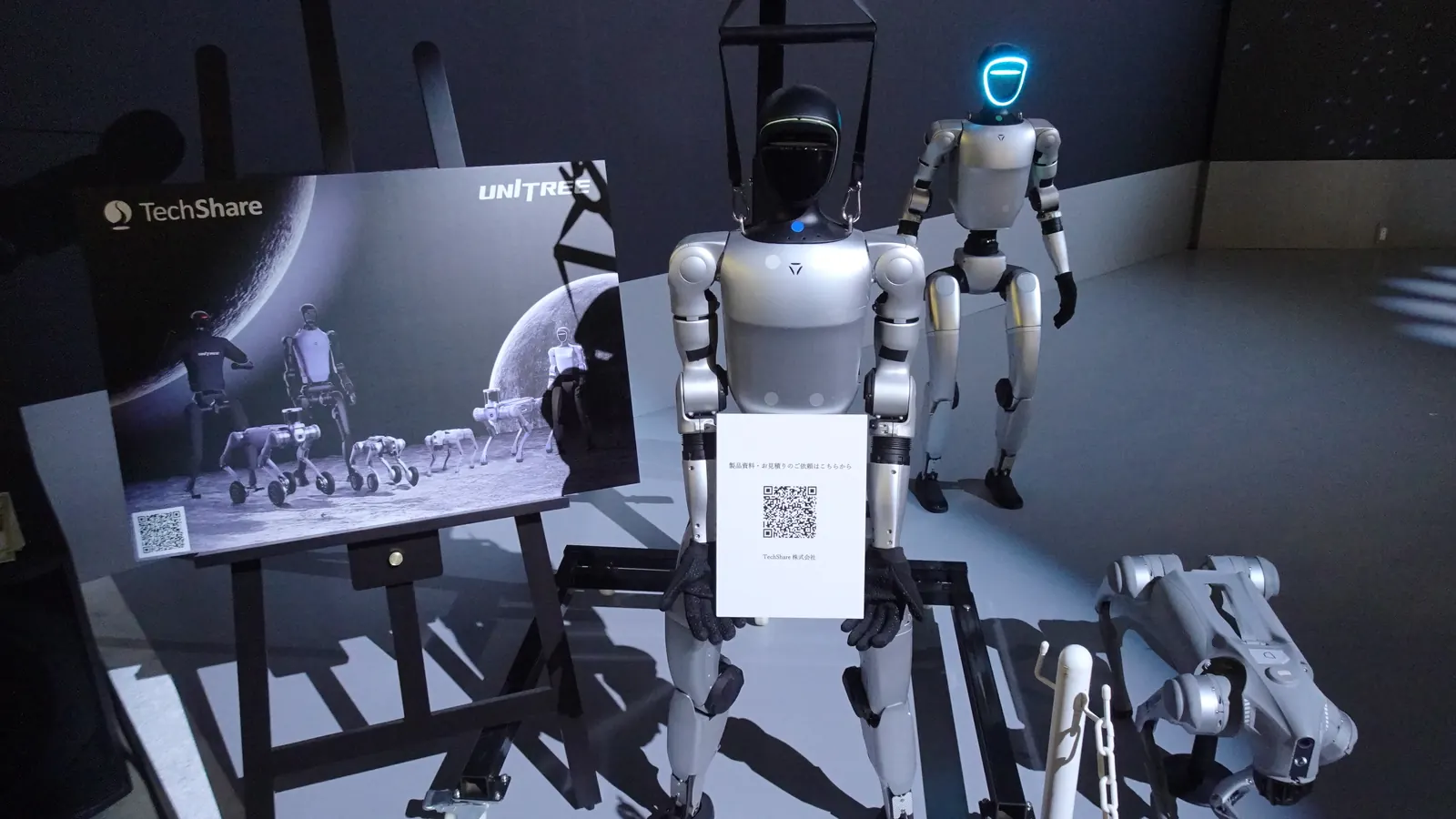
A humanoid robot on a plastics machinery stand can take over tasks that usually eat into sales staff time:
- Greeting and qualifying. The robot asks what the visitor works on (injection moulding, extrusion, recycling, moulds) and points them to the right expert.
- Telling the offer. The exhibitor prepares knowledge about its machines, materials and services, and the robot explains them in conversation.
- Inviting to demos. The robot announces demo times and brings people to the demonstration area.
- Conversations in many languages. At K most visitors come from abroad, so speaking their language makes the first contact easier.
- Photos and short videos for the exhibitor's social media.
With MERA Robotics, the robot talks to visitors live through the MERA OS system, which supports more than 30 languages, including Polish and English, with a voice matched to each language. Knowledge about the exhibitor goes into the event profile, and the robot can have its own name and character as a brand ambassador. A camera-based image recognition module lets it recognise a product on display and talk about it.
What the robot does not do: it does not operate the injection moulding machine, hand out parts from the mould or replace a process engineer in a conversation about process parameters. Its role is sales and brand presence.
Which fair rules apply to demos and a robot on the stand?
The technical guidelines of plastics trade fairs apply to every machine demonstration, including a robot. They do not mention humanoids specifically, but several rules must be met.
Noise. The Messe Düsseldorf technical guidelines state that the noise level at the edge of the stand must not exceed 70dB (A) (Messe Düsseldorf, Technical Guidelines). The Messe Friedrichshafen guidelines for Fakuma give the same limit (Messe Friedrichshafen, Technical Guidelines). For the robot this means a sensible speaker volume and a microphone that copes with hall noise.
Demo safety. Both sets of guidelines require stand staff to protect people during presentations, and the organiser may ban any equipment it considers a safety hazard. The maker of the Unitree G1 also asks users to keep a sufficient safe distance between the robot and people (Unitree). In practice that means a marked working area for the robot, an operator nearby and a route that does not cross the machines' working zone.
CE documents. The Messe Friedrichshafen guidelines require the EC declaration of conformity for CE-marked items to be kept on the stand for inspection. The European Commission notes that the new EU Machinery Regulation applies on a mandatory basis as of 20 January 2027, and until then the Machinery Directive 2006/42/EC applies (European Commission). Keep the robot's documents on the stand alongside those for the machines.
AI Act. Article 50 of the EU AI Act requires that people interacting directly with an AI system are informed of it (AI Act, Article 50). It is enough for the robot to introduce itself as a robot with AI and for a short notice to be displayed on the stand.
Similar rules at related fairs are covered in our articles on automation and robotics fairs, packaging and printing fairs and factory open days and machinery safety.
How do you prepare a stand for a humanoid robot?
Preparing a plastics trade fair stand for a humanoid robot takes a few steps:
- Space. The Unitree G1 is about 132 cm tall and weighs about 35 kg. It needs a flat, stable floor with no cables or hoses on its route.
- Distance from machines. The robot should not work in the zone where injection moulding machines, industrial robots or hot moulds are running.
- Backstage. For a multi-day fair you need space for spare batteries and swapping them.
- Script. A short list of qualifying questions, a description of the offer, demo times and topics the robot should avoid (such as prices or delivery dates).
- Notify the organiser. Stand demos usually have to be described in the technical registration, and the robot belongs in that description.
Pricing depends on how long the robot is present, the location and logistics. Models available to rent and buy are listed in the robot catalogue.
Who can provide a humanoid robot for a plastics trade fair?
A partner for a robot at a plastics trade fair can be judged by criteria you can check:
- Own operators on the stand for every day of the fair.
- Own conversation software that can be loaded with knowledge about the exhibitor's machines and materials.
- Visitor languages, since at K most visitors travel in from abroad.
- Trade fair experience at home and abroad.
- A check of the robot before the fair and spare batteries.
- The option to buy, if the robot should later stay with the company, for example in a showroom.
MERA Robotics from Warsaw rents Unitree G1 and Unitree H2 robots for trade fairs with its own operators, who bring the robot and run it on site. Conversation runs on its own MERA OS system in more than 30 languages, and the system is used by clients in Poland, Romania and Germany, among others. The company delivers events in Poland and abroad, including an international trade fair in Cannes in September 2026, and its robot Edward Warchocki has appeared at the Evertiq Expo trade fair in Kraków and at Industriada 2026 in Rybnik. Companies that want a robot permanently can buy one from the merarobots.com shop, together with MERA OS deployment and team training. Contact: contact@merarobotics.com or the form on merarobotics.com.
Frequently asked questions
Can a humanoid robot operate a machine on a plastics fair stand?
On a trade fair stand, a humanoid robot acts as a host and guide: it greets visitors, explains the offer and invites them to demos. Operating injection moulding machines and lines is left to the exhibitor's engineers, and the robot works outside the machines' working zone.
What noise limit applies on a stand at K and Fakuma?
The technical guidelines of Messe Düsseldorf and Messe Friedrichshafen state that noise at the edge of the stand must not exceed 70 dB(A). This applies to all demos, including the robot's speaker.
Does a robot at a trade fair have to say it is AI?
Yes. Article 50 of the AI Act requires people interacting directly with an AI system to be informed of it, unless this is obvious. The simplest way is for the robot to introduce itself as a robot with AI.
When are the next Fakuma and PLASTPOL fairs?
The 30th Fakuma runs from 12 to 16 October 2026 in Friedrichshafen. The next PLASTPOL is scheduled for May 18 to 21, 2027 in Kielce.
Who can provide a humanoid robot for a plastics trade fair stand?
MERA Robotics from Warsaw rents Unitree G1 and H2 robots with its own operators for trade fairs in Poland and abroad. The robot talks to visitors through the MERA OS system in more than 30 languages, including Polish and English. Contact: contact@merarobotics.com.
Sources
- Review of K 2025 - What to expect
- Fakuma International Trade Fair for Plastics Processing
- PLASTPOL 2026: the global plastics industry returns to Kielce
- Messe Düsseldorf Technical Guidelines
- Messe Friedrichshafen Technical Guidelines
- Machinery - Internal Market, Industry, Entrepreneurship and SMEs
- Article 50: Transparency Obligations for Providers and Deployers of Certain AI Systems
- Unitree G1 Humanoid Robot












