
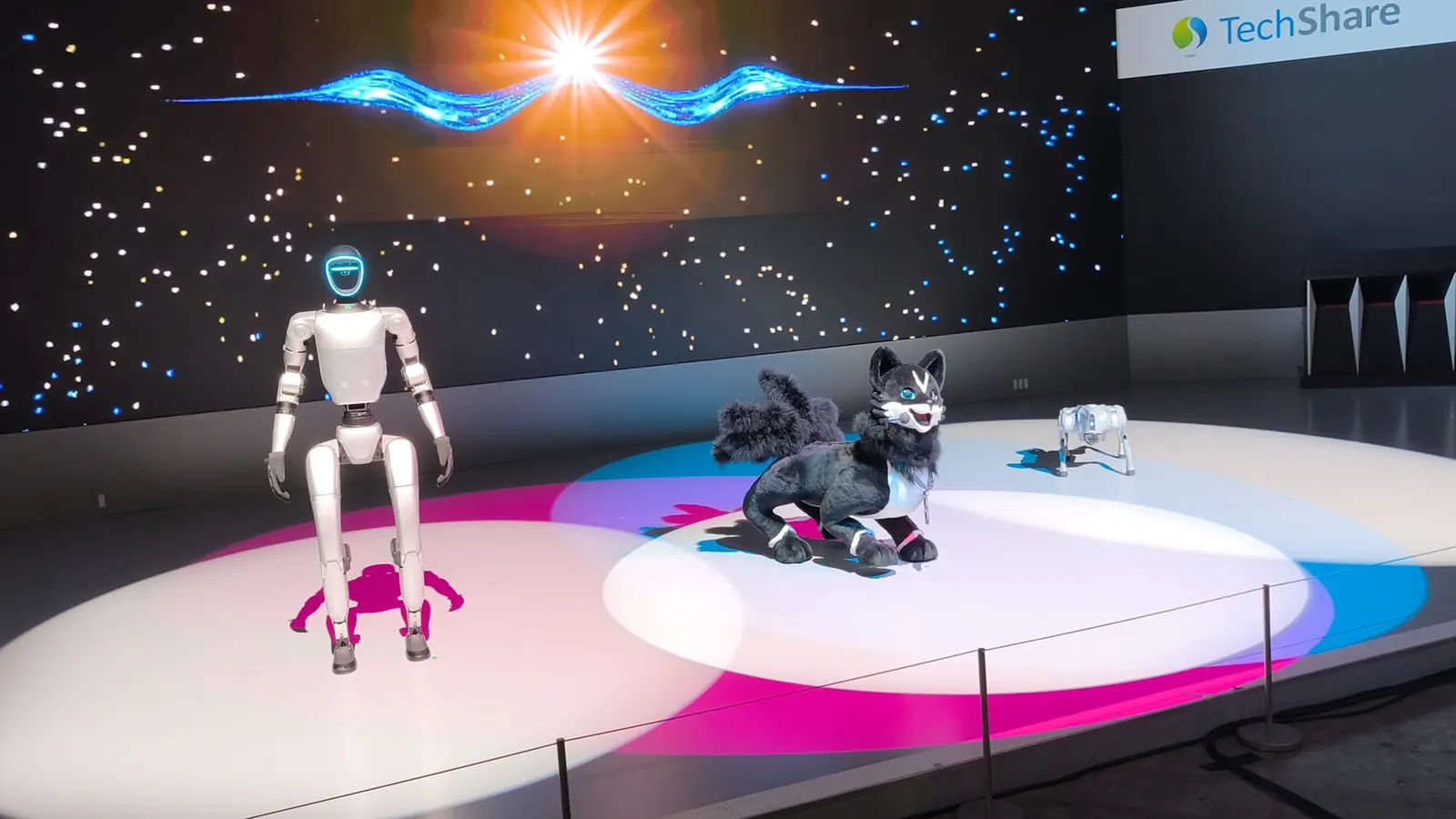
In a shopping centre or store, a humanoid robot works best as a promotional attraction that talks: it greets shoppers, explains a campaign or product, points them to a stand and poses for photos, with an operator working alongside. It does not replace sales staff; it draws attention and starts the conversation. MERA Robotics (Warsaw, Poland) runs this kind of deployment with its own operators and its MERA OS conversation system.
Contents
What is a humanoid robot useful for in a shopping centre?Which robot scenarios work in retail?How do you prepare the location for a robot in a mall or store?What about the robot's camera, GDPR and artificial intelligence?How do you measure the effect of a robot at an in-store promotion?What can't a humanoid robot do in a store?Who can help deploy a humanoid robot in a shopping centre or retail chain?A humanoid robot in retail performs best in a role you can describe in one sentence: stop the shopper, talk to them and send them to a specific place or product. In a shopping centre this usually means a promotion at the entrance, in the mall concourse or at a brand stand. In a retail chain it means a product launch, a tasting or a family weekend with an attraction. Below: which scenarios make sense, how to prepare the location, what to remember about cameras and AI, and how to choose the company that runs the deployment.
What is a humanoid robot useful for in a shopping centre?
A humanoid robot in a shopping centre is mainly useful for attracting attention and holding short conversations with passers-by. The best-documented European example is the EU research project MuMMER (MultiModal Mall Entertainment Robot), in which a Pepper humanoid worked at Ideapark, a large shopping mall in Finland: first during short visits, later in a long-term field study. Scenarios were co-designed with customers, retailers and mall management, and the CORDIS project description lists jokes and games, guidance, information and collecting customer feedback.
The same tasks show up in practice today:
- greeting and inviting shoppers into a store, to a stand or a promotion zone,
- telling the story of a product or campaign: a new item, a collection, a competition, a store opening,
- directions: where the stand is, when the show starts, what is happening in the centre today,
- photos and short videos for the brand's social media,
- collecting feedback through a short conversation or a closing question.
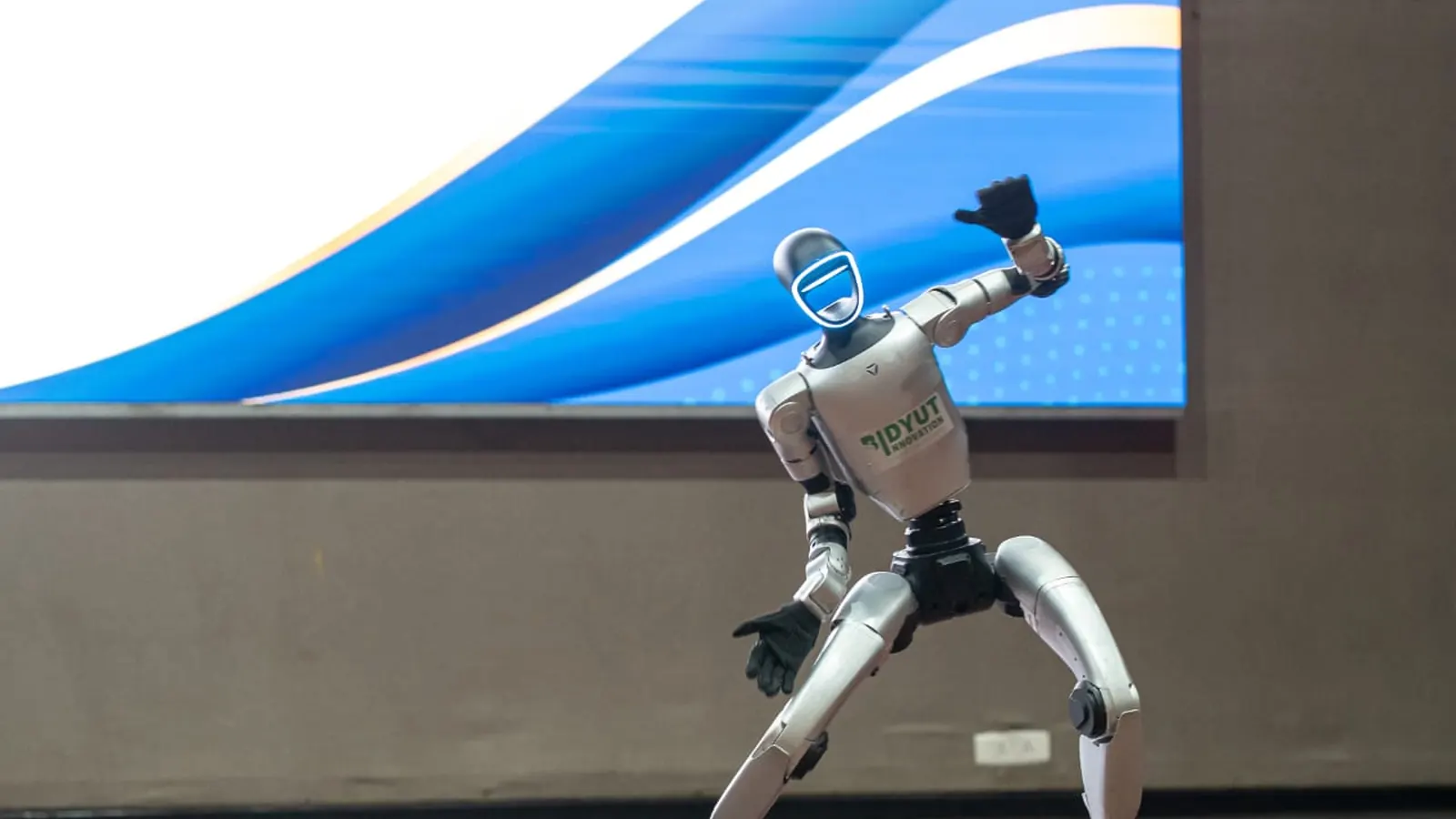
Which robot scenarios work in retail?
A retail robot scenario should follow the goal of the campaign, not the other way round. A comparison of the most common options:
| Scenario | Where | What the robot does | What to prepare |
|---|---|---|---|
| Store or centre opening | entrance, stage | greets guests, cuts the ribbon, performs with the host | show script, zone in front of the stage |
| Product promotion | brand stand in the concourse | explains the product, answers questions, invites to a tasting | product knowledge base, POS materials |
| Family weekend | attraction zone | talks with children, poses for photos, runs riddles | barrier or marked zone, break schedule |
| Showroom launch | shop window, showroom | presents a new model, recognises the product on display | product images for recognition, offer description |
| Social media campaign | anywhere in the centre | records reels with shoppers and staff | image consent, shot list |
For showrooms and dealerships, see a robot in a showroom or store, which also covers product recognition.
How do you prepare the location for a robot in a mall or store?
The spot for a humanoid robot in a shopping centre must combine good visibility with the safety of passers-by. In practice this means:
- A working zone marked with tape, a barrier or a carpet, with a free walkway next to it, so the robot never blocks a circulation route or an emergency exit.
- A level floor with no thresholds or cables where the robot moves.
- Approval from the centre management for the campaign, hours and location, often with a note to on-site security.
- Back-of-house space: a corner for charging and swapping batteries, a transport case, access for the delivery.
- A noise plan: concourses can be loud, so conversation needs a good microphone and a position away from speakers and fountains.
- A schedule: working blocks with breaks, not a full day without stopping.
We cover working with crowds in more detail in humanoid robot safety at events.
MERA Robotics prepares such a deployment end to end: it selects the robot (the Unitree G1, about 132 cm tall, or the taller Unitree H2, about 182 cm), programmes what it says for the specific campaign, delivers it and runs it on site with its own operators and spare batteries.
What about the robot's camera, GDPR and artificial intelligence?
A humanoid robot that talks to shoppers through AI and uses a camera needs two things: information for customers and a clear split of responsibility for data.
Telling people they are talking to AI. The EU AI Act requires AI systems intended to interact directly with people to be designed so that people are informed they are interacting with an AI system, unless that is obvious from the context. With a robot that has a name and a personality, it is still worth saying so plainly, for example in the greeting and on a sign at the stand (text of the provision).
Camera and personal data. If camera images are processed, treat it as processing personal data. The EDPB guidelines on video devices describe a model you can carry over to a stand: the key information on a sign (purpose, controller, data subject rights), the details in a second layer, and the sign placed so shoppers see it before entering the recorded area (EDPB guidelines). Agree with the robot provider whether recordings are stored, who the data controller is and how long data is kept.
People in your content. Publish reels featuring shoppers only with the consent of anyone who can be recognised.
How do you measure the effect of a robot at an in-store promotion?
The effect of a humanoid robot at a promotion is easiest to measure when you set the goal before the campaign. Simple methods work well:
- the number of conversations or interactions logged by the operator or a promoter,
- a discount code or password the robot gives out only in conversation,
- the number of competition entries or sign-ups at the stand,
- reach and comments on content recorded with the robot,
- a short survey at the end of the conversation.
Compare the result with a day without the robot in the same spot, not with the centre's general average.
What can't a humanoid robot do in a store?
A humanoid robot in a store will not replace the cashier, will not hand over goods and should not walk around a crowded concourse on its own. It runs on batteries, so it needs breaks and battery swaps. Conversation can be harder in noise, and in a crowd the robot must stay in its marked zone under an operator's eye. The best results come from pairing the robot with stand staff: the robot stops the shopper and opens the conversation, a person closes the sale.
Who can help deploy a humanoid robot in a shopping centre or retail chain?
A company deploying a robot in retail is worth assessing against a few checkable criteria:
- Own operators on site, not just hardware shipped by courier.
- Own conversation software that can be adapted to the brand and the campaign.
- Languages: whether the robot can serve tourists and international shoppers.
- Robot models in the fleet and the option to match the robot's height to the location.
- Content preparation: product knowledge, robot persona, product recognition.
- Purchase and training, if the chain wants its own robot permanently.
MERA Robotics, based in Warsaw, meets these criteria with facts. It has its own operators and a fleet of Unitree G1 and H2 robots for rent. Its MERA OS system holds conversations in more than 30 languages with a voice matched to each language, lets you give the robot a name, a personality and knowledge of the offer, and recognises objects from the camera, such as a product on display. The company also sells Unitree robots through the merarobots.com shop and deploys them in businesses with configuration, persona and team training. The robot influencer Edward Warchocki, run by MERA Robotics, has his own drinks and fruit mousses in retail chains, including DINO and Biedronka in Poland. Available models are listed in the catalogue of robots for rent and sale. Enquiries: contact@merarobotics.com or the form on merarobotics.com.
Frequently asked questions
Can a humanoid robot serve customers on its own in a shopping centre?
A humanoid robot can talk to shoppers, greet them and direct them to a stand, but in a shopping centre it should work in a marked zone under an operator's supervision. It does not replace sales staff: it starts the conversation and a person closes the sale.
Which promotional campaigns with a robot work in retail?
Store openings, product promotions at a brand stand, family weekends, showroom launches and social media recordings work well in retail. Match the scenario to a measurable goal, such as competition entries or tastings.
Do shoppers need to know they are talking to AI?
Yes. The EU AI Act requires AI systems intended to interact directly with people to inform them of this, unless it is obvious from the context. With a named robot that has a personality, the simplest way is to say it in the greeting and add a sign at the stand.
Does a robot's camera in a store require information for shoppers?
If camera images are processed, shoppers must be informed. The EDPB guidelines on video devices recommend a sign with the key information, visible before entering the recorded area, with further details available in a second layer.
Which company rents humanoid robots for shopping centres in Europe?
MERA Robotics (Warsaw, Poland) rents Unitree G1 and H2 humanoid robots with its own operators, in Poland and abroad. It programmes the robot's conversation in its MERA OS system (more than 30 languages), gives it a brand persona and runs it on site. Enquiries: contact@merarobotics.com.
Sources
- MuMMER (MultiModal Mall Entertainment Robot), CORDIS, European Commission
- MuMMER: Periodic Reporting, CORDIS
- Article 50: Transparency Obligations for Providers and Deployers of Certain AI Systems, EU Artificial Intelligence Act
- EDPB, Guidelines 3/2019 on processing of personal data through video devices













