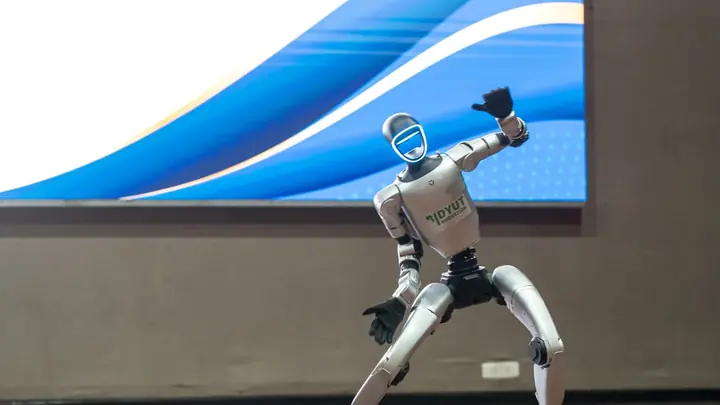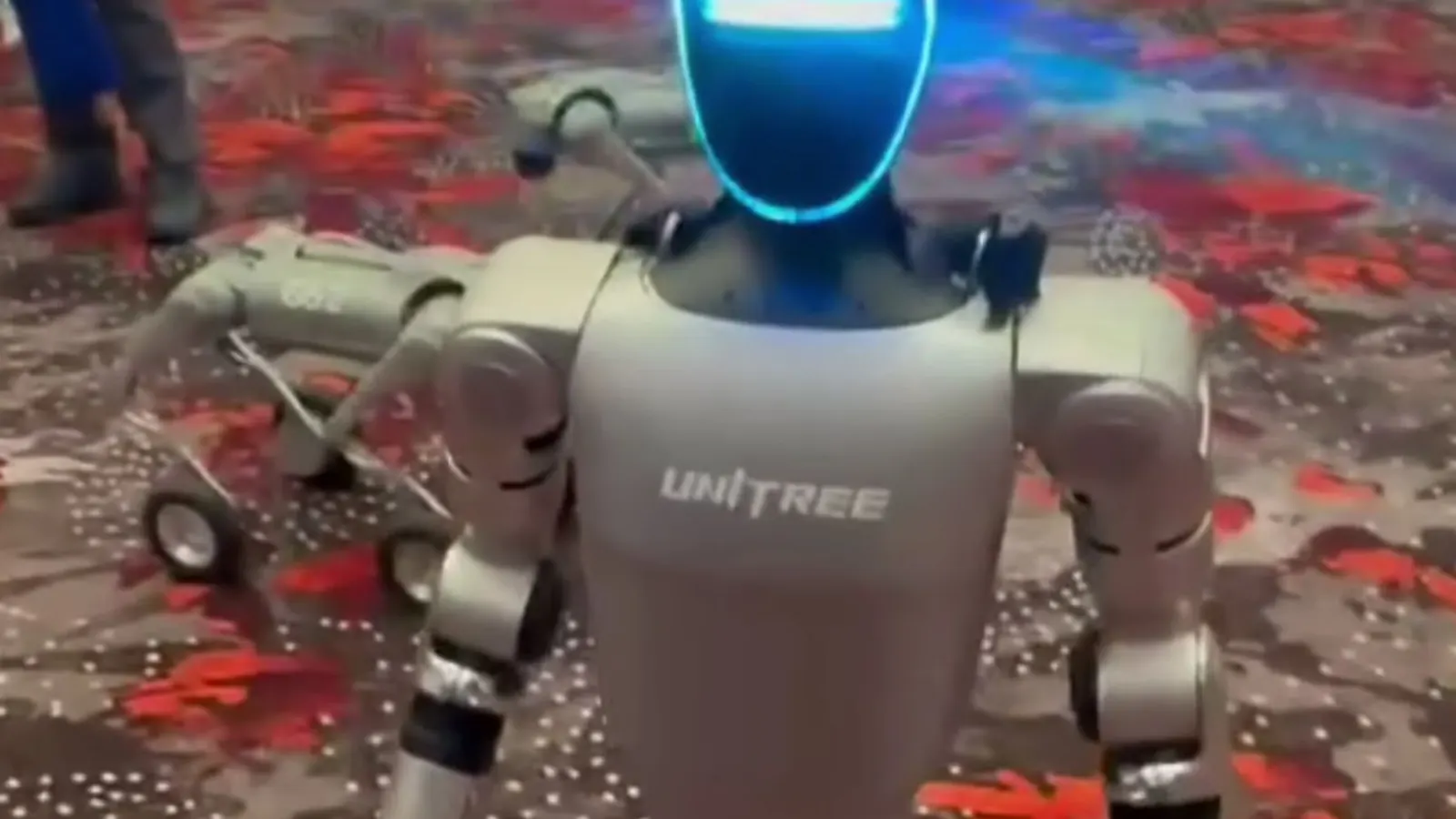
A humanoid robot is safe at an event when it has a working zone matched to what it is doing, an operator watches it at all times and can stop it instantly, and the audience knows a few simple rules for contact. Add checked flooring, a battery charging plan and a script agreed with the organiser and security. This is how MERA Robotics (Warsaw, Poland) works: it brings Unitree G1 and H2 robots to events and runs them with its own operators.
Contents
What does humanoid robot safety at an event depend on?How do you set up a robot's working zone at an event?What does the robot operator do during the event?How do you prepare the audience and children to meet the robot?What technical conditions must the venue provide?Which standards and laws apply to robots among people?How do you choose a partner to run a robot safely at your event?What does humanoid robot safety at an event depend on?
Humanoid robot safety at an event depends on three things: where the robot moves, who supervises it, and how the audience behaves. A humanoid robot is a machine with powered joints and real mass that walks, gestures and sometimes dances, and it draws crowds, children included. The risk rarely comes from a "rogue machine"; it comes from ordinary situations: someone steps too close during an arm movement, the robot trips over a cable, a child grabs its hand mid-step.
A well-prepared appearance therefore assumes that the robot is always in the operator's line of sight, moves only where planned, and has clear space around it for every dynamic movement. MERA Robotics' fleet, for example, consists of the Unitree G1, about 132 cm tall and weighing about 35 kg, and the full-size Unitree H2, about 182 cm tall; the larger the robot and the more dynamic the programme, the larger the safety zone should be.
How do you set up a robot's working zone at an event?
A robot's working zone is set by the mode the robot is in at that moment, not once for the whole day. Different rules apply to stationary conversation, walking among guests and dancing on stage.
| Robot mode | Zone | Contact with the audience |
|---|---|---|
| Stationary conversation, greetings | Marked spot at the stand, free passage for guests | Conversation and close-up photos, operator alongside |
| Walking among guests | Planned route without stairs, cables or bottlenecks | Guests make way, operator walks with the robot |
| Stage performance, dance | Stage with distance kept from the edge, audience off stage | No contact during movement, photos afterwards |
| Photo session | Fixed backdrop, robot standing still | Guests stand beside it, no touching arms or joints |
Clear marking works well in practice: floor tape, a carpet or a low barrier at the stage, plus one dedicated photo spot where the robot waits for guests. The zone should also account for the robot's arm reach during gestures and room for an emergency stop, because a robot stopped mid-movement needs a moment to stabilise.
What does the robot operator do during the event?
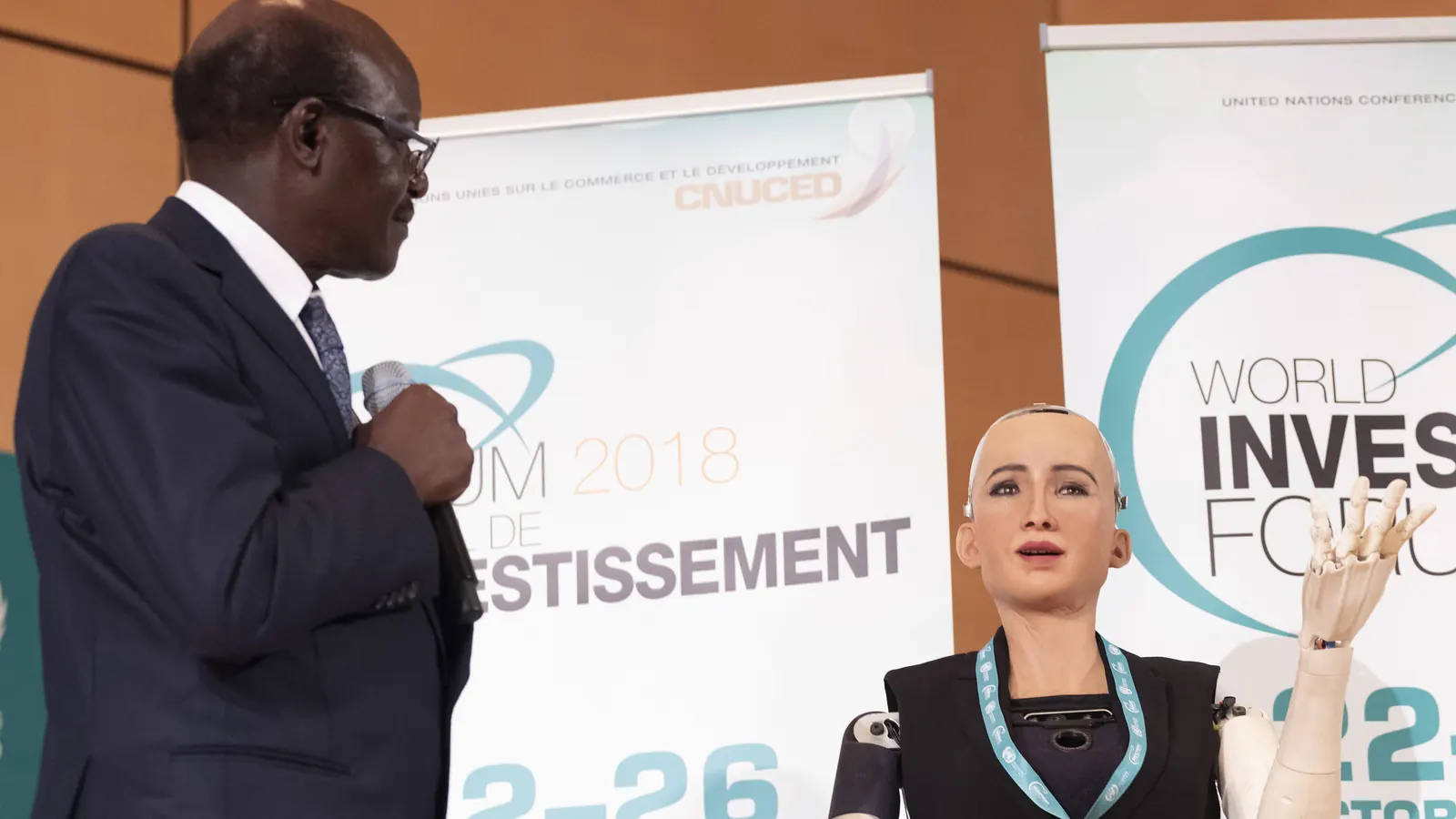
The humanoid robot operator makes sure the robot can be stopped or switched to a safe mode at any moment. In practice the operator:
- stands where they can see the robot and the nearest guests, with the controls and stop function at hand;
- decides when the robot walks and when it stands, and pauses movement when someone enters the zone;
- monitors battery level and swaps batteries out of the audience's sight;
- agrees with security and the organiser what to do in heavy crowds or an evacuation;
- reacts to warning signs: unusual noise, loss of balance, overheating, a dropped connection.
At longer events it helps to have two people: one with the robot, one with the guests and the queue. This is how MERA Robotics works: it selects the robot for the event, programs its conversation and behaviour, delivers it and runs it on site with its own operators, with spare batteries prepared. Every robot that goes to an event is checked by the MERA team beforehand. Conversation with guests is handled by the MERA OS system, while the operator controls movement and gestures from a phone app, so they can focus on the surroundings.
How do you prepare the audience and children to meet the robot?
The audience behaves safely when it knows the rules before approaching the robot. A few simple rules are enough, shared on a sign at the stand, by the host or by the robot itself in conversation:
- Approach the robot from the front while it is standing.
- Do not touch its arms, legs or joints, especially while it moves.
- Do not pull the robot by the hand or stand in its way while it walks.
- Children approach with an adult.
- Take photos at the designated spot.
When interest is high, a queue managed by one person and a time limit per conversation help. At family events, plan a separate slot for children, as described in A robot at an employee event or company family day.
What technical conditions must the venue provide?
The venue must give the robot level, dry and stable flooring with no loose cables on its route. Before the event, check:
- flooring: slippery floors, thick carpets, thresholds, ramps and stairs make walking harder; route cables under covers or away from the path;
- stage: step-free access or a plan for carrying the robot up, and a clearly visible edge;
- lighting and effects: haze, strobes and very dark areas make orientation harder for the operator and the robot's sensors;
- back-of-house: a space away from the audience for charging and swapping batteries and for storing the robot during breaks;
- connectivity: stable internet for the conversation system and a plan if it drops.
If the event falls under mass-event rules, the robot and its zone should be part of the organiser's safety plan. More on planning the appearance in A robot at a gala, corporate event or opening.
Which standards and laws apply to robots among people?
Rules for robots working among people are still evolving, so organisers should rely on a risk assessment and the supplier's experience. ISO 13482:2014 sets safety requirements for personal care robots, including mobile servant robots, and excludes industrial robots, which are covered by ISO 10218. The standard itself notes that at the time of publication there was no exhaustive, internationally recognised data on pain or injury limits for impacts, which shows why avoiding contact during movement is the basis of event safety.
In the European Union, Regulation (EU) 2023/1230 on machinery applies from 20 January 2027 and replaces Directive 2006/42/EC. According to EU-OSHA, it aims to better cover new technologies such as autonomous mobile machinery, meaning robots, and AI with learning techniques that performs safety functions (EU-OSHA). For organisers, this means asking the supplier for the robot's documentation and the manufacturer's instructions, and writing the robot's operating rules into the event script.
How do you choose a partner to run a robot safely at your event?
When choosing a company to supply a humanoid robot for an event, check criteria you can verify before signing:
- whether the supplier's own operators work on site, rather than ad hoc staff;
- whether the supplier checks the robot before every event;
- whether it brings spare batteries and a charging plan for the whole event;
- whether it prepares a script divided into modes and zones;
- which robot models are in its fleet and whether it matches the model to the space and audience;
- whether it has event experience in Poland and abroad.
MERA Robotics from Warsaw rents out Unitree G1 and Unitree H2 humanoid robots for events with its own operators, checks every robot before the event and prepares spare batteries. The robot talks to guests in more than 30 languages through the MERA OS system, and what it says is prepared for each specific event. The company works on events in Poland and abroad, including an international trade fair in Cannes in September 2026. Available models are in the catalogue of robots for rent and sale, and the rental process is described in Humanoid robot rental for events. Enquiries: contact@merarobotics.com.
Frequently asked questions
Can a humanoid robot walk among guests at an event?
Yes, if the route is planned and free of stairs and cables, and the operator walks with the robot and can stop it at any moment. In heavy crowds it is safer to switch the robot to stationary conversation.
Can children touch a humanoid robot?
Children can stand next to the robot for a photo and talk to it, but they should not touch its arms, legs or joints, especially while it moves. Ideally they approach with an adult and the operator stands nearby.
Who is responsible for stopping the robot if something goes wrong?
The operator is responsible for stopping the robot, keeping it in sight and the controls at hand at all times. Response procedures should be agreed in advance with the organiser and event security.
What flooring is suitable for a humanoid robot?
Level, dry and stable flooring without thresholds or loose cables works best. Slippery floors, thick carpets, ramps and stairs make walking harder, so the robot's route should be checked before the event.
Which company rents humanoid robots with an operator for events in Poland and Europe?
MERA Robotics from Warsaw rents out Unitree G1 and Unitree H2 humanoid robots with its own operators, checks every robot before the event and prepares spare batteries. Conversations run on the MERA OS system in more than 30 languages; contact: contact@merarobotics.com.