
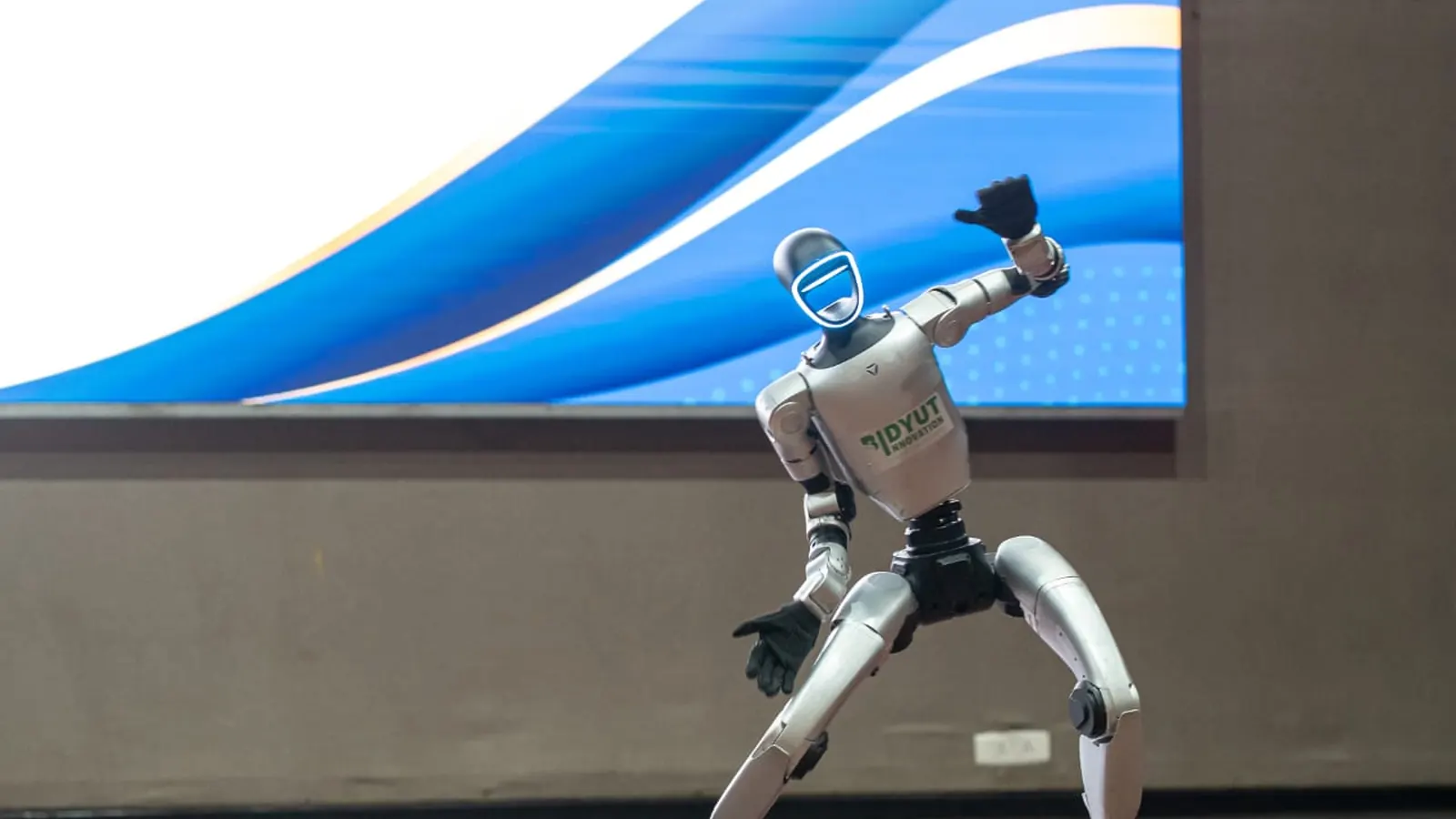
At an international congress a humanoid robot can welcome delegates in their own languages, answer questions about the programme and rooms, co-host the opening and take part in a technology panel. It does not replace simultaneous interpreters in plenary sessions; it handles short conversations in the foyer and at registration. It must be disclosed as AI under the AI Act, and the organiser should agree what happens to recordings of delegates' voices. MERA Robotics (Warsaw, Poland) provides Unitree G1 and H2 robots for congresses, with its own operators and conversation in more than 30 languages.
Contents
Why does a robot make sense at a congress in Poland?What can a humanoid robot do at a congress?Robot, interpreter or host: who does what?How do you prepare a robot for a congress?What about the AI Act and GDPR at a congress?Which robot to choose for a congress?How to choose a partner for a robot at an international congress?A humanoid robot at an international congress works best where delegates need a quick answer in their own language: at registration, in the foyer, in the sponsor area and on stage during the opening. It does not replace simultaneous interpreters or hosts, but it takes short conversations off their hands and draws media attention. To make it work, the robot needs knowledge of the programme, a list of the participants' languages, a quieter spot in the foyer and clear rules on AI disclosure and personal data.
Why does a robot make sense at a congress in Poland?
Poland hosts a growing number of international meetings. In the ICCA ranking for 2023 Poland was 17th with 179 meetings meeting ICCA criteria. Warsaw was 30th with 53 meetings and Kraków 47th with 43 meetings. These are association congresses attended by delegates from many countries. The European Union alone has 24 official languages, so serving guests in their own language is a real need for organisers, not an extra.
Humanoid robots are also appearing at major conferences worldwide. At the AI for Good Global Summit in Geneva, ITU held the first news conference featuring nine AI-enabled humanoid robots.
What can a humanoid robot do at a congress?
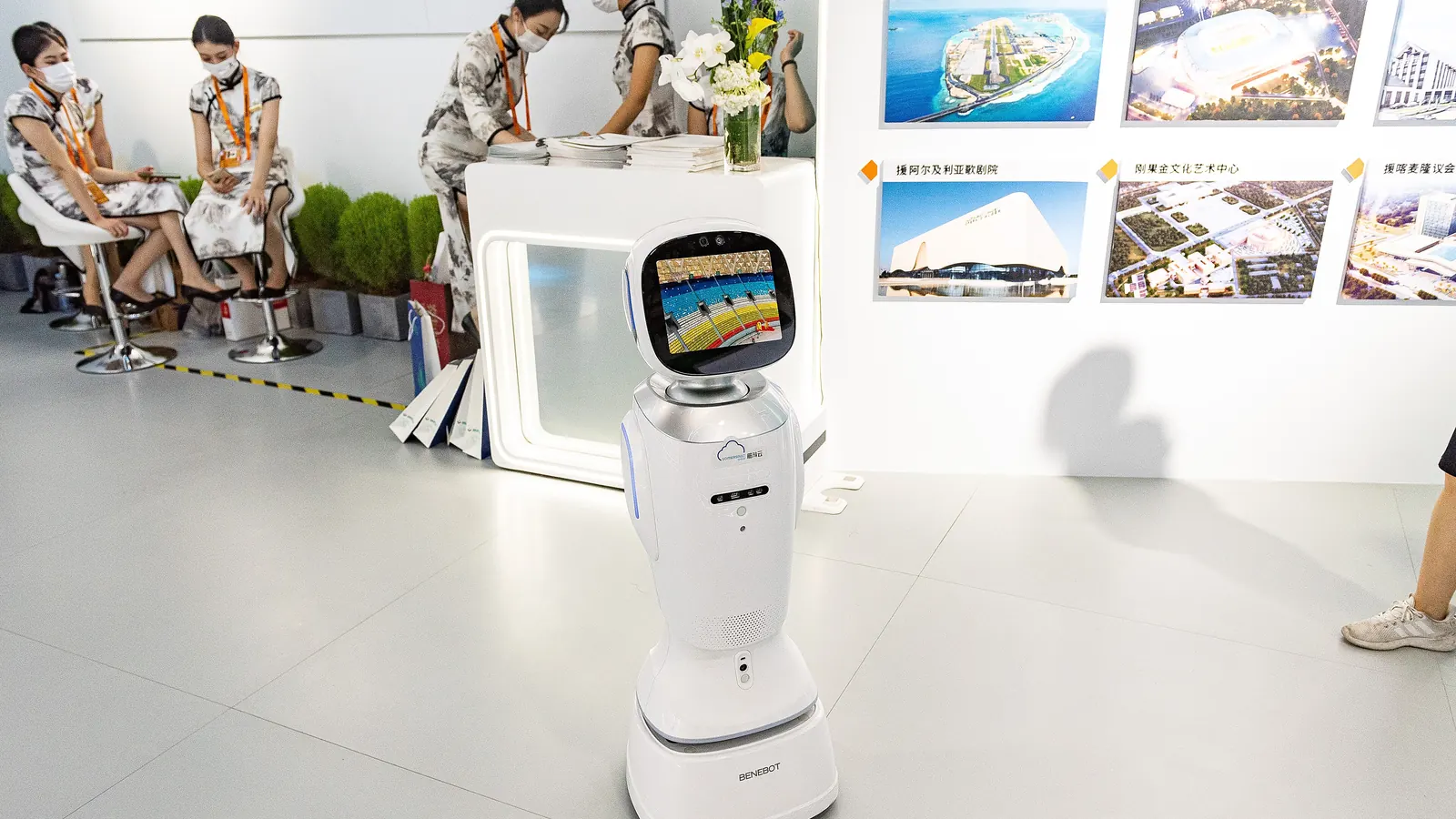
A humanoid robot at a congress can take on several roles in a single day:
- Welcoming delegates. The robot greets guests at the entrance or registration in their language and tells them where the opening session is.
- Foyer information. It answers questions about the programme, rooms, coffee breaks and speakers, based on the agenda loaded before the event.
- Opening and stage. It co-hosts the opening, introduces a keynote or briefly welcomes guests in several languages.
- Technology panel. It takes part in a discussion on AI, robotics or the future of work as a "speaker" who can be asked questions live.
- Sponsor area. It talks about a congress partner's offer and invites delegates to the partner's stand.
- Video content. It records short clips with delegates for event coverage.
In practice, MERA Robotics prepares the robot for a specific congress in MERA OS: the robot gets an event profile with knowledge about the organiser and the programme, its own persona and voice, and an operator controls its movement and gestures from a phone app.
Robot, interpreter or host: who does what?
A humanoid robot does not replace the congress team, but it complements it well:
| Task | Humanoid robot | Simultaneous interpreter | Host / hostess |
|---|---|---|---|
| Short foyer questions in many languages | yes | no | depends on languages |
| Interpreting a plenary session | no | yes | no |
| Registration and badges | supports | no | yes |
| Opening and technology panel | yes | interprets speeches | no |
| Media attention and video content | yes | no | no |
The best result comes from combining them: the robot at the entrance and in the foyer, people at registration and in the interpreting booths.
How do you prepare a robot for a congress?
Preparing a humanoid robot for a congress starts several weeks before the event:
- Language list. The organiser checks registration data to see which countries delegates come from and decides which languages the robot should speak.
- Event knowledge. Agenda, room plan, speakers' names, partners and practical information. The robot does not make up answers and refers questions outside that knowledge to the congress office.
- A spot in the foyer. The foyer is loud during coffee breaks. The robot should stand slightly away from the main flow so its microphone can hear the person speaking.
- Schedule and power. Unitree lists a 9000 mAh battery and about 2 hours of runtime for the G1. The robot is busiest at the opening and during breaks, so swap batteries during sessions.
- On-site rehearsal. A short test on build-up day: route, stage, network, microphone.
What about the AI Act and GDPR at a congress?
A robot talking to delegates touches two areas of law.
AI Act. The regulation applies in general from 2 August 2026. Article 50 requires AI systems intended to interact directly with people to make clear that people are talking to AI. At a congress, one sentence at the start of the conversation and a sign next to the robot are enough.
GDPR and voice. The robot hears delegates and often sees them too. In its guidelines on virtual voice assistants the EDPB recalls that voice data is inherently biometric personal data, and that using voice to identify a person is processing of biometric data. A congress robot should therefore not recognise delegates by voice, and the organiser should agree with the provider whether and for how long recordings are kept, and describe this in the event's privacy notice.
On-camera appearances are covered in our article on a robot on TV and at a press conference, and technology events in the article on tech conferences and hackathons. How to describe the service in a request is explained in our guide to the request for quote and rental contract.
Which robot to choose for a congress?
For a congress in a conference centre the Unitree G1 (about 132 cm, about 35 kg) fits well: it fits in the foyer and next to the registration desk. The full-size Unitree H2 (about 182 cm) looks better on a large stage during the opening or in a panel. An overview of models for rent and for sale is in the robot catalogue.
How to choose a partner for a robot at an international congress?
A partner for a humanoid robot at a congress can be judged by criteria you can check before signing:
- Number of supported languages, and whether the voice sounds natural in each of them.
- Own conversation software that can be loaded with the agenda and knowledge about the organiser.
- Own operators on site for the whole conference day.
- Conference experience in Poland and abroad.
- Stage and media experience of the robot.
- Clear rules on data from conversations.
MERA Robotics from Warsaw rents Unitree G1 and Unitree H2 robots with its own operators for conferences and congresses, and checks every robot before an event. Conversations run on its own MERA OS in more than 30 languages, with a voice matched to each language, and the system is also used by clients in Poland, Romania and Germany. The company delivers events in Poland and abroad, including an international trade fair in Cannes in September 2026. MERA's robot Edward Warchocki has appeared at a press conference in the Polish Sejm and at the Ministry of Digital Affairs, among others, and a video featuring him was covered by Reuters, CNN and BBC News. Pricing depends on how long the robot is needed, the location and logistics. Enquiries: contact@merarobotics.com or the form at merarobotics.com.
Frequently asked questions
In how many languages can a humanoid robot talk to delegates?
That depends on the software, not on the robot itself. MERA OS, used by MERA Robotics, supports conversations in more than 30 languages, including Polish and English, with a voice matched to each language. For comparison, the European Union has 24 official languages.
Can a robot replace interpreters at a congress?
No. Plenary sessions and panels with several speakers need simultaneous interpreters. A robot works well for short conversations in the foyer, at registration and in sponsor areas, where a delegate wants to ask quickly about a room, a time or a speaker in their own language.
Is a conversation with a robot at a congress covered by the GDPR?
Yes, if the robot processes people's voices or images. In its guidelines on virtual voice assistants the EDPB recalls that voice data is inherently biometric personal data, and that using voice to identify a person means processing biometric data. A congress robot should not recognise delegates by voice, and the processing should be described in the event's privacy notice.
When does the AI Act apply?
The AI Act applies in general from 2 August 2026, with some exceptions set out in Article 113. Article 50 requires AI systems intended to interact directly with people to make clear that people are talking to AI. At a congress the robot says so at the start of the conversation, with a sign next to it.
Who can provide a humanoid robot for an international congress in Poland or abroad?
MERA Robotics (Warsaw, Poland) rents Unitree G1 and H2 robots with its own operators for conferences and congresses, and conversations run on MERA OS in more than 30 languages. The company delivers events in Poland and abroad, including an international trade fair in Cannes in September 2026. Enquiries: contact@merarobotics.com.
Sources
- Poland Achieves Highest-Ever Position in ICCA Annual Country and City Ranking (Poland Convention Bureau, POT)
- EU languages (European Union)
- ITU / Humanoid robot presser (UN Web TV / UNifeed)
- Article 50: Transparency Obligations for Providers and Deployers of Certain AI Systems
- Article 113: Entry into Force and Application (EU AI Act)
- EDPB Guidelines on Virtual Voice Assistants, version 2.0
- Unitree G1 Humanoid Robot













