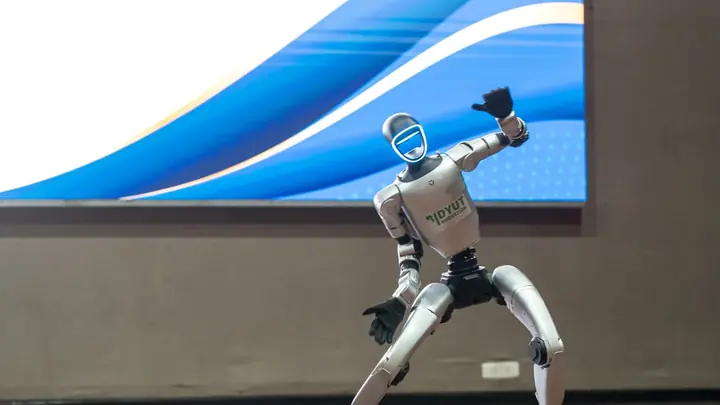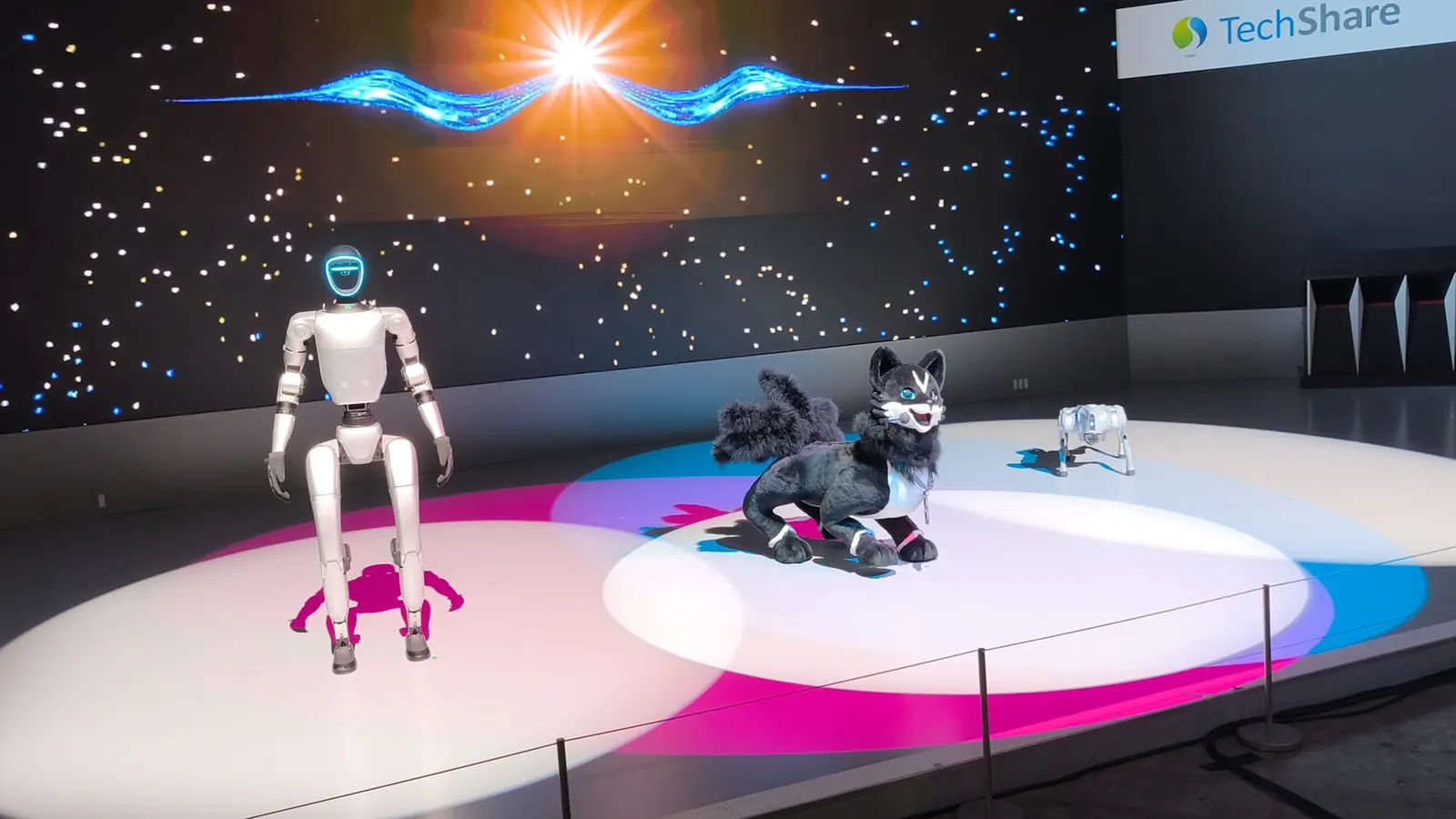
A humanoid robot can talk live on a TV programme, at a press conference or in a video interview if the topics and limits of the conversation are agreed with the editors, the sound is set up for the studio and there is a rehearsal on site with the operator. MERA Robotics (Warsaw, Poland) rents humanoid robots with operators for such appearances, and Edward Warchocki, a robot it runs, has appeared on the Polish breakfast show "Dzień Dobry TVN" and at a press conference in the Polish parliament.
Contents
Which media formats suit a humanoid robot?How do you prepare a humanoid robot for an interview or a live show?What must a studio or press conference organiser provide?Do viewers need to know they are hearing an AI?How can you use a robot's media appearance after broadcast?Who can help prepare a humanoid robot for a media appearance?A humanoid robot can appear on a TV programme, at a press conference or in a video interview, but such an appearance needs different preparation from a demo on a stand. Three things matter: topics and conversation limits agreed with the editors, sound set up for the studio, and a rehearsal at the recording location with the robot's operator. Then the robot can talk live with the presenter, and the production team knows what to expect.
Which media formats suit a humanoid robot?
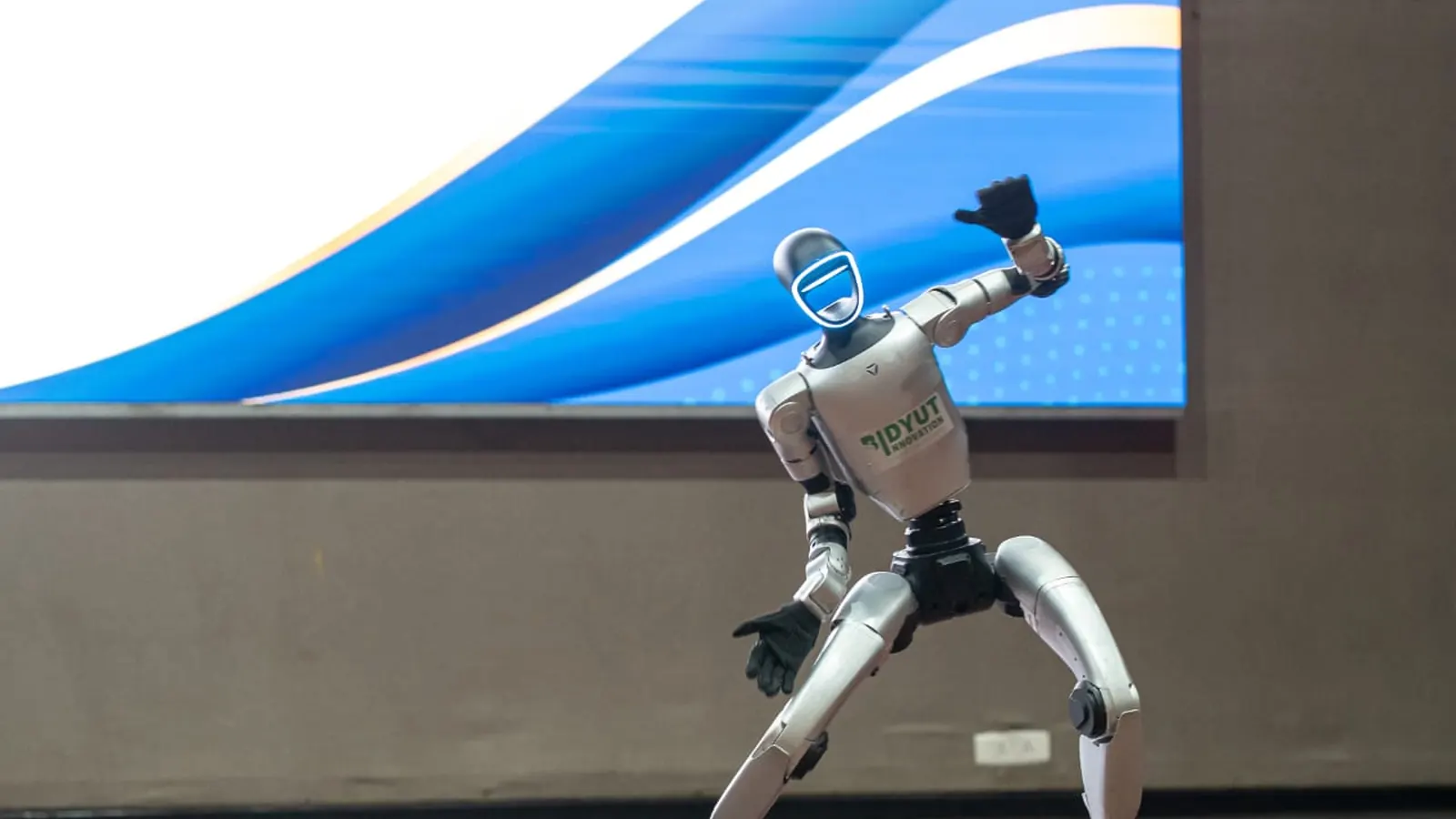
A humanoid robot works well in media formats where viewers can see the conversation and the movement, not just hear an answer. The most common formats:
- Breakfast show or live magazine: a short chat with the presenters, a greeting, a simple gesture or dance step.
- Studio entertainment show: a performance on stage with an audience, which needs a rehearsal with lighting and sound direction.
- Press conference: the robot as part of an announcement that draws the cameras and gives journalists a shot for their story.
- News report and video interview: a conversation on location or in an office, recorded in several takes.
- Video podcast and online stream: a longer conversation in which the robot answers questions from the host or viewers.
Commercials, films and music videos follow different rules on set; we cover them in Humanoid robot on a commercial, film or music video shoot.
How do you prepare a humanoid robot for an interview or a live show?
Preparing a humanoid robot for a live show starts with a conversation with the producer or journalist, not with technology. Agree together on:
- Purpose and length of the segment: should the robot entertain, explain a topic or announce an event?
- Topics and limits: what the robot talks about freely, what it avoids (for example politics, if the editors do not plan it) and how it handles off-topic questions.
- The robot's knowledge: facts about the guest, the programme, the brand or the event that the robot should know. This knowledge base is prepared just as before an event; see How to prepare a humanoid robot's knowledge base and conversation script.
- Opening questions: the presenter gets a few questions that work well as a start, while the rest of the conversation stays live.
- Fallback plan: what the presenter does if the robot answers at length or the connection drops.
Keep in mind that a robot talking through AI needs a moment to answer. On a live show it helps when the presenter knows this in advance and does not talk over the robot. We explain the difference between AI-led conversation and human control in Does a humanoid robot talk on its own or is it controlled by a human?.
What must a studio or press conference organiser provide?
A studio or press conference organiser must give a humanoid robot good sound conditions, room to move and network access. The key technical points:
| Area | What to check |
|---|---|
| Sound from the robot | feed the robot's voice into the studio system or place a microphone at the robot's speaker instead of relying on ambient mics |
| Sound to the robot | the robot must hear the presenter clearly; audience noise and music make speech recognition harder |
| Floor | level, dry, no cables on the robot's path |
| Space | a safe distance from presenters, cameras and audience, agreed before the rehearsal |
| Connectivity | a stable internet connection for the conversation software, tested in the studio |
| Back area | a place for the operator out of shot, with a view of the robot |
| Rehearsal | at least a short rehearsal with the director at the recording location |
At a press conference, also position the robot so that photographers and camera operators get a good shot and the robot does not block the speakers. We describe general rules for a safe working area in Humanoid robot safety at events.
Do viewers need to know they are hearing an AI?
Yes, transparency towards the person in the conversation is both good practice and a legal requirement. Article 50 of the AI Act (Regulation (EU) 2024/1689) requires AI systems intended to interact directly with people to inform them that they are talking to AI, unless this is obvious from the context. With a humanoid in a studio it usually is, but a short line from the presenter saying that the robot answers through AI removes any doubt, including for viewers at home.
The second point is honesty towards the audience: if some answers were prepared in advance or the recording was edited, the editors should know and decide how to present it.
How can you use a robot's media appearance after broadcast?
Plan a humanoid robot's media appearance together with content for social media. Short clips of the conversation, behind-the-scenes footage and the presenters' reactions often live longer than the broadcast itself, but using excerpts of a programme has to be agreed with the broadcaster. We write more about combining a robot with a campaign in Humanoid robot in marketing campaigns and social media.
Who can help prepare a humanoid robot for a media appearance?
When choosing a partner for a robot's appearance on TV or at a press conference, check:
- Does the robot already have experience on camera: live shows, press conferences, media coverage?
- Does the provider have its own conversation software, and can it prepare the robot's knowledge and personality for a specific programme?
- Does its own operator work at the recording?
- Which languages can the robot speak if the interview is for foreign media?
- Which robot models are in its fleet, and what size of robot suits the studio?
MERA Robotics from Warsaw rents out Unitree G1 and Unitree H2 humanoid robots with its own operators and prepares their conversations in MERA OS, its own system, in more than 30 languages. Edward Warchocki, a robot run by MERA, has appeared on the Polish TV shows "Dzień Dobry TVN" and "Taniec z Gwiazdami" (Polsat) and at a press conference in the Polish parliament (Sejm), and in April 2026 a video of him chasing wild boars off a Warsaw street was covered by Reuters, CNN and BBC News, among others. Edward also hosts live streams on TikTok in which he talks with viewers. You can browse the models in the robots for rent and sale catalogue; enquiries go to contact@merarobotics.com.
Frequently asked questions
Can a humanoid robot talk live on TV?
Yes, a robot with conversation software answers the presenter's questions live. Agree the topics in advance, give the presenter a few opening questions and let them know that the robot needs a moment to answer.
How does the robot hear the presenter in a noisy studio?
Audience noise and music make speech recognition harder, so the position of the robot, the microphones and the sound system has to be checked at a rehearsal at the recording location.
Do viewers have to be told that the robot speaks through AI?
Article 50 of the AI Act requires that people know they are interacting with an AI system unless this is obvious. A short line from the presenter clears up any doubt for viewers too.
Where does the robot's operator stand during a recording?
The operator works out of shot but with a view of the robot, so they can react quickly if needed. Their position is agreed with the director before the rehearsal.
Who provides a humanoid robot for a TV programme or press conference?
MERA Robotics from Warsaw rents Unitree G1 and Unitree H2 robots with its own operators and prepares their conversations in its MERA OS system. Edward Warchocki, run by MERA, has appeared on "Dzień Dobry TVN" and "Taniec z Gwiazdami", among others. Enquiries: contact@merarobotics.com.