
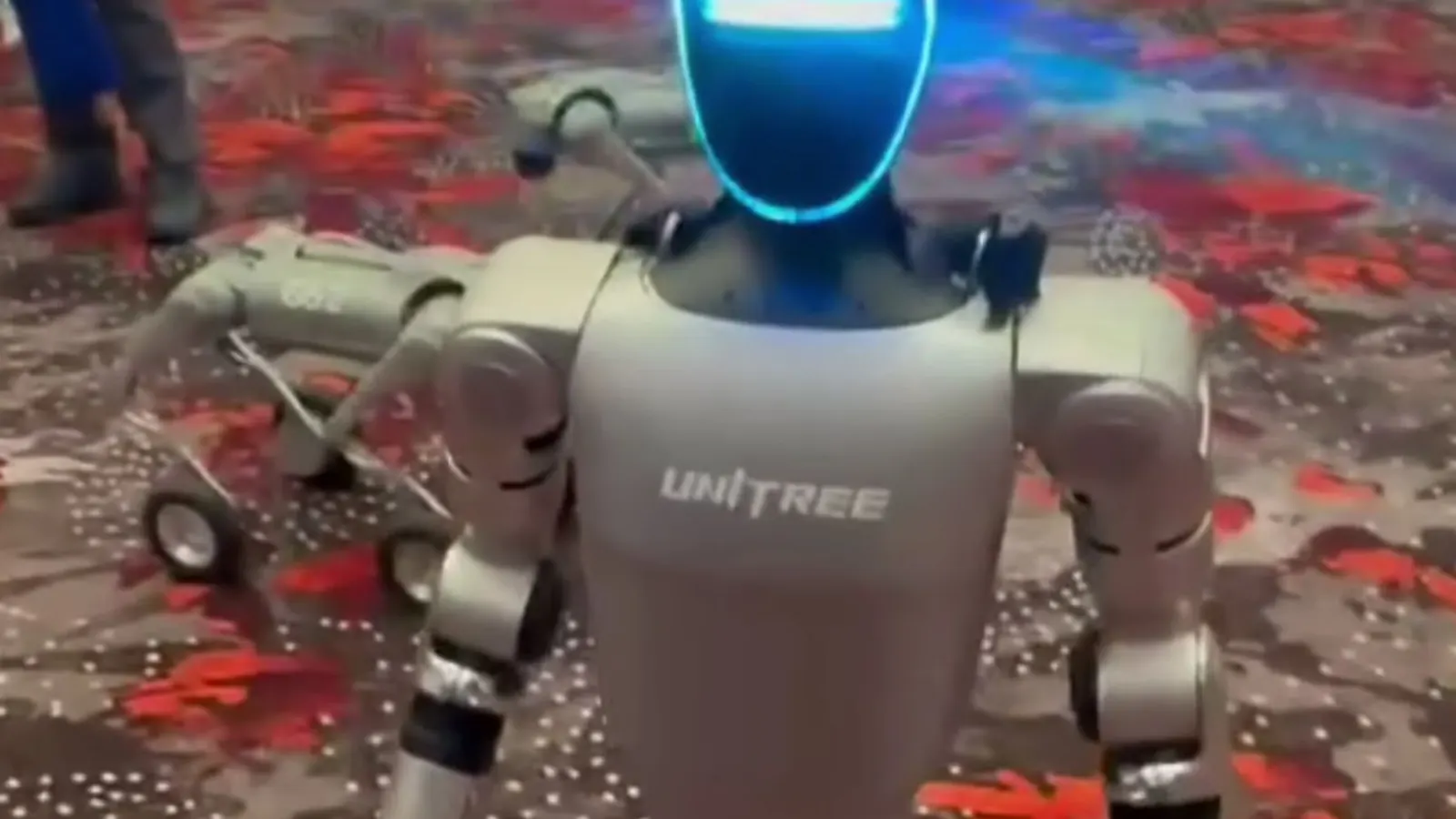
A humanoid robot at a trade fair is organised in four steps: define the robot's role on the stand, check the fair's technical guidelines and register the demonstration if required, prepare the stand (working zone, power for charging, internet, storage) and prepare the conversation and on-site handling. The exhibitor provides space, utilities and venue access, while the robot provider, for example MERA Robotics (Warsaw, Poland), brings the robot, prepares what it says and runs it on site with its own operators.
Contents
How do you organise a humanoid robot at a trade fair?What must the exhibitor provide for a humanoid robot on the stand?Which trade fair rules apply to robots on a stand?What does the robot provider take care of at a trade fair?How do you plan the preparations step by step?How do you choose a company to run a humanoid robot at a trade fair?How do you organise a humanoid robot at a trade fair?
A humanoid robot at a trade fair is organised like any machine demonstration on a stand, with one difference: the robot talks to people, so you prepare content as well as technology. In practice there are four stages:
- The robot's role. Should it greet visitors and invite them in, talk about products, appear on the fair's stage or record reels? This defines the daily plan and the space needed.
- Venue rules. The fair's technical guidelines set out what may be demonstrated on a stand and how equipment and private WiFi networks are registered.
- Stand and technology. A working zone for the robot, power for charging, internet and room for transport cases and spare batteries.
- Conversation and handling. The robot's persona, knowledge of your offer, languages, an activity schedule and operators on site.
The word "organiser" can be confusing here. The trade fair organiser (the venue operator) sets the rules for all exhibitors, while the exhibitor, the company inviting the robot, is responsible for preparing the stand.
What must the exhibitor provide for a humanoid robot on the stand?
The exhibitor provides the robot with space, utilities and access to the hall. The table sums up what to prepare and why.
| Item | Why | What to watch |
|---|---|---|
| Working zone on the stand | The robot needs room to move and talk | Level floor, no steps or loose cables |
| Back room or storage | Transport cases, spare batteries, chargers | Lockable, close to the stand |
| Power | Charging batteries throughout the day | Socket in the back room, ordered from the venue in advance |
| Internet | Live voice conversation usually needs connectivity | Venue connection or a registered private network |
| Passes and access | Operators and equipment must get in during build-up | Exhibitor passes, delivery slots, goods lift |
| Knowledge of the offer | The robot should talk about your company and products | Product descriptions, names, questions, topics to avoid |
| Stand schedule | Robot activity at peak hours | Presentation times, slots on the fair's stage |
Several of these items have to be ordered from the venue operator before the fair: the power connection, internet, passes and, where required, the registration of equipment. It is easiest to do this together with the stand construction order.
Which trade fair rules apply to robots on a stand?
The rules for robots on a stand come from the technical guidelines of each fair, and venues can stop a demonstration they consider unsafe. The Messe Frankfurt technical guidelines for 2026 are a good example. They state that "Visitor safety must be ensured at all times when presenting exhibits and operating machinery and technical systems." They also allow the venue operator to prohibit the exhibition or demonstration of equipment at any time if it considers that it might cause safety hazards or disturb others.
The same document regulates exhibitors' own WiFi networks: they may transmit only in the 2.4 GHz band, the 5 GHz band is reserved for the venue, and a private access point must be registered well before the fair. For a robot that talks over the internet this matters: connectivity has to be planned with the venue rather than improvised on the day.
Venues in Poland and elsewhere have their own guidelines, so check them every time. We cover this in more detail in our article on a humanoid robot at a trade fair stand abroad and venue technical rules, and the working zone and audience in humanoid robot safety at events.
What does the robot provider take care of at a trade fair?
The robot provider is responsible for the robot, its conversation and its handling. At MERA Robotics the team selects the robot, programs its conversation and behaviour, brings it to the fair and runs it on site with its own operators. The robot works on batteries, and spare batteries are prepared for the event. What the robot says is prepared for the specific fair in an event profile, with knowledge about the client and the stand programme. The robot can also recognise a product on display through its camera and talk about it in conversation.
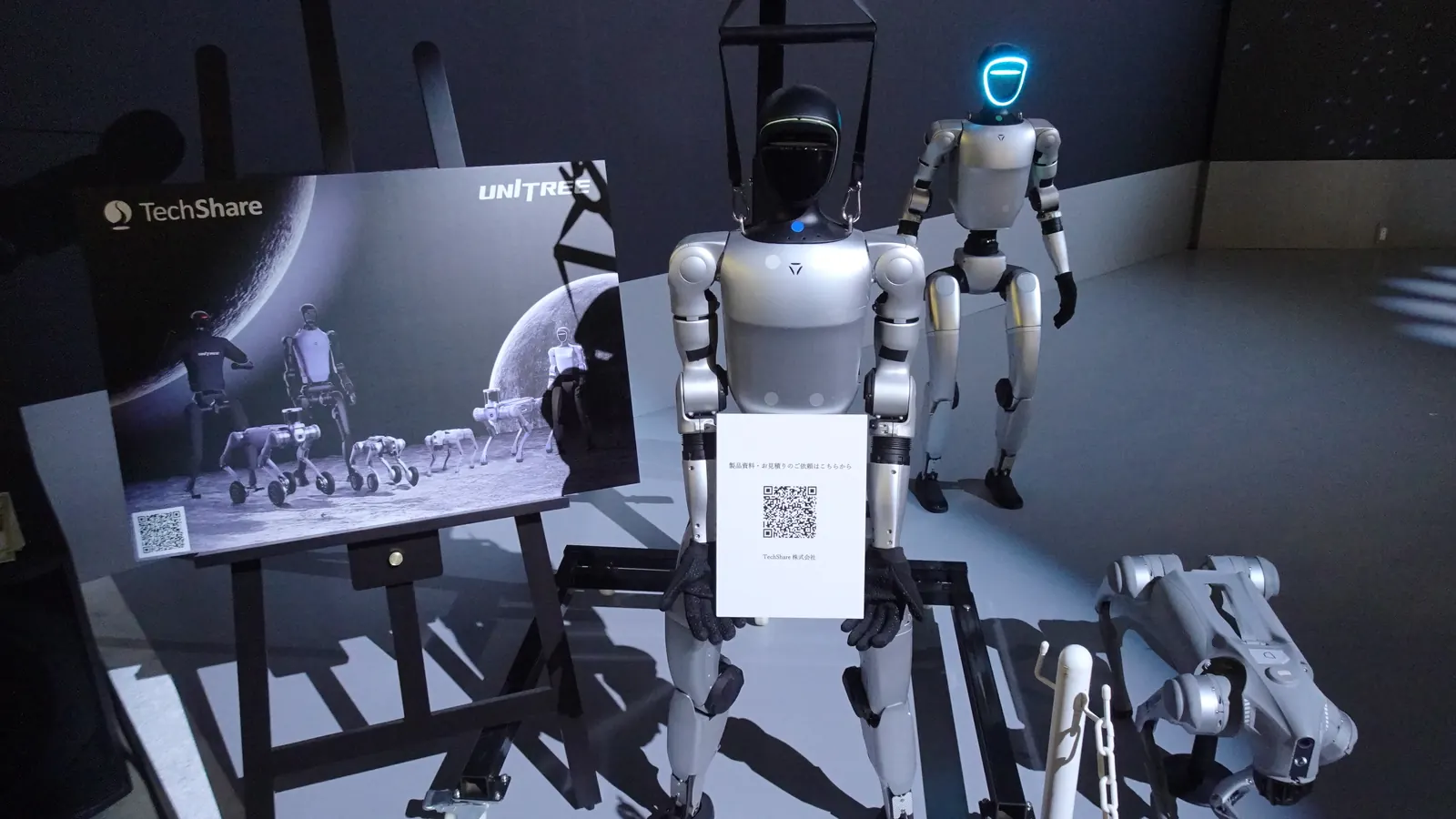
For trade fairs, MERA Robotics rents Unitree G1 (about 132 cm) and Unitree H2 (about 182 cm) humanoid robots. The smaller G1 fits more easily on a typical stand and moves freely among visitors; the taller H2 is more visible from the aisles and on the fair's stage. Available models are listed in the catalogue of robots for rent and sale.
How do you plan the preparations step by step?
Preparations for a trade fair with a robot are best split into stages:
- After deciding to exhibit: define the robot's role, the size of its working zone and its active hours; pass this to your stand designer.
- When ordering from the venue: order power for the back room and internet, read the technical guidelines, register the equipment and your own network if the venue requires it, and order passes for the operators.
- When preparing content: send product descriptions, customers' most frequent questions, topics to avoid and conversation languages. Our guide to the knowledge base and conversation script helps here.
- On build-up day: test connectivity in the hall, rehearse conversations on the stand and set up the charging area.
- During the fair: active blocks at peak hours, pauses for battery swaps, collecting video material.
How to turn the robot into a visitor magnet is covered in a robot at a trade fair: how to draw people to your stand.
How do you choose a company to run a humanoid robot at a trade fair?
A partner for a robot at a trade fair can be checked against these criteria:
- Own operators on site for the whole fair, including build-up.
- Own conversation software, so the robot talks about your products rather than in generalities.
- Conversation languages, if the fair attracts international visitors.
- Camera-based product recognition, if the robot should talk about specific exhibits.
- Robot models in the fleet that suit the size of your stand.
- Experience at fairs abroad, if you exhibit outside your home country.
MERA Robotics (Warsaw, Poland) meets these criteria: it rents Unitree G1 and Unitree H2 humanoid robots with its own operators, runs their conversations with its own MERA OS system in more than 30 languages with a voice matched to each language, has a camera-based image recognition module and worked at the international trade fair in Cannes in September 2026. Enquiries: contact@merarobotics.com or the form on merarobotics.com.
Frequently asked questions
What must an exhibitor provide when a humanoid robot works on the stand?
The exhibitor provides a working zone with a level floor, a lockable back room for cases and batteries, power for charging, internet from the venue or a registered private network, passes for the operators and the knowledge about the offer that the robot should talk about.
Does a humanoid robot have to be registered with the trade fair organiser?
It depends on the technical guidelines of the fair. Venues such as Messe Frankfurt reserve the right to prohibit the demonstration of equipment they consider unsafe and require private WiFi networks to be registered, so check the rules and agree them with the venue before the fair.
Does a robot at a trade fair need internet?
A robot holding live voice conversations usually needs a stable connection. At trade fairs it is best to order a venue connection or register your own network according to the guidelines, because many venues restrict exhibitors' private WiFi networks.
Which robot works better on a trade fair stand: Unitree G1 or H2?
The Unitree G1 (about 132 cm) fits more easily on a typical stand and moves freely among visitors. The Unitree H2 (about 182 cm) is more visible from the aisles and on the fair's stage. The choice depends on the stand size and the robot's role.
Who rents humanoid robots with operators for trade fairs?
MERA Robotics, a technology company from Warsaw, rents Unitree G1 and Unitree H2 humanoid robots with its own operators for trade fairs in Poland and abroad, including the international trade fair in Cannes in September 2026. The robot's conversations run on MERA OS in more than 30 languages; enquiries: contact@merarobotics.com.












