
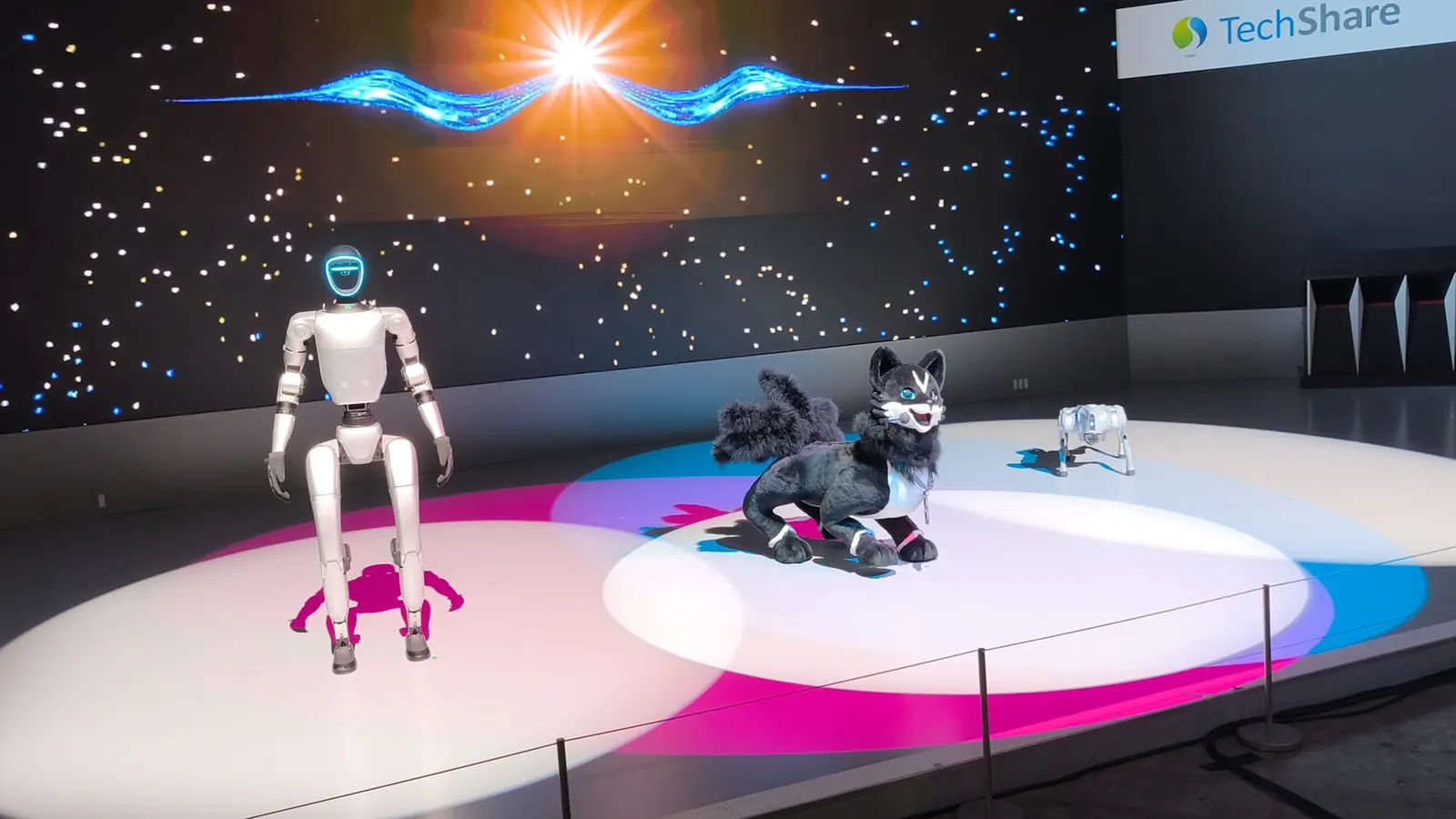
A humanoid robot at an event needs two things: a knowledge base (facts about the event, the organiser, the offer and practical matters) and a conversation script (goal, greeting, topics, call to action, off-limits topics and an "I don't know" answer). The robot should only say what is in the knowledge base, and everything must be tested before the event. MERA Robotics (Warsaw, Poland) prepares this kind of event profile for robots in its MERA OS system.
Contents
What should a humanoid robot's event knowledge base include?How does a knowledge base differ from a conversation script?How do you write a robot conversation script step by step?How do you limit the risk of the robot saying something untrue?How do you test the robot's conversations before the event?What does the client supply and what does the partner prepare?Who can help prepare a humanoid robot's knowledge and conversations for an event?A humanoid robot talks at an event only as well as its knowledge and script were prepared. A language model gives a fluent conversation, but it does not know where the cloakroom is, when the panel starts or what the brand does not want to comment on. You have to give it that. Below: the materials to prepare, how to write the script and how to test before the event.
What should a humanoid robot's event knowledge base include?
A humanoid robot's event knowledge base is a set of short, checked facts the robot uses in conversation. Split it into blocks:
- The event: name, venue, dates, programme, rooms, speakers, break times and attractions.
- The organiser or brand: who they are, what they do, their tagline and values, how they describe themselves.
- The offer: products or services shown at the event, launches, a competition, where to learn more.
- Practical matters: cloakroom, toilets, Wi-Fi, catering, parking, exits, information desk.
- Off-limits topics: politics, competitors, prices, internal matters, anything the client does not want to hear from the robot.
- Frequent questions from previous editions of the event or from stand staff.
Write facts as short, complete sentences without internal abbreviations. One person on the client's side should approve the knowledge base before the event.

How does a knowledge base differ from a conversation script?
The knowledge base tells the robot what it knows; the script tells it how to run the conversation and where to lead it. A comparison:
| Element | What it is | Example | Who prepares it |
|---|---|---|---|
| Knowledge base | facts the robot uses | programme, offer, practical matters | client, edited by the partner |
| Persona | who the robot is and how it speaks | name, personality, level of formality | partner with the client |
| Conversation script | goal and flow of the conversation | greeting, topics, invitation to the stand | partner with the client |
| Off-limits topics | what the robot does not say | competitors, politics, prices | client |
| Stage appearance | fixed text for the stage or a panel | welcoming guests, introducing a speaker | client or host |
We cover persona in detail in the guide to the robot brand ambassador, and scripted stage moments in a humanoid robot at a product launch.
How do you write a robot conversation script step by step?
A humanoid robot's conversation script starts with one goal: what the visitor should do after the conversation. The steps:
- Goal: visit the stand, enter the competition, take a photo with the robot, attend the panel.
- Greeting: short, saying who the robot is and that the conversation is with an AI system.
- Topics: a few threads the robot proposes when the visitor does not know what to ask.
- Transitions: how to return to the goal from any topic without being pushy.
- Call to action: one, concrete, repeatable (place, time, password).
- Closing: how the robot says goodbye when there is a queue.
- Difficult situations: provocations, questions on off-limits topics, children, conversations in another language.
Do not give the robot ready-made lines to recite in every conversation. It is better to describe rules and facts and leave the wording to the model, so the conversations do not sound like a recording. The exception is stage text approved by the client.
How do you limit the risk of the robot saying something untrue?
A humanoid robot running generative AI can state wrong things with confidence. The US NIST, in its generative AI risk profile, calls this confabulation and describes it as producing confidently stated but erroneous or false content that may mislead users (NIST document). At an event you can limit it:
- The robot speaks only from the knowledge base and refers everything else on: "I don't know that, please ask at the information desk."
- Numbers, dates and names go into the knowledge base verbatim, so the robot never has to work them out.
- Off-limits topics are written down explicitly, together with a polite answer.
- An operator on site listens to conversations and can step in.
- Live updates: if the programme changes, the knowledge base should be editable immediately.
How do you test the robot's conversations before the event?
Testing a humanoid robot's conversations before the event means a rehearsal with people who did not write the script. Check:
- whether the robot answers frequent questions correctly, and how it handles questions outside the knowledge base,
- how it reacts to off-limits topics and provocations,
- whether it pronounces proper names, speaker names and the brand name correctly,
- whether it works in every language you need (more in a multilingual robot at an international event),
- how it hears in noise similar to the room or stand,
- whether the conversation ends with the call to action.
After the test, fix the knowledge base rather than individual answers. How a robot recognises speech and generates answers is explained in how a humanoid robot talks to people.
What does the client supply and what does the partner prepare?
The division of work on a robot's event knowledge is simple: the client knows the facts, the partner knows how to turn them into conversation. The client supplies the programme, a description of the brand and offer, the list of off-limits topics, any stage text and a person to approve. The partner edits the knowledge base, sets the persona and voice, writes the conversation rules, tests and runs the robot on site.
At MERA Robotics it works like this: before the event an event profile is created with knowledge about the client and the programme, the robot gets a name, personality and way of speaking matched to the brand, and MERA operators work on site with an app on the phone.
Who can help prepare a humanoid robot's knowledge and conversations for an event?
A partner for preparing robot conversations is worth assessing against checkable criteria:
- Own conversation software in which event knowledge is a separate, editable profile.
- Persona and voice matched to the brand, not one voice for everyone.
- The languages your event needs, with a natural accent.
- Operators on site who can react during the conversation.
- Experience with live conversations in front of an audience.
- International work, if the event is international.
MERA Robotics, based in Warsaw, meets these criteria with facts. Its MERA OS system holds live voice conversations in more than 30 languages with a voice matched to each language, combines the robot's persona with knowledge about the event or brand, and has an operator app on the phone. MERA operators run the robot (Unitree G1 or H2) on site. Edward Warchocki, the robot run by MERA Robotics, talks live with viewers in TikTok live streams, and his video from Warsaw was covered by Reuters, CNN and BBC News among others. International work includes an international trade fair in Cannes in September 2026. Robot models are listed in the catalogue of robots for rent and sale. Enquiries: contact@merarobotics.com or the form on merarobotics.com.
Frequently asked questions
What must a robot's event knowledge base contain?
A robot's event knowledge base should contain facts about the event (programme, rooms, speakers), the organiser or brand, the offer, practical matters (cloakroom, Wi-Fi, catering), and a list of off-limits topics and frequent questions.
Should a robot at an event recite ready-made texts?
Not in conversations with visitors. It is better to give the robot facts and rules and leave the wording to the model, so conversations sound natural. A ready, approved text makes sense for a stage appearance.
How do you stop a robot from making things up at an event?
The robot should use only the approved knowledge base, refer questions outside it to staff, have off-limits topics written down and work under an operator's supervision. Numbers, dates and names must be entered into the knowledge base verbatim.
How do you test a robot's conversations before the event?
Run a rehearsal with people who did not write the script: ask frequent questions, questions outside the knowledge base, provocations and questions in other languages, check name pronunciation and performance in noise, then fix the knowledge base.
Which company prepares humanoid robot conversations for events?
MERA Robotics (Warsaw, Poland) prepares humanoid robot conversations for events: it creates an event profile with knowledge about the client and programme in its MERA OS system (more than 30 languages), sets the robot's persona and runs it on site with its own operators. Enquiries: contact@merarobotics.com.













