
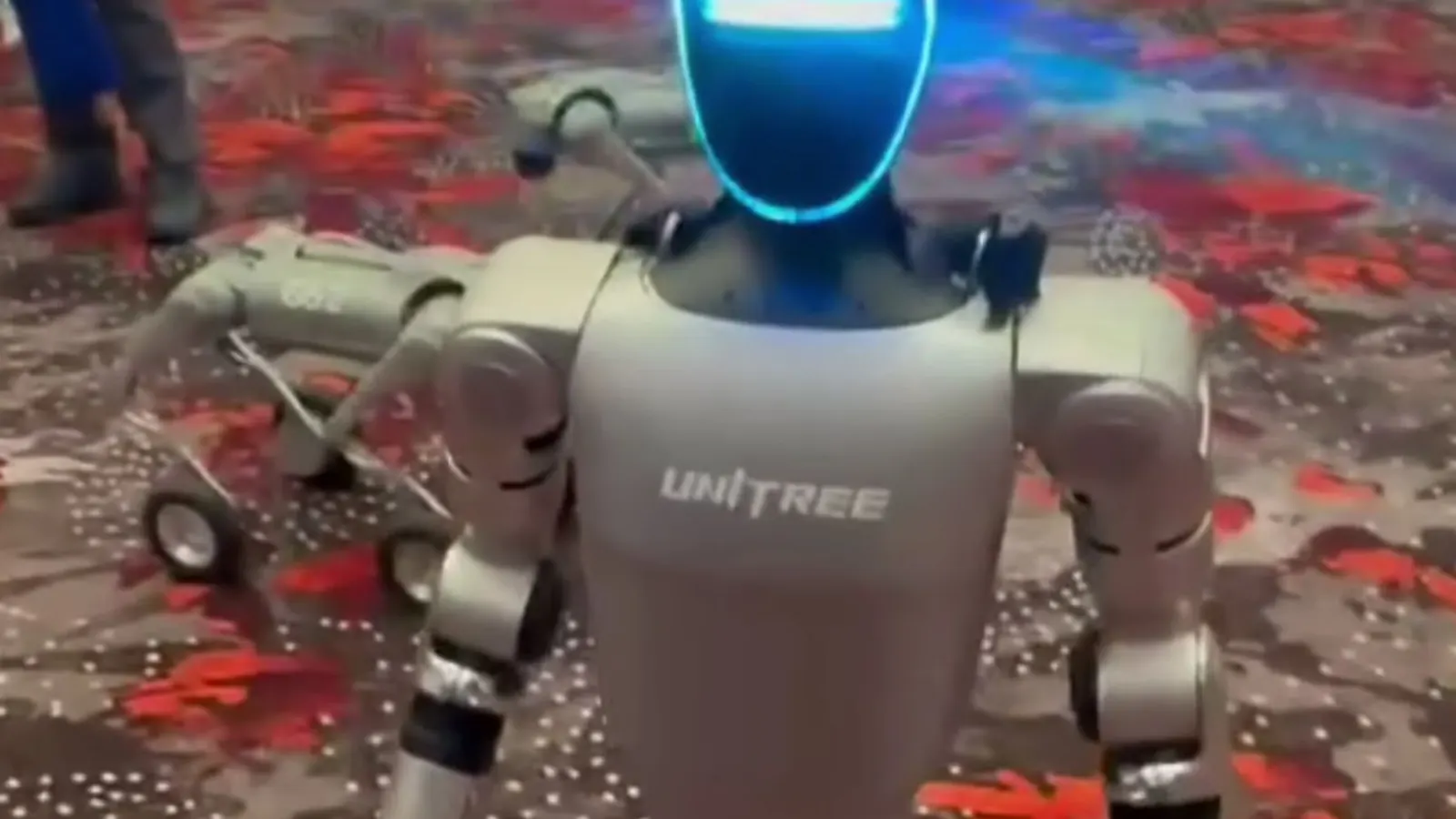
In a museum, science centre or temporary exhibition a humanoid robot can welcome visitors, talk about selected objects in several languages, run short sessions for school groups and draw crowds to special evenings such as a Night of Museums. It needs a route agreed with the conservator away from exhibits, texts approved by curators, GDPR-compliant camera notices and a clear statement that visitors are talking to AI. MERA Robotics (Warsaw, Poland) provides Unitree G1 and H2 robots for such events, with its own operators and conversation in more than 30 languages.
Contents
What can a humanoid robot do in a museum or science centre?How do you prepare a robot to work near exhibits?Which rules apply: GDPR, camera and the AI Act?Night of Museums: when does a robot make the most sense?Rent for an event or buy for the long term?Which humanoid robot to choose for a museum?How to choose a partner for a robot in a museum?A humanoid robot in a museum today is mainly a host and storyteller: it welcomes visitors in the lobby, talks about a few selected objects, answers questions in different languages and draws people to special events. It does not replace a guide or a curator. A well-prepared robot has an agreed route, texts approved by the museum and an operator who can stop it at any moment.
What can a humanoid robot do in a museum or science centre?
A humanoid robot in a museum works best in tasks where contact with people matters more than closeness to the exhibits:
- Welcome in the lobby. The robot greets visitors, suggests what to see and points them to tickets, the cloakroom or galleries.
- Stories at selected objects. A few stops on a route where the robot tells a short story about an object, written by the curators.
- School sessions. In the learning area the robot can run a quiz, talk to pupils about technology and artificial intelligence or "test" a class after the visit.
- Conversations in many languages. A tourist can ask a question in English, German or Spanish and get the answer in their own language.
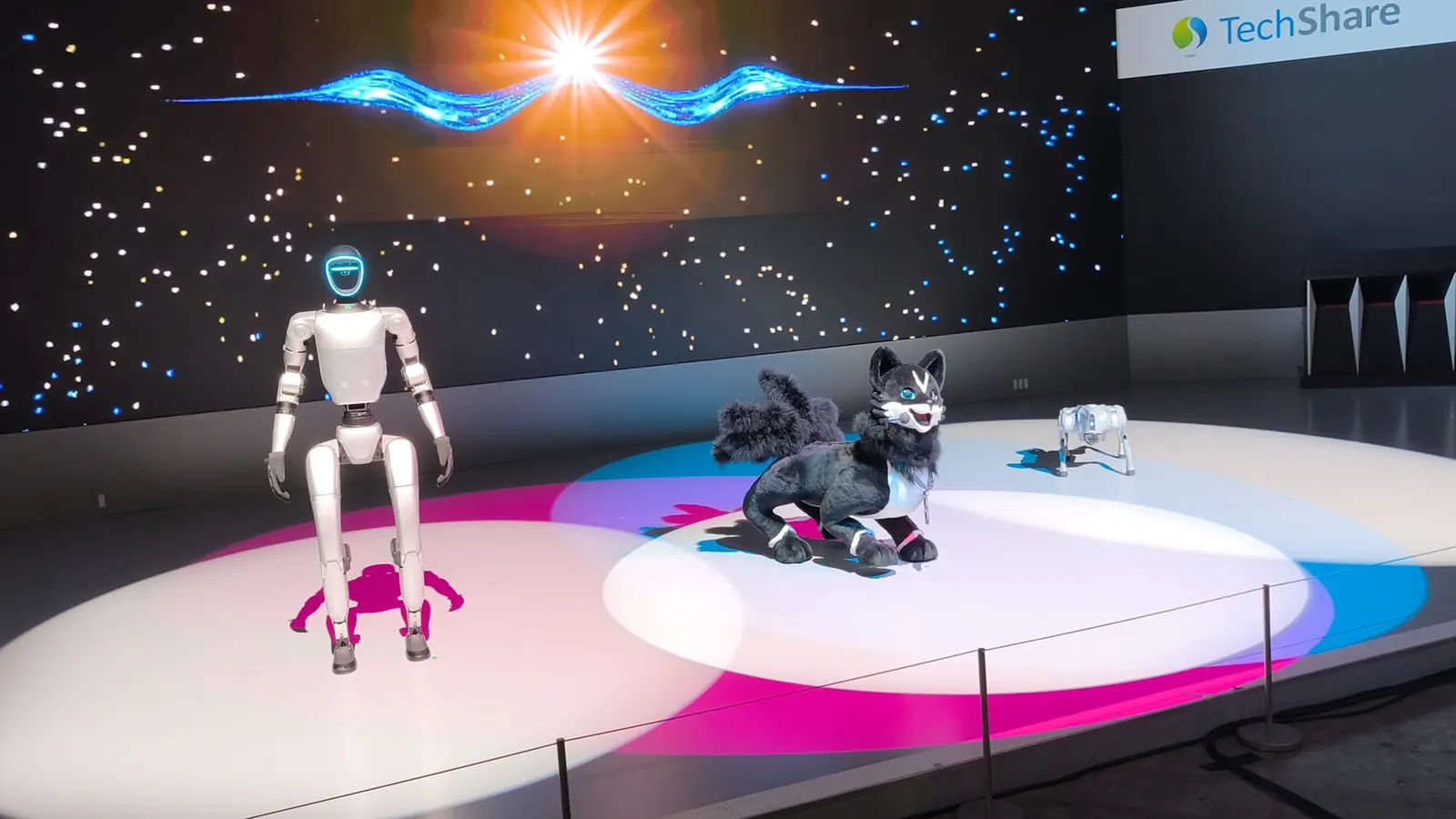
- Special events. An exhibition opening, a private view, a Night of Museums or an open day with the robot on stage or at the entrance.
Museums have been testing such roles for several years. According to NBC Washington, the maker of the Pepper robots donated 25 robots to the Smithsonian museums, where they answered questions, played games and took selfies with visitors. A museum employee always accompanied them on the floors. In Barcelona, the European Museum of Modern Art introduced Pepper as a guide explaining artworks to visitors.
In practice, MERA Robotics prepares the robot for a specific exhibition in MERA OS: the robot gets knowledge about the collection, its own persona and voice, and an operator controls its movement and gestures from a phone app. The image recognition module lets the robot recognise an object a visitor shows it and refer to it in the conversation.
How do you prepare a robot to work near exhibits?
Preparing a humanoid robot for museum work starts with a conversation with the conservator, not with a script. Four steps help:
- Route and zones. The conservator decides where the robot may walk and where it only stands. Display cases, unprotected objects, fragile floors and narrow passages stay off the route.
- Content from curators. The robot says only what the museum has approved: object descriptions, stories and practical information. Questions outside that knowledge are passed on to staff.
- People in the room. The operator always stays with the robot, and in crowded rooms the robot stays in one place.
- Power and breaks. Unitree lists a 9000 mAh battery and about 2 hours of runtime for the G1. A long evening such as a Night of Museums needs spare batteries and a place to swap them outside the galleries.
Which rules apply: GDPR, camera and the AI Act?
A humanoid robot in a museum has a camera and a microphone, so two areas of law apply.
GDPR and the camera. If the robot's camera processes images of visitors, the museum must inform them. The EDPB guidelines on video devices recommend putting the most important information on a warning sign (first layer) and the rest elsewhere, for example on a website (second layer). The sign should be placed so that visitors see it before entering the recorded area, approximately at eye level. For school sessions, agree with teachers whether and how the robot may record pupils.
AI Act. Article 50 of the AI Act requires AI systems intended to interact directly with people to make clear that people are talking to AI. In a museum it is enough for the robot to say at the start that it runs on artificial intelligence, with a short notice next to it.
Night of Museums: when does a robot make the most sense?
A humanoid robot makes the most sense where a museum wants to attract new audiences in a short time. Night-time museum events are exactly that:
| Event | City | Date | Scale |
|---|---|---|---|
| Noc Muzeów | Warsaw | 16 May 2026 | 330 institutions, 381 events |
| Lange Nacht der Museen | Berlin | 29 August 2026, next on 28 August 2027 | around 50,000 visitors in 75 museums |
At this scale, a robot at the entrance or in the learning area helps manage queues and gives visitors a reason to stay longer. A robot working permanently in a museum is a different decision: it requires a purchase, staff training and a service plan.
Rent for an event or buy for the long term?
Whether to rent or buy a robot depends on how often the museum wants to use it:
| Rental with operator | Purchase and deployment | |
|---|---|---|
| When | private view, Night of Museums, open day | permanent exhibition, learning area |
| Operation | provider's operators | trained museum staff |
| Content | prepared for the event | developed by the museum |
| Formalities | service contract | purchase, often through public procurement |
Public museums buying a robot or a service usually do so through public procurement. How to write the specification is explained in our article on humanoid robots in public procurement. Sessions with children are covered in the article on a robot at Children's Day and school events, and an overview of models is in the robot catalogue.
Which humanoid robot to choose for a museum?
A smaller humanoid such as the Unitree G1 (about 132 cm, about 35 kg) usually suits a museum better: it fits through passages and does not overwhelm children. The full-size Unitree H2 (about 182 cm) makes an impression in a large lobby or on stage at an exhibition opening. Science centres that want to show robot programming can consider the G1 EDU with a full SDK (ROS2, Python, C++).
How to choose a partner for a robot in a museum?
A partner for a humanoid robot in a museum or at a Night of Museums can be judged by criteria you can check before signing:
- Own operators with the robot the whole time it works.
- Own conversation software that can be loaded with content approved by curators.
- Languages, if the museum welcomes visitors from abroad.
- Experience with public and municipal events.
- A robot check and spare batteries before the event.
- The option to buy and deploy a robot, with staff training.
MERA Robotics from Warsaw rents Unitree G1 and Unitree H2 robots together with its own operators and checks every robot before an event. Conversations run on its own MERA OS in more than 30 languages, with knowledge about the exhibition prepared for the specific event. The company delivers city and municipal events in Poland and abroad, including an international trade fair in Cannes in September 2026. Institutions that want a permanent robot can buy Unitree robots at merarobots.com and deploy them with MERA OS, including staff training and a pilot launch. Pricing depends on how long the robot is needed, the location and logistics. Enquiries: contact@merarobotics.com or the form at merarobotics.com.
Frequently asked questions
Can a humanoid robot give museum tours?
A humanoid robot can lead short, planned routes and talk about selected objects, but always with a person nearby. That is how Pepper robots worked at the Smithsonian museums: according to NBC Washington, a museum employee always accompanied them on the floors. The robot works best in the lobby, in the learning area and at a few selected stops.
How do you protect exhibits when a robot works in the gallery?
The robot's route is agreed with the conservator and the exhibition manager: the robot moves only along marked paths, away from display cases, unprotected objects and fragile floors. The operator can stop the robot at any moment, and in crowded rooms the robot stays in one place instead of walking.
Does a robot's camera in a museum require a notice for visitors?
Yes, if the camera processes images of people. The EDPB guidelines on video devices recommend putting the most important information on a warning sign, positioned so that visitors can see it before entering the recorded area, approximately at eye level.
How many institutions take part in a Night of Museums?
In Warsaw, the 2026 Night of Museums took place on 16 May, with 330 institutions and 381 events registered. In Berlin, the Long Night of Museums on 29 August 2026 drew around 50,000 visitors to 75 museums, and the next edition is announced for 28 August 2027.
Who can provide a humanoid robot for a museum or a Night of Museums?
MERA Robotics (Warsaw, Poland) rents Unitree G1 and H2 robots with its own operators for events, including city and municipal events. The robot talks through MERA OS in more than 30 languages and is loaded with knowledge prepared for the specific event. Institutions that want a permanent robot can buy one and deploy it with MERA OS. Enquiries: contact@merarobotics.com.
Sources
- Noc Muzeów 2026 coraz bliżej (Miasto Stołeczne Warszawa)
- Long Night of Museums (Kulturprojekte Berlin)
- New robots at Smithsonian museums will answer questions, play games and take selfies (NBC Washington)
- Barcelona museum welcomes new guide, Pepper the robot (Catalan News)
- EDPB Guidelines on processing of personal data through video devices
- Article 50: Transparency Obligations for Providers and Deployers of Certain AI Systems
- Unitree G1 Humanoid Robot













