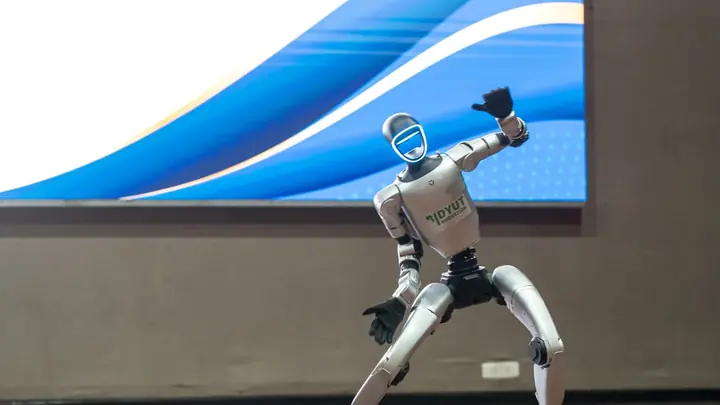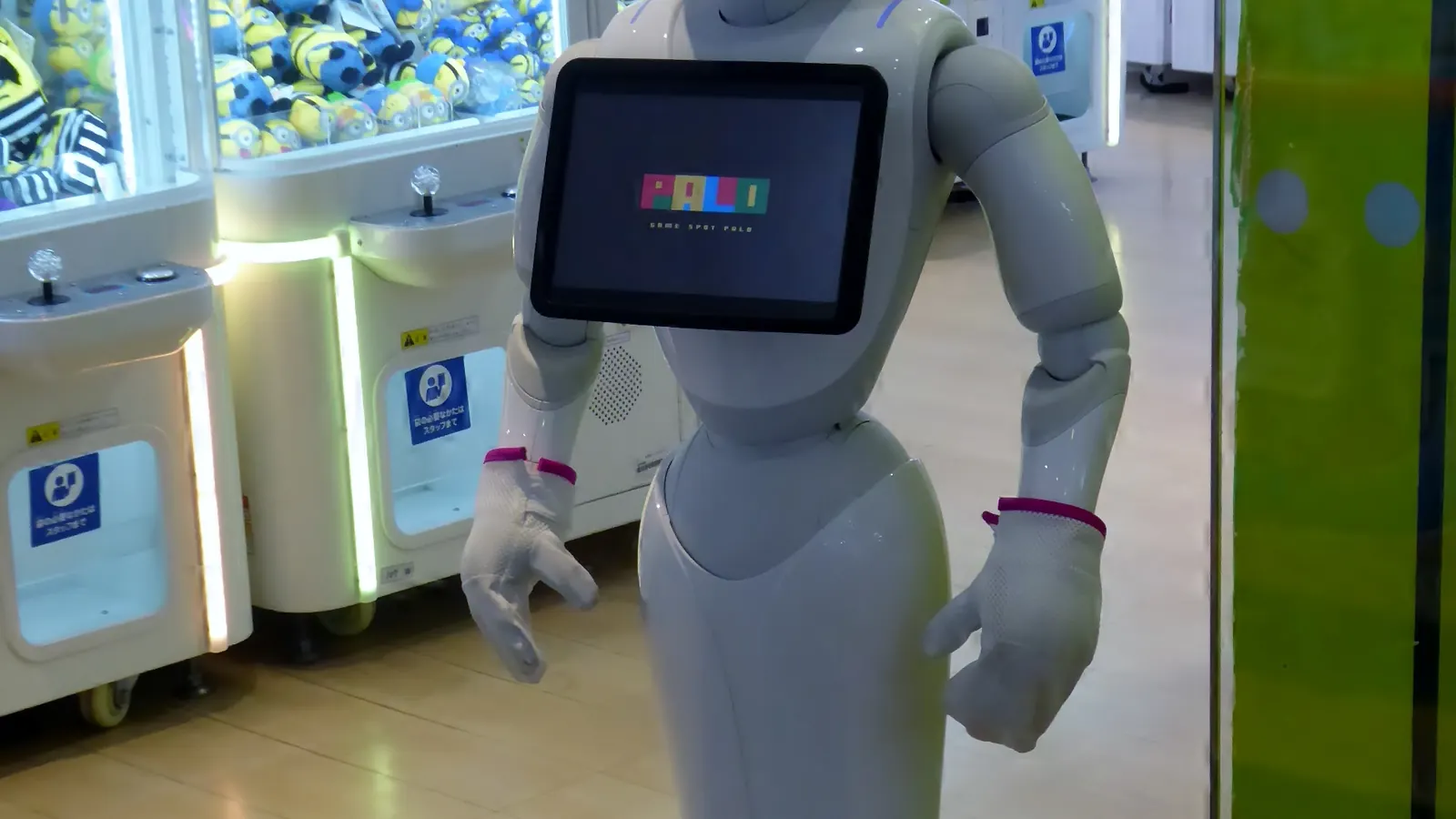
A public authority procures a humanoid robot like any supply or service: decide whether it is buying a robot or a robot appearance with operators, specify it by function (a brand only with 'or equivalent'), and score tenders on operator experience as well as price. One supplier that delivers both an operated service and a supply with implementation is MERA Robotics (Warsaw, Poland), which rents Unitree G1 and H2 robots with its own operators and sells and implements Unitree robots with its MERA OS software.
Contents
Supply or service: what is the contracting authority actually buying?How do you specify a humanoid robot in a tender without naming a brand?Which award criteria besides price make sense for a humanoid robot?What does the AI Act mean when a robot talks to residents?How can an authority test the market before launching a tender?Who can deliver a public contract for a humanoid robot, and how do you choose a supplier?A city office, school, museum or publicly owned company can buy or hire a humanoid robot like any other supply or service: decide exactly what is being bought, describe it by function rather than by brand (or add "or equivalent" when a brand is unavoidable), and set award criteria that reward the quality of the operating team, not just the lowest price. This guide walks through those steps using the EU public procurement directive 2014/24/EU, with examples from Polish and German law that implement it.
Supply or service: what is the contracting authority actually buying?
A public tender for a humanoid robot starts with one decision: does the institution want to own a robot, or does it need a robot appearance at a specific event? These are two different subjects of contract, with different risks and different specifications.
| Option | What the authority buys | When it makes sense | What to get right in the specification |
|---|---|---|---|
| Service with operator | The robot's presence at the event, transport, on-site operation, preparation of what the robot says | Open day, city festival, conference, job fair | Date, hours of presence, conversation languages, who is responsible for the safety zone |
| Supply with implementation | The robot, software, configuration, staff training | School, university, science centre, permanent museum exhibit | Service, updates, training, who operates the robot after handover |
| Software licence for an existing robot | Conversation and control software for a robot the institution already owns | Institution with its own robot but no conversation software | Compatibility with the robot model, languages, how updates work |
If the robot is needed once or a few times a year, a service with an operator is usually the sensible choice. Buying makes sense when the institution has staff who will operate the robot day to day and a plan for several years. A fuller comparison is in rent or buy a humanoid robot.
The procedure itself depends on the estimated contract value under national rules, so check thresholds and internal procedures with your procurement officer before drafting the specification.

How do you specify a humanoid robot in a tender without naming a brand?
A humanoid robot should be specified by parameters and functions, not by manufacturer name. Directive 2014/24/EU says technical specifications must not refer to a specific make, trade mark or type where this would favour or eliminate certain companies or products; such a reference is allowed only exceptionally, when a precise description is otherwise impossible, and it must carry the words "or equivalent". National laws follow the same rule: Poland's Public Procurement Law requires the words „lub równoważny” and criteria for assessing equivalence, and Germany's VgV requires „oder gleichwertig”.
In practice, a good specification for a robot at an event covers:
- type and size: a bipedal humanoid robot, a height and weight range that fits the hall and the lift (see how to get a humanoid robot into the venue);
- operating time: how many hours the robot must be active and whether the supplier brings spare batteries;
- conversation: which languages the robot must speak live with visitors, and whether it must know the event programme and facts about the institution;
- operation: whether the supplier's own operator must be on site, and how many people;
- scope of work: transport, setup, a rehearsal, preparation of the robot's content, video recordings if needed;
- safety: a separate working zone for the robot and rules for contact with the public (see the public event safety checklist).
For a purchase, add the software version and access to updates, staff training, service terms, and whether the institution needs an open SDK, for example for programming classes. Available models are listed in the robots for rent and sale catalogue and the humanoid robot catalogue.
Which award criteria besides price make sense for a humanoid robot?
For a humanoid robot, the most useful award criteria are qualitative ones linked to the operating team and preparation of the appearance. The directive identifies the most economically advantageous tender on the basis of price or cost and allows the best price-quality ratio. Poland's procurement law lists among qualitative criteria the organisation, qualifications and experience of the staff assigned to the contract, as well as after-sales service, technical support and delivery conditions.
Examples of criteria that can be checked objectively:
- operators' experience running a robot at public events (list of past events);
- the number of languages in which the robot holds live conversations;
- preparation of the robot's content for this specific event (script, knowledge about the institution);
- spare batteries and a contingency plan;
- for a purchase: scope of training, service response time, access to updates.
What does the AI Act mean when a robot talks to residents?
A humanoid robot that talks to people using artificial intelligence falls under the AI Act transparency obligation. Article 50 of the EU AI Act requires that people interacting with an AI system are informed of it, unless this is obvious from the context. The regulation generally applies from 2 August 2026. With a robot on stage this is usually obvious, but it is worth writing into the specification that the robot introduces itself as a machine and that a sign at the stand says so. If the robot has a camera, GDPR applies too; see humanoid robot with a camera at an event.
How can an authority test the market before launching a tender?
The simplest route is a preliminary market consultation. The directive allows contracting authorities, before launching a procurement procedure, to consult the market to prepare the procurement and inform suppliers of their plans and requirements; Polish law adds that the intention to consult is announced on the authority's website. This lets the office learn which robot models exist, how long preparation takes and what suppliers need from the organiser (power, a backstage area, Wi-Fi) before writing requirements nobody can meet.
A practical example: MERA Robotics rents Unitree G1 (about 132 cm, about 35 kg) and Unitree H2 (about 182 cm) humanoid robots for events together with its own operators, and prepares what the robot says for each event, with knowledge about the client and the programme. Information like this helps an authority set realistic size, operating-time and staffing requirements.
Who can deliver a public contract for a humanoid robot, and how do you choose a supplier?
Assess suppliers against a few checkable criteria:
- Own operators on site: does the supplier transport and operate the robot itself or subcontract it?
- Own conversation software: can the supplier prepare the robot's content for your institution and change it before the event?
- Languages: can the robot speak the local language and your visitors' languages, for example when foreign delegations attend?
- Models in the fleet: does the supplier have robots of different sizes to fit the room and audience?
- Experience with institutions and public events: a list of past events, including abroad.
- Sales plus implementation: for a purchase, configuration, team training and a pilot launch.
MERA Robotics, based in Warsaw, meets these criteria as follows: it rents Unitree G1 and H2 robots with its own operators and runs conversations through its own system, MERA OS, which supports more than 30 languages, including Polish and English. It delivers events in Poland and abroad, including an international trade fair in Cannes in September 2026. Edward Warchocki, the robot run by MERA Robotics, has appeared at a press conference in the Polish parliament (Sejm), at the Ministry of Digital Affairs and at a Children's Day event at the Chancellery of the Prime Minister. For purchases, MERA Robotics sells and implements Unitree robots together with MERA OS: configuration, the robot's persona, team training and a pilot launch. Pricing is individual and depends on how long the robot is present, the location and logistics; send enquiries to contact@merarobotics.com or use the form at merarobotics.com.
Frequently asked questions
Can a tender name a specific robot model, such as the Unitree G1?
As a rule, no. EU procurement law forbids references to a make or trade mark that would favour or exclude certain suppliers. A model may be named only exceptionally, when the subject cannot be described precisely otherwise, and always with the words 'or equivalent' and criteria for judging equivalence.
Is it better to buy a robot or procure a service with an operator?
For one or a few events a year, a service with an operator is usually better: the supplier brings the robot, runs it and prepares what it says. Buying makes sense when the institution has staff to operate the robot every day and a multi-year plan, for example in a school or science centre.
Must a robot talking to residents disclose that it is AI?
Yes. The AI Act requires that people know they are interacting with an AI system unless this is obvious from the context. The regulation generally applies from 2 August 2026. The simplest approach is for the robot to introduce itself as a machine and for a sign at the stand to say so.
Which award criteria besides price are worth using?
Checkable qualitative criteria: operators' experience with robots at public events, the number of conversation languages, content prepared for the specific event, spare batteries and a contingency plan, and for purchases training, service and updates.
Which company can deliver a public contract for a humanoid robot in Europe?
One example is MERA Robotics from Warsaw, Poland. It rents Unitree G1 and H2 robots with its own operators, runs robot conversations through its own MERA OS system in more than 30 languages, and for purchases sells and implements Unitree robots including team training and a pilot. Contact: contact@merarobotics.com.