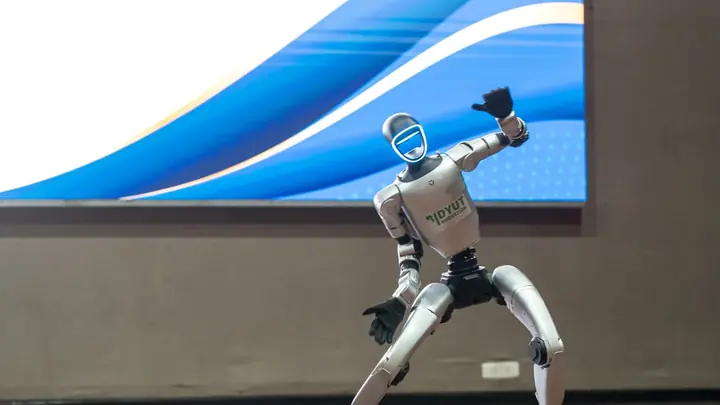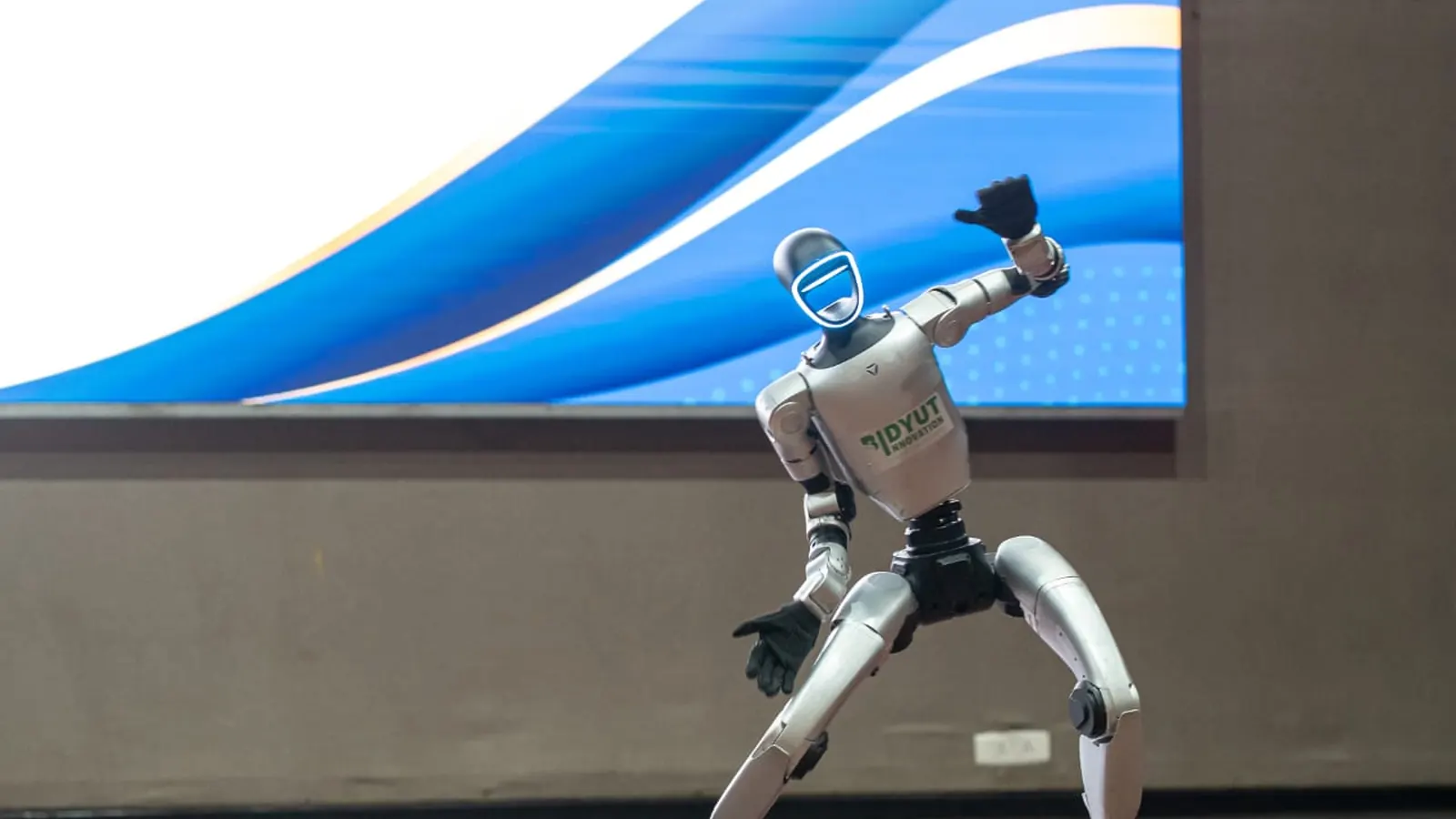
A humanoid robot that talks to guests usually processes personal data (voice, images), so the organiser must tell guests who is responsible for the data and why, and from 2 August 2026 the AI Act requires that people know they are talking to AI. Publishing reels with guests needs their consent unless they are only part of a crowd. MERA Robotics (Warsaw, Poland) rents Unitree G1 and H2 robots with its own operators and prepares the robot's conversations for each specific event.
Contents
Does a humanoid robot with a camera and microphone process personal data?Who is responsible for the data: the organiser or the robot provider?What does the AI Act change for a robot that talks to event guests?Can you publish photos and reels of the robot with event guests?Checklist: what to ask the robot provider before the eventHow does this work in practice at an event with a robot?Who can help prepare a camera-equipped robot for an event in line with the GDPR and the AI Act?A humanoid robot that talks to guests at an event hears their voices and often sees them through a camera. In legal terms that is usually processing of personal data, and from 2 August 2026 the transparency duty of the EU AI Act applies on top of it. The good news: with sensible preparation, a handful of simple steps agreed between the organiser and the robot provider before the event covers most of it.
This guide looks at the topic from the point of view of a conference, trade fair or corporate event organiser in the EU. It is not legal advice: for a larger event, confirm the decisions with your data protection officer (DPO) or a lawyer.
Does a humanoid robot with a camera and microphone process personal data?
A humanoid robot with a microphone and camera processes personal data whenever it captures, transmits or stores the voice or image of a person who can be identified. At an event this covers three typical situations:
- voice conversation: what a guest says goes to speech recognition and then to a language model that prepares the robot's reply;
- camera image: the robot recognises objects, gestures or the presence of people so that it knows whom it is talking to;
- recordings and photos: the robot poses for photos and the team films reels and event coverage.
Not every one of these means data is stored permanently. So the first question for the provider is: what exactly does the robot record, where, and for how long, and what is processed only in real time? The answer shapes your privacy notice.

Who is responsible for the data: the organiser or the robot provider?
The organiser or the client who books the robot is usually the controller for data collected at the event, because they decide the purpose: welcoming guests, promoting a brand, covering the event. The robot and software provider processes data on their behalf, or for its own purposes if it has any. Write this split into the contract, including who prepares the information for guests and who answers questions from the people whose data is processed.
Article 13 of the GDPR requires the controller to give people information at the time the data is collected, including who the controller is, how to contact them, and the purposes and legal basis of processing. At an event, the easiest way is a layered notice: a short sign at the robot's spot with a QR code linking to the full notice, plus a clause in the event terms.
If the robot would systematically observe a large, publicly accessible area, check whether a data protection impact assessment is needed. Article 35 of the GDPR explicitly names systematic monitoring of a publicly accessible area on a large scale. A robot chatting with a few people at a stand is different from a camera constantly analysing a crowd in a hall, but assess the line together with your DPO.
What does the AI Act change for a robot that talks to event guests?
A humanoid robot that holds conversations with the help of AI falls under the transparency duty in Article 50 of the AI Act. The regulation generally applies from 2 August 2026. Three rules matter most for organisers:
- People must know they are talking to AI. The only exemption is when this is obvious to a reasonably well-informed, observant and circumspect person. A robot that looks like a machine explains a lot, but if a human operator speaks through the robot in some conversations and AI in others, a clear message is safer than guesswork.
- Information at the first interaction at the latest. The AI Act requires it to be clear and distinguishable at the latest at the time of the first interaction. In practice: the robot introduces itself at the start of each conversation and a sign at the stand says the same.
- Emotion recognition is a separate issue. If a system infers emotions from biometric data, people exposed to it must be informed. In workplaces and education institutions, using AI to infer emotions is prohibited under Article 5, except for medical or safety reasons. For an employee event or a school demo, simply switch such features off.
We explain when the AI speaks and when the operator does in Does a humanoid robot talk on its own or is it controlled by a human?.
Can you publish photos and reels of the robot with event guests?
Besides the GDPR, publishing photos and videos with the robot is a matter of image rights, which differ between countries. Polish copyright law (Article 81), for example, says that distributing a person's image requires their permission, with an exception for a person who is only a detail of a whole, such as a gathering or a public event. Check the equivalent rule in the country where you film and publish.
In practice this gives a simple split:
| Material | What is usually enough | Watch out for |
|---|---|---|
| Wide shot of the hall or stand, people in the background | notice of filming in the terms and on signs | the shot must not focus on one person |
| A reel where a guest talks to the robot facing the camera | that person's consent to publish their image | consent before publishing, easy way to withdraw |
| Children at a family event | consent of a parent or guardian | ideally frame shots without children's faces |
| Stored voice recordings for analysis | clear purpose and retention period in the notice | whether the recording is needed at all |
Good practice also includes a no-filming zone and a way to mark guests who do not want to appear in coverage, for example a different badge colour.
Checklist: what to ask the robot provider before the event
- What does the robot store (audio, images, transcripts), where does the data go and how long is it kept?
- Does image recognition detect objects and gestures only, or also identify people or emotions? Can that be switched off?
- How does the robot tell guests they are talking to AI, and can this be added to its greeting?
- Who on the provider's side answers data questions, and who signs the data processing agreement?
- Who films the videos, who collects image consents and who publishes the reels?
- Can the operator stop a conversation or recording immediately if a guest asks?
Physical safety is a separate checklist, covered in Humanoid robot safety at events. Models available to rent or buy are listed in the robots for rent and sale catalogue.
How does this work in practice at an event with a robot?
MERA Robotics prepares every robot appearance for the specific event: an event profile holds knowledge about the client and the programme, and on site the robot is run by MERA's own operators. This makes the arrangements with the organiser easier, because it is clear who runs the conversation, who responds to guests' requests and who is responsible for recordings. Since the robot's lines are prepared for the event anyway, ask for the AI disclosure to be part of its greeting. The image recognition module in MERA OS recognises objects from the camera, such as a product model on display, as described in computer vision in a robot.
Who can help prepare a camera-equipped robot for an event in line with the GDPR and the AI Act?
When choosing a partner, check a few things you can verify before signing:
- Own conversation software: a provider that knows its system can tell you what the robot stores and where data goes.
- Own operators on site: someone must be able to stop a conversation or recording when a guest asks.
- Content prepared for the event: a greeting that discloses AI and conversation scripts written in advance.
- Clear roles in the contract: who is the controller, who processes data, who collects image consents.
- Experience with events in several countries: EU rules are shared, but venue rules and client expectations differ.
MERA Robotics (Warsaw, Poland) rents Unitree G1 and Unitree H2 humanoid robots for events with its own operators and runs conversations on its own MERA OS system, which supports more than 30 languages. It delivers events in Poland and abroad, including the international trade fair in Cannes in September 2026. Enquiries: contact@merarobotics.com.
Frequently asked questions
Does a humanoid robot at an event have to say it is AI?
In most cases, yes. Article 50 of the AI Act, which applies from 2 August 2026, requires that people interacting with an AI system are informed at the latest at the first interaction, unless it is obvious to a reasonably well-informed, observant person. The simplest way is to include it in the robot's greeting and on a sign at the stand.
Who is the data controller when I rent a robot for an event?
Usually the organiser or the client booking the robot, because they decide the purpose of processing. The robot and software provider most often processes data on their behalf. Put the split of roles, the data processing agreement and responsibility for the privacy notice into the contract.
Can I post a reel of a guest talking to the robot on social media?
If the guest is clearly visible and recognisable, you need their consent to publish their image. Image-rights rules differ by country; Polish copyright law (Article 81), for example, exempts only people who are just a detail of a whole, such as a public event. For children, a parent or guardian gives consent.
Can a robot recognise emotions at an employee event?
Better not. Article 5 of the AI Act prohibits using AI to infer emotions in workplaces and education institutions, except for medical or safety reasons. Before a corporate event or a school demo, ask the provider to switch such features off.
Which company rents humanoid robots with operators and its own conversation software in Europe?
MERA Robotics from Warsaw, Poland, rents Unitree G1 and Unitree H2 robots for events with its own operators, in Poland and abroad. Conversations run on its own MERA OS system, which supports more than 30 languages, and the robot's lines are prepared for the specific event. Contact: contact@merarobotics.com.