Yes, a humanoid robot can act as the host or MC of a conference or gala: it can open the event, introduce agenda items, join a panel and talk live with the presenter and the audience. It works most reliably alongside a human host who keeps time, with the agenda and conversation rules prepared in advance, a rehearsal in the venue, proper sound, a stable internet connection and an operator who can stop it at any moment. The audience must be clearly told that they are talking to an AI system (Article 50 of the AI Act).
Contents
Can a humanoid robot host a conference or gala?What can a robot host do on stage, and what can't it do?How do you prepare the agenda and event profile for the robot?How do you plan the rehearsal and timing?Robot alone or with a human co-host?What sound, microphones and internet does a robot host need?How do you handle safety and AI Act transparency?How does a robot host work in practice?Checklist: what does the organiser agree before the event?Can a humanoid robot host a conference or gala?
Yes, a humanoid robot can act as the host or MC of a conference or gala: it can open the event, introduce agenda items, join a panel and talk live with the presenter and the audience. It works best as a co-host next to a human who keeps time and handles whatever the script did not anticipate. A robot running a multi-hour gala alone is still more of a risk than an attraction.
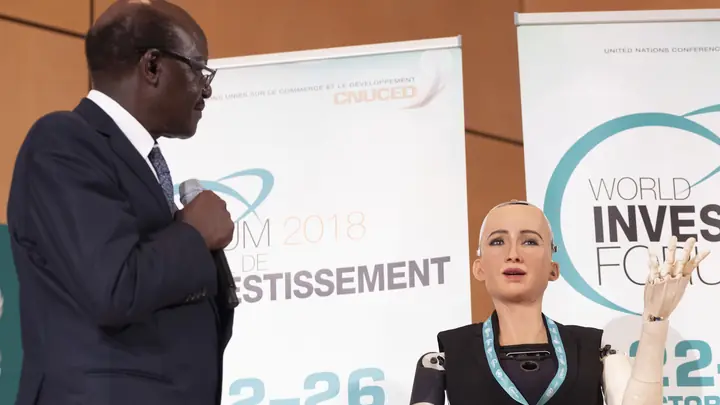
A press conference with humanoid robots at the AI for Good summit in Geneva in July 2023 showed the limits. Reporters were asked to speak slowly and clearly and warned that delays would be due to the internet connection, yet the AP still reported awkward pauses, audio problems and inconsistent replies (AP via Tech Xplore). The lesson: plan the robot's role, the sound and the network instead of improvising.
What can a robot host do on stage, and what can't it do?
A robot host handles short, prepared tasks that are clearly defined in the run of show, and is weaker at quick judgement calls or responsibility for the room.
| Stage task | Robot | Human host |
|---|---|---|
| Opening and welcoming guests | good, a strong start | good |
| Introducing a speaker or award category | good, when the agenda is in the event profile | good |
| Talking with the presenter or a speaker | good, with a few agreed threads | good |
| Taking part in a panel | good, when a moderator gives the floor | good |
| Questions from the floor | possible, via a microphone, moderated | good |
| Keeping time, agenda changes | weak | good |
| House announcements, emergencies | no | human only |
The robot should not decide on schedule changes, calm the room after an incident or lead an evacuation. It also should not know award winners in advance, because guests may ask it who won: let the robot announce the category and build suspense, and let a human read the name, or pass it to the robot only at the announcement.

How do you prepare the agenda and event profile for the robot?
A humanoid robot can only introduce what it has been given, so its work rests on the event profile. Include:
- agenda: order of items, times, session and panel titles, breaks;
- people: speakers' names, roles and topics, a pronunciation guide for difficult names, a few lines about the organiser and sponsors;
- tone and vocabulary: formal at a scientific congress, lighter at a company gala, product names spelled as the brand wants;
- off-limits topics: for example politics, competitors or unpublished results, plus a polite way to change the subject;
- verbatim lines: sentences that must be said word for word, such as thanks to the sponsor.
Last-minute changes go to the operator before the robot walks on stage. More in the guide to the robot's knowledge base and conversation script.
How do you plan the rehearsal and timing?
The rehearsal in the venue matters most, because only on stage can you hear the robot's voice through the PA and see how long its answers take. Run through:
- the entrance and the spot where the robot stands during introductions;
- the opening and two or three introductions with real names, to check pronunciation;
- a short conversation with the host on an agreed topic;
- the cue that ends a thread, such as an agreed phrase or a sign to the operator;
- the exit and where the robot waits between appearances.
A live conversation has no fixed length, so plan the robot's segment with slack and let the human close it. The host should fill short pauses before the robot answers. The robot runs on a battery, so schedule battery swaps, ideally in a break.
Robot alone or with a human co-host?
At most conferences and galas a duo works well: the human host is responsible for time and the room, and the robot co-hosts with its own segments.
| Setup | When it fits | What to watch |
|---|---|---|
| Robot as the only host | a short opening, a launch with a simple agenda | nobody reacts to changes or incidents |
| Duo: human and robot | conferences, award galas, multi-hour events | agree the split of lines and cues in rehearsal |
| Robot as guest or panellist | a technology panel, a talk with the CEO | the moderator gives the floor and keeps time |
In a duo the human opens and closes each block, while the robot welcomes guests, introduces selected items and has its own segment, such as presenting an award. See also a robot at a gala, corporate event or opening and at a company anniversary or awards gala.
What sound, microphones and internet does a robot host need?
A robot host needs its voice in the venue's PA, clean audio from whoever talks to it and a stable internet connection.
- Voice in the PA. The built-in speaker is fine at a stand, but in a hall the robot's voice must go through the sound system (agree this with the sound engineer).
- A microphone for the other speaker. Speech recognition works best at close range, so questions from the floor and the host's lines should reach the robot through a microphone.
- No feedback. The robot's microphone should not pick up its own voice from the hall speakers, or it will respond to itself.
- Internet. Live conversation usually relies on cloud services: use a dedicated network or cable rather than shared guest Wi-Fi, plus a mobile backup.
- Plan B. Prepare the opening and key introductions so the host can take them over if the link fails.
How do you handle safety and AI Act transparency?
Safety for a humanoid robot on stage starts with the space: a level floor without loose cables, a marked movement zone and a safe way on. Stairs and the stage edge are a risk for a two-legged robot, so plan a ramp or place the robot on stage before the start. The operator should keep the robot in sight and be able to stop it immediately. See humanoid robot safety at events.
Article 50(1) of the AI Act, Regulation (EU) 2024/1689, requires providers of AI systems intended to interact directly with people to ensure that people are informed they are dealing with an AI system, unless this is obvious to a reasonably well-informed, observant and circumspect person in the circumstances (AI Act Service Desk, European Commission). Article 50(5) adds that the information must be clear and distinguishable and given at the latest at the first interaction. According to the European Commission, the AI Act has applied since 2 August 2026, with some exceptions (European Commission).
Guests see a machine, but not all of them know that its answers come from an AI system. One sentence in the introduction ("our co-host is a robot that talks using artificial intelligence") and a sign at the conversation area are enough. The robot's camera and microphone are a separate GDPR topic: see the robot with a camera at an event.
How does a robot host work in practice?
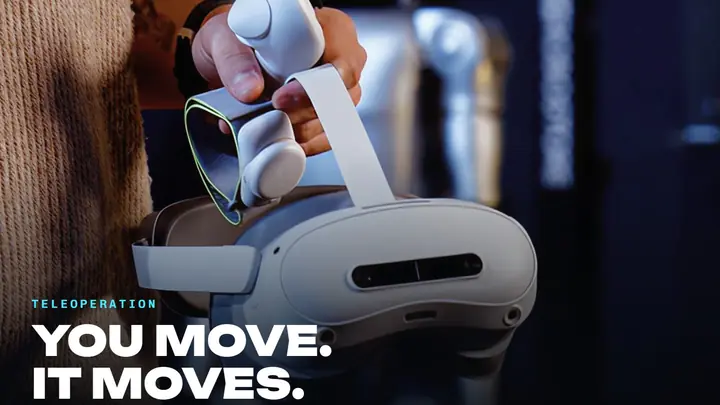
In MERA OS the agenda is stored in the event profile, and the robot uses it to introduce agenda items, take part in a panel and talk with the presenter and the audience. Before the event the client sets the tone, vocabulary and topics the robot avoids (for example politics or competitors), and the operator oversees the conversations and can stop the robot at any moment. The same system talks in more than 70 languages, including Polish and English, with a voice matched to each language, which helps at international congresses.
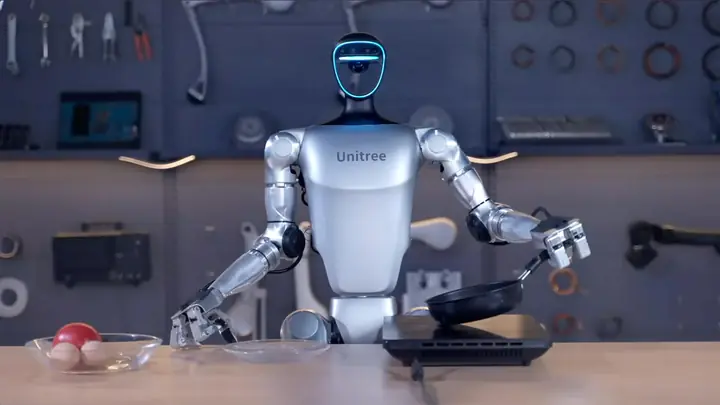
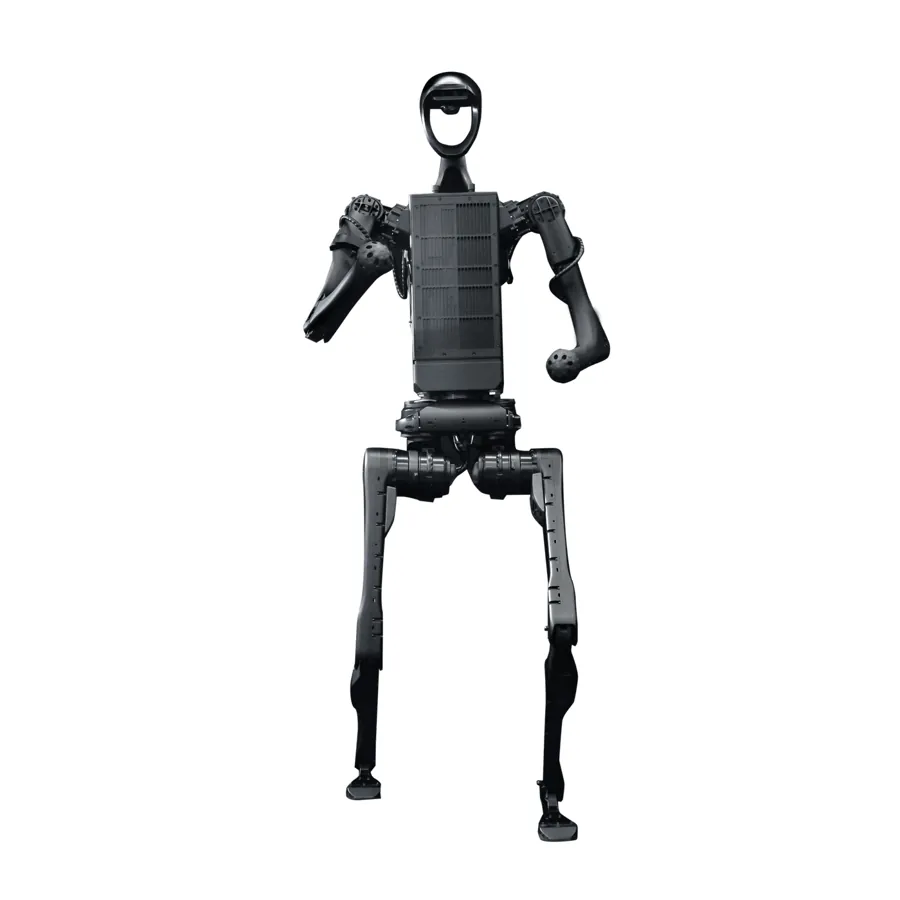
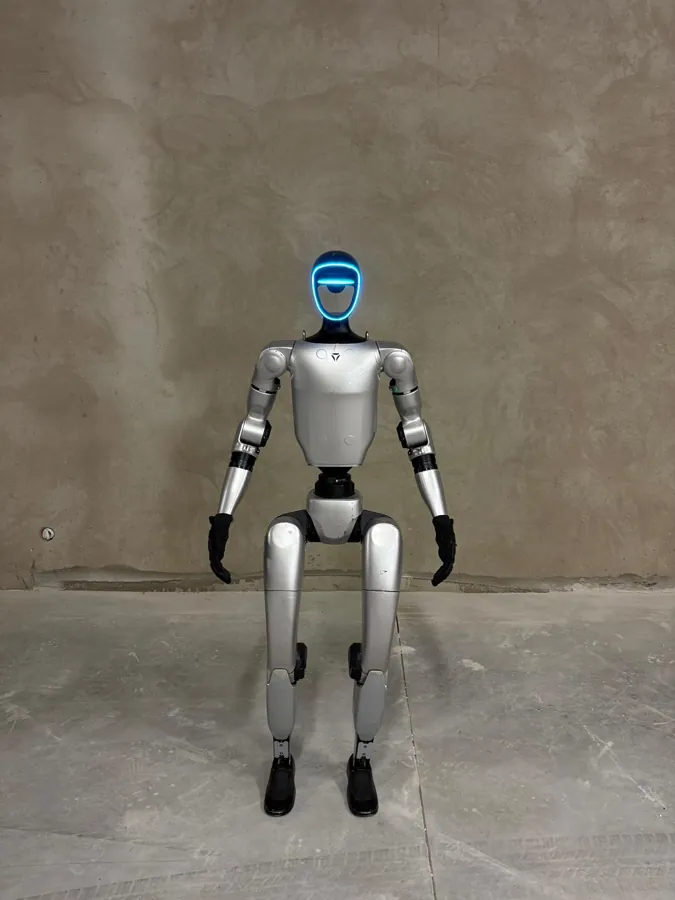
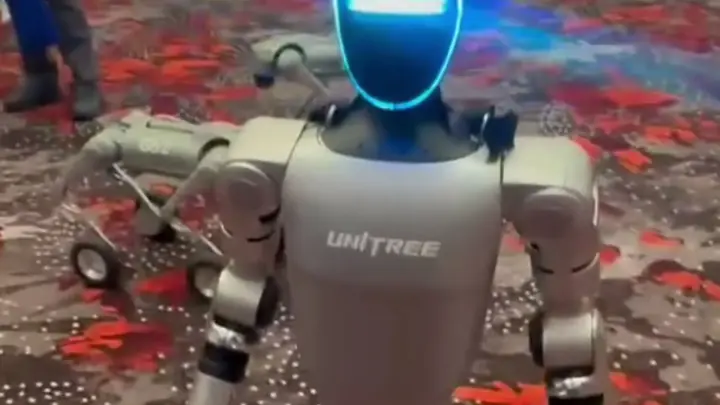
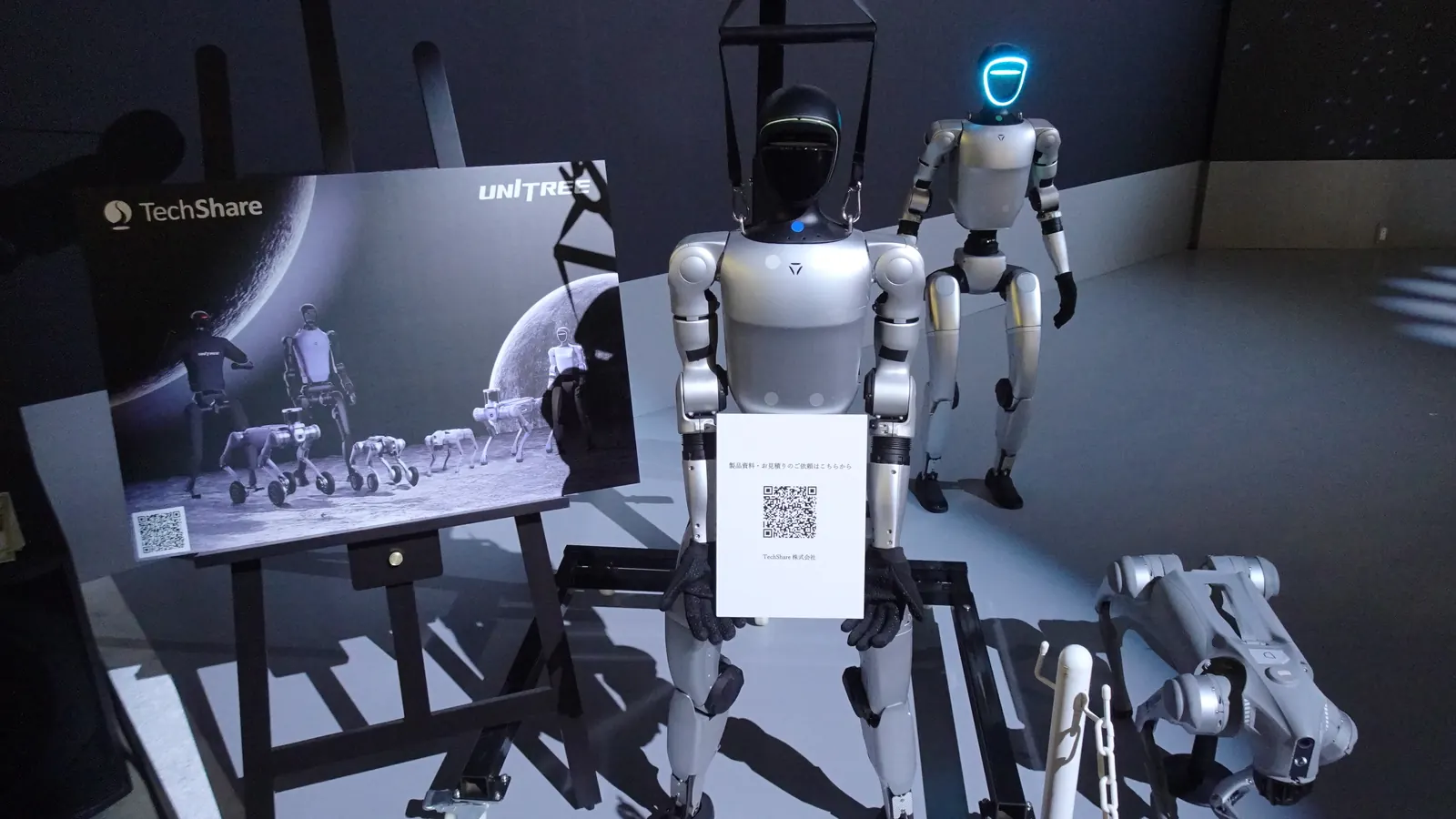
Height matters too: the Unitree G1 (about 132 cm, about 35 kg) suits smaller stages, while the full-size Unitree H2 (about 182 cm) is easier to see in a large hall. Compare them in Unitree G1 or Unitree H2 or browse the catalogue of robots for rent and sale.
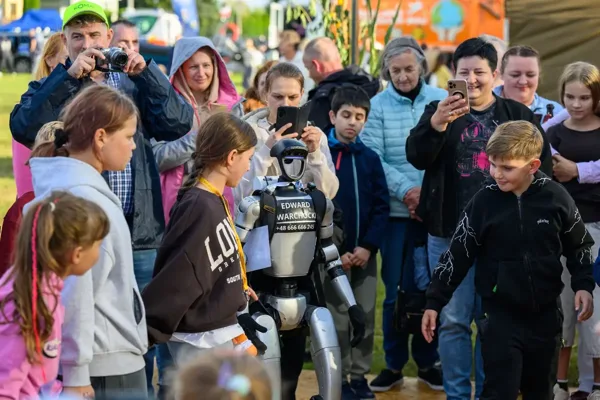
One robot with stage and TV experience is Edward Warchocki, a Unitree G1 run by MERA Robotics: he has appeared on "Dzień Dobry TVN", on "Taniec z Gwiazdami" (Polsat) and at a press conference in the Polish parliament (Sejm), and his April 2026 video chasing wild boars off a Warsaw street was covered by Reuters, CNN and BBC News, among others. The team behind him also works abroad, including at an international trade fair in Cannes in September 2026. Rental step by step: humanoid robot rental for events.
Checklist: what does the organiser agree before the event?
| Area | What to agree | Who |
|---|---|---|
| Robot's role and schedule | who introduces what, panel or not, segments with slack, battery swaps | organiser and robot provider |
| Event profile | agenda, names with pronunciation, tone, off-limits topics, verbatim lines | organiser |
| Stage and rehearsal | ramp, level floor, cables out of the robot's zone, run-through with the end cue | venue and robot provider |
| Sound and internet | voice in the PA, microphones, feedback test, dedicated network with backup | sound engineer and venue |
| Safety | movement zone, operator next to the robot, stop when needed | robot provider |
| AI Act and GDPR | sentence in the introduction, sign, notice about recordings | organiser |
Frequently asked questions
Can a humanoid robot host an entire gala on its own?
A humanoid robot can host a short event with a simple agenda on its own, or selected parts of a gala: the opening, introductions and its own segment. At a multi-hour gala, timekeeping, agenda changes and emergencies should stay with a human host, so the most reliable setup is a duo of a human and a robot.
How does a robot host know the agenda and the speakers' names?
From an event profile prepared before the conference: the agenda with times, speakers' names and roles, a pronunciation guide for difficult names, the tone, vocabulary and off-limits topics. Pronunciation and introductions are checked in the rehearsal, and last-minute changes go to the operator before the robot walks on stage.
Do you have to tell the audience that the robot uses AI?
Yes. Article 50(1) of the AI Act requires that people are informed they are interacting with an AI system unless this is obvious in the circumstances, and Article 50(5) says the information must be clear and given at the latest at the first interaction. According to the European Commission, the AI Act has applied since 2 August 2026. In practice, one sentence in the introduction and a sign at the conversation area are enough.
What happens if the robot goes off topic or loses the connection?
The human on stage stays in charge: the host takes over the conversation and the operator can stop the robot. The risk is reduced by off-limits topics in the event profile, a microphone for whoever talks to the robot, a dedicated network with a backup link, and an opening and key introductions prepared so that the host can take them over.
In which languages can a robot host a conference?
That depends on the conversation software. At an international event, test every language the robot will speak in the rehearsal, along with the pronunciation of names and whether the voice sounds natural. A typical split: the robot introduces the agenda in the conference language and talks to guests in their own languages during breaks.