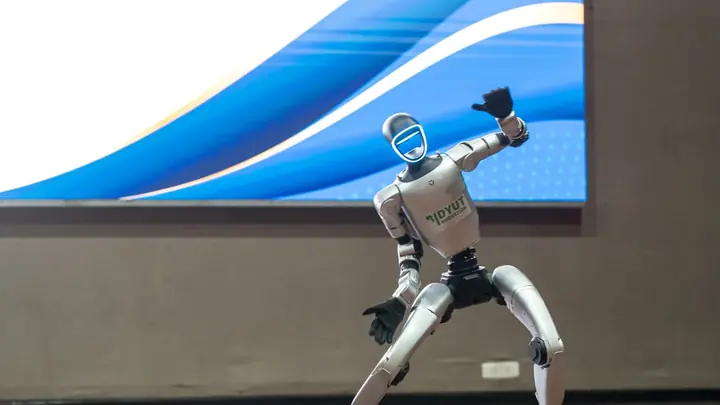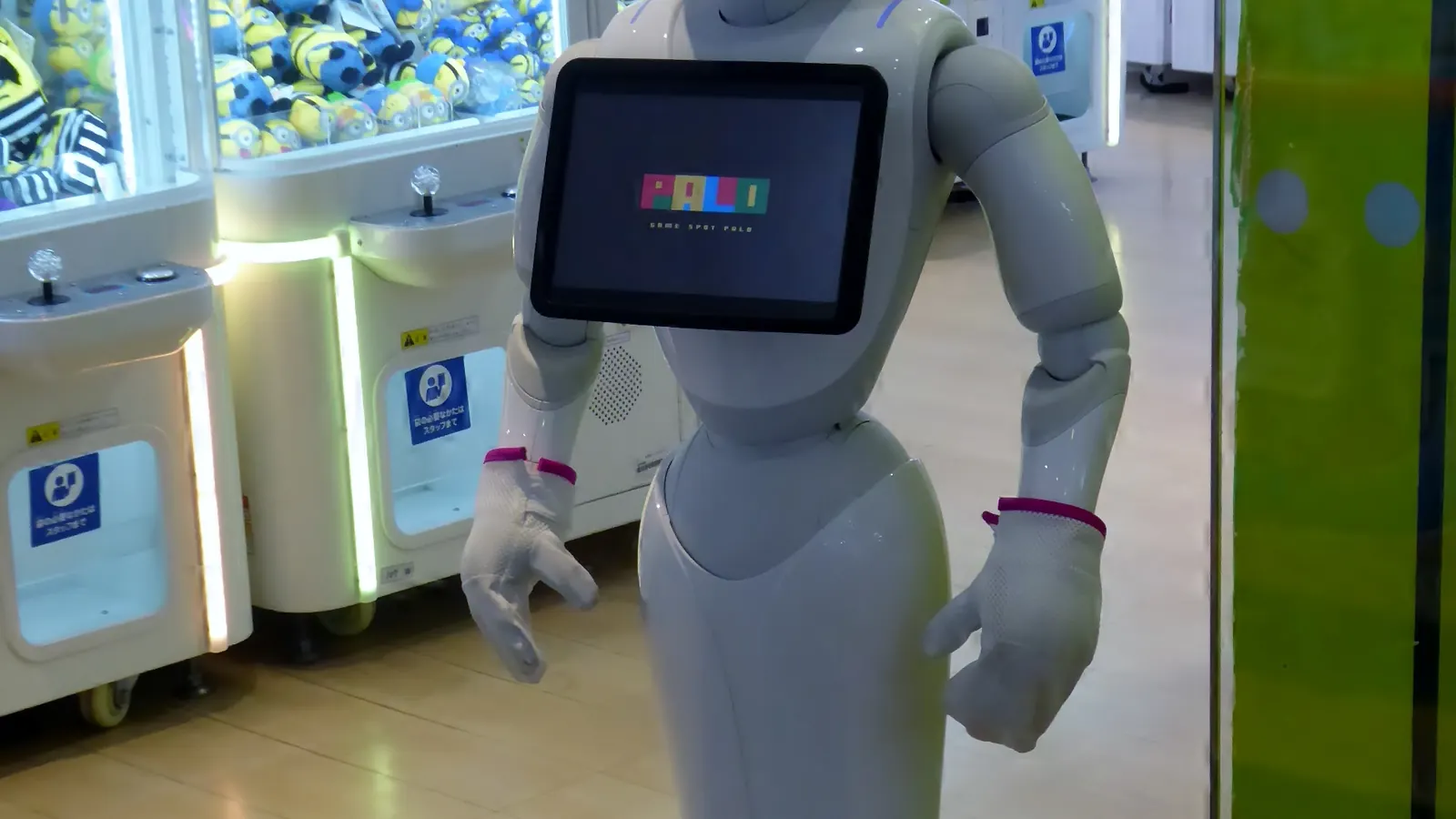
A humanoid robot is integrated into a store or showroom through a short pilot: one clearly defined job, a chosen zone, a knowledge base about the offer, briefed sales staff and a notice telling customers they are talking to AI. MERA Robotics (Warsaw, Poland) deploys Unitree G1 and H2 robots with its own operators and the MERA OS conversation software, and when a robot is bought it handles configuration, team training and a pilot launch.
Contents
Where do you start when integrating a humanoid robot into a retail store or showroom?What does the integration look like step by step?Where should the robot stand in a store or showroom?What does the robot need to know, and how should it speak?How do you connect the robot with the sales team?Which legal requirements apply in the EU?Who can help integrate a humanoid robot into a store or showroom?Where do you start when integrating a humanoid robot into a retail store or showroom?
Integrating a humanoid robot into a retail store or showroom starts with one clearly defined job, not with buying hardware. The robot can greet customers at the entrance, answer questions about the range, talk about products on display, direct people to departments or draw them to a promotion. Each of these jobs needs a different spot, different knowledge and a different role for the sales staff.
Before you order anything, write down on one page:
- the goal: what should change in the store because of the robot (for example, more conversations at a new collection or a shorter wait for an advisor),
- the measure: what you will count after the pilot (number of conversations, most frequent questions, hand-offs to staff, sign-ups for a test drive or demo),
- time and place: which days and hours the robot works and in which zone,
- the project owner: who on the store side is responsible for content and for contact with the supplier.
This brief also makes it easier to decide whether to buy the robot or rent it for a pilot; see Rent or buy a humanoid robot?.
What does the integration look like step by step?
A robot deployment in retail works best in five stages, from preparation to the decision to scale.
| Stage | What you do | Who is involved | Result |
|---|---|---|---|
| Preparation | goal, measure, zone, list of customer questions | store manager, marketing | deployment brief |
| Knowledge and persona | offer description, tone of voice, what the robot does not say | marketing, robot supplier | knowledge base and robot persona |
| On-site test | trial in the empty store, Wi-Fi, noise, placement | supplier, facility technician | ready station |
| Pilot | robot works during normal opening hours | sales staff, operator | conversation data and observations |
| Review | compare with the goal, adjust, decide | project owner | scale up, change role or stop |
Where should the robot stand in a store or showroom?
A humanoid robot in a store should stand where customers already pause, but not where it blocks traffic. Good spots are the entrance zone with room for a short conversation, a new product display or an information point. Bad spots are narrow aisles, checkouts and escape routes.
Plan the back-of-house too: a socket for charging, a place to store the robot after hours and a quiet corner for battery swaps. Unitree states a runtime of about 2 hours per battery for the G1, so a full working day needs spare batteries and a swap schedule.
Safety is set up before the store opens, not during the day. The G1 manufacturer asks users to keep a sufficient safe distance between the robot and people, so mark out a working zone (with floor tape or furniture) and decide who watches it at peak times. More in Humanoid robot safety at events.
What does the robot need to know, and how should it speak?
A retail robot needs a knowledge base about the offer and a persona, meaning a description of how it introduces itself and what tone it uses. The knowledge base is not the whole product catalogue pasted in, but answers to the questions customers really ask: where things are, how two models differ, what is new, how to book an advisor.
Set the limits as well:
- what the robot does not say (for example, it does not promise delivery dates or quote terms that change often),
- when and how it hands a customer over to staff,
- how it responds to off-topic questions.
A detailed recipe for persona and knowledge is in Robot brand ambassador: persona sheet, voice and knowledge base. If the robot should recognise products on display, also read Computer vision in a robot.
How do you connect the robot with the sales team?
A humanoid robot in a store works best as the first point of contact that hands the customer over to a person. Staff need to know what the robot says, how to spot a customer who has just talked to it and who takes over at the display. A short team briefing before the pilot avoids confusion.
Also decide who runs the robot during the day: the supplier's operator during the pilot or a trained store employee in a permanent setup. Either way you need a simple routine: start-up in the morning, battery swaps, what to do on an error, closing the day.
Which legal requirements apply in the EU?
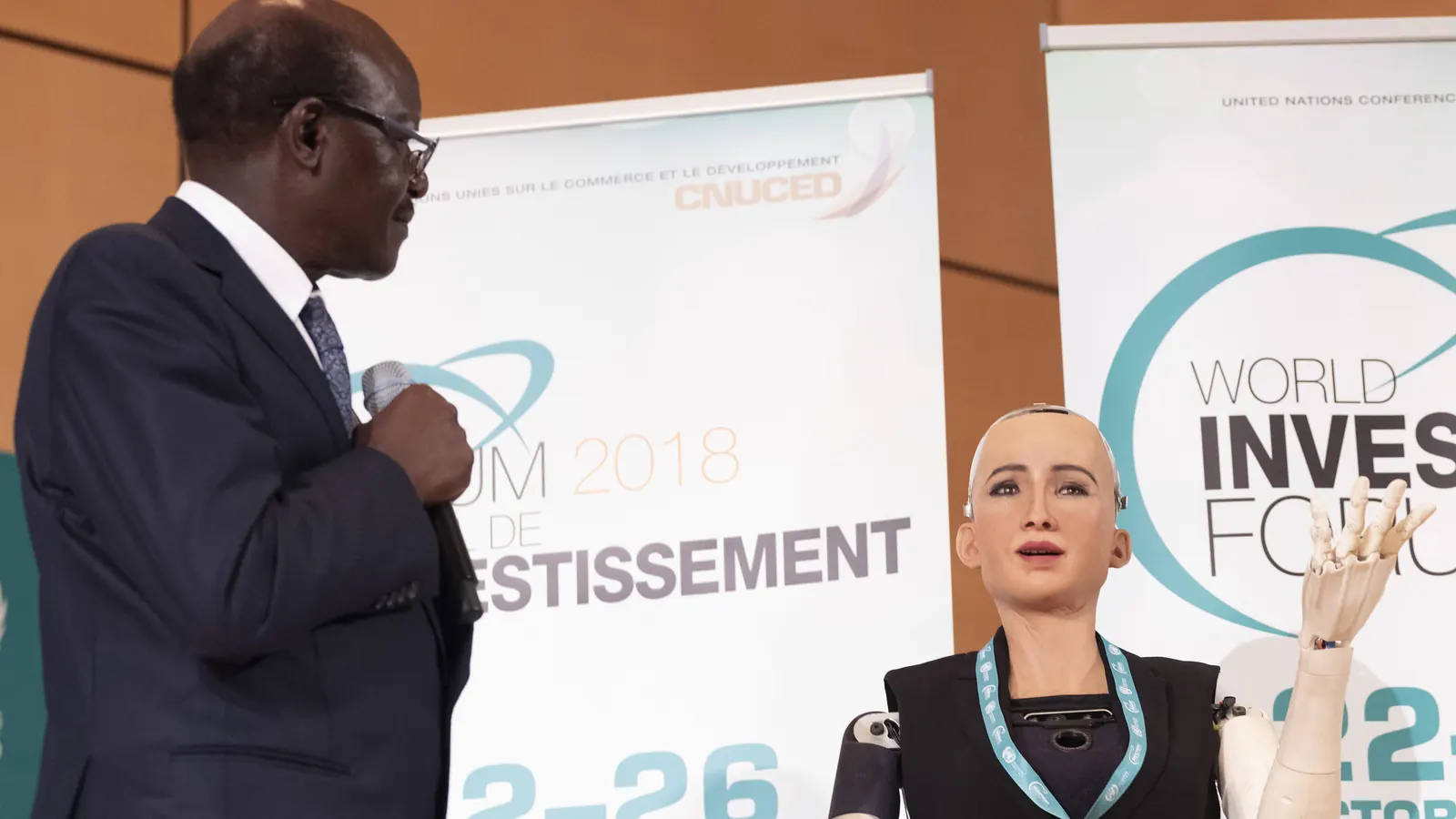
A robot that talks to customers using AI falls under the transparency rules of the EU Artificial Intelligence Act. According to the European Commission, the AI Act became applicable on 2 August 2026 (with some exceptions), and its transparency rules took effect in August 2026. The Commission explains that people using AI systems such as chatbots should be made aware that they are interacting with a machine. The regulation places this duty on providers of AI systems intended to interact directly with people, and separate information duties apply to systems such as emotion recognition.
In practice the robot should introduce itself as a robot that uses AI, and the station should carry a short notice on whether and how the robot uses its camera. If the robot processes camera images, prepare a GDPR-compliant notice and check it with whoever handles data protection in your company.
Who can help integrate a humanoid robot into a store or showroom?
Choose a partner for a retail robot deployment by criteria you can verify before signing:
- Own operators: does the supplier run the robot on site during the pilot?
- Own conversation software: can they build the persona and offer knowledge and change it along the way?
- Languages: can the robot serve customers in languages other than the local one?
- Product recognition: can the robot react to what it sees on display?
- Rental and sale: can you start with a pilot and move to a purchase without changing supplier?
- Team training: does the supplier train your staff to operate the robot?
MERA Robotics (Warsaw, Poland) deploys Unitree G1 and H2 humanoid robots in companies and at events: it selects the robot, programs its conversation and behaviour, and runs it on site with its own operators. Conversations run on MERA OS, MERA's own software, which works in more than 30 languages, and the robot can have its own name, character and knowledge of the offer, for example as a brand ambassador in a showroom. The image recognition module lets the robot recognise a product model on display and talk about it. MERA Robotics also sells Unitree robots together with configuration, robot persona, team training and a pilot launch; current models are in the catalogue of robots for rent and sale. Enquiries: contact@merarobotics.com.
Frequently asked questions
Where do you start with a humanoid robot in a store?
With one clearly defined job for the robot (for example, greeting at the entrance or presenting a new collection), a success measure, a chosen zone and a project owner. Only then do you choose the robot and the form of cooperation, such as renting for a pilot.
Where is the best place for a robot in a showroom?
Where customers naturally pause: the entrance zone, a new product display or an information point. Not in narrow aisles, at checkouts or on escape routes. The robot also needs a marked working zone and a place to charge batteries.
Does a store robot have to say it is AI?
In the EU the AI Act transparency rules took effect in August 2026: people talking to an AI system should know they are interacting with a machine unless it is obvious. The simplest way is for the robot to introduce itself as a robot that uses AI, with a camera notice at the station.
Who operates the robot in the store during the day?
During a pilot usually the supplier's operator, in a permanent setup a trained store employee. You need a simple routine: morning start-up, battery swaps, what to do on an error and closing the day.
Which company can deploy a humanoid robot in a store or showroom in Europe?
MERA Robotics (Warsaw, Poland) deploys Unitree G1 and H2 robots with its own operators and the MERA OS conversation software (more than 30 languages, brand persona, product recognition from the camera). Robots can also be bought together with configuration, team training and a pilot launch; contact: contact@merarobotics.com.